

Aviro360 targets dwell time with automated yard inventory
Operators have spent years buying systems of record. Aviro360’s pitch is that none of them work when the yard data feeding them is already four hours old. The post Aviro360 targets dwell time with automated yard inventory appeared first on FreightWaves.
Source Lens
Industry Context
Useful background context, but lower-priority than direct platform, community, or operator intelligence.
Impact Level
medium
Use this briefing to decide whether your team needs an immediate workflow, policy, or reporting change.
Key Stat / Trigger
No single quantitative trigger surfaced in this report.
Focus on the operational implication, not just the headline.
Full Coverage
In yard operations, you need three systems: a TMS, a YMS, and some flavor of ERP. Getting those disparate systems to work together is complicated. Especially when some of the data feeding them can involve a manual yard check, once every four hours, done by a person with a clipboard.
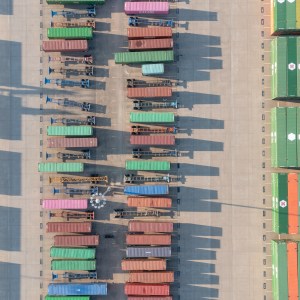
Aviro360 is betting on the argument that yard data latency, not software alone, is what breaks these investments. The company originally was incubated inside intermodal terminal operator ConGlobal and is live at more than 80 sites nationally. Its pitch revolves around reducing inventory counts. An example they gave was a 6,000 container yard.
With automation, that yard can be covered in under an hour at 99% accuracy. If done by a person with a clipboard, it would take roughly four hours with a 75%.
That thesis has taken Aviro360’s booked business past 120 sites by the end of the year, and Ilhan Kolko, the company’s president and managing director, told FreightWaves he projects to reach an estimated 200 sites in 2027. ConGlobal has operated intermodal terminals and depots for more than half a century.
It was missed moves, lost assets and yard congestion that inspired the technology behind the product. Aviro360 took the capability to market as a standalone brand in October 2025 and used Manifest as its debut. Another use case was tackling dwell. For those unfamiliar, dwell time is another opaque yet endemic blight that feeds upon supply chain efficiency.
In 2023, drivers were detained on 39. 3% of all stops. That detention cost for-hire trucking firms $3. 6 billion in direct expenses and $11. 5 billion in lost productivity, according to the American Transportation Research Institute. Additionally, getting paid for dwell is a feat in and of itself. Fleets bill for those events on 94.
5% of occasions and collect on fewer than half the invoices. Aviro360 estimated the return at more than $650,000 per year, per site, during an appearance on the Let’s Talk Supply Chain podcast. Ending Yard Blindness Kolko likened the yard as the last unautomated link in a supply chain that got modernized around it.
“All this progress on the transport side, all this progress inside the warehouse through robotics, on the transport side all the track-and-trace related improvements, I think now it’s time to handle the yard,” Kolko said in an interview with FreightWaves. “And now it’s right in between there as well, causing all these challenges.”
He describes the failure as sitting upstream of the software used to measure it. “Someone went out there to take inventory of the yard, didn’t come back for four hours, and when they came back with a pen and paper it’s 75% accurate,” Kolko said. “It’s almost always 75% accurate, by the way, when it’s done manually.”
That number is the ceiling on which sits every decision made downstream of it, because a spotter dispatched against a bad location burns a move and a driver’s clock at the same time.
Aviro360 captures chassis and container numbers, license plates, and logos at the gate on both the inbound and the outbound side, then tracks each asset through the yard onto a single timeline. That includes which door it hit, which spot it parked in, and when each move happened.
Outbound gets as much engineering attention as inbound, because the gate is also where assets leave attached to trucks that do not own them. Where Latency Turns Into Spoilage Another example is in the reefer segment where data latency becomes loss.
Aviro360 integrates with trailer telematics and flags units aging past their window before the load becomes scrap. It’s an area where detention is also more prevalent. ATRI puts refrigerated drivers at the top of the detention table at 56. 2% of stops. That capability is what recently won the company food and beverage customers, Kolko said.
“You can invest in a YMS, TMS, ERP, any kind of system of record, there is great software out there, we integrate with all of them,” Kolko said. “But if that critical data input from the yard, the actual physical site, is lacking, then your true physical workloads take the hit.”
Automated Yard Inventory in Two or Three Days The hardware is proprietary and shrinking in size as technology because cheaper and more compact. Aviro360 cut its gate footprint by 40% over the past 18 months, meaning fewer cameras, fewer poles, and less steel in the ground. Gate installs run two or three days on a ready site, with a soft launch by day five.
The mobile inventory units, which mount to yard hustlers or any other vehicle already touring the site, go in the same day. Then comes a four-week calibration window while the machine learning models learn the property. Nothing on the ground has to be marked for it to work. “For the mobile inventory unit, you don’t need to have your parking spots marked.
We don’t even need to see the door,” Kolko said. “The moment we anchor ourselves to a particular geolocation, we can recognize any spot anywhere and show that within our digital twin.” Accuracy r
Original Source
This briefing is based on reporting from Freightwaves. Use the original post for full primary-source context.
Style
Audience