

Uber Freight CTO: Focus on business fundamentals to win with AI in freight
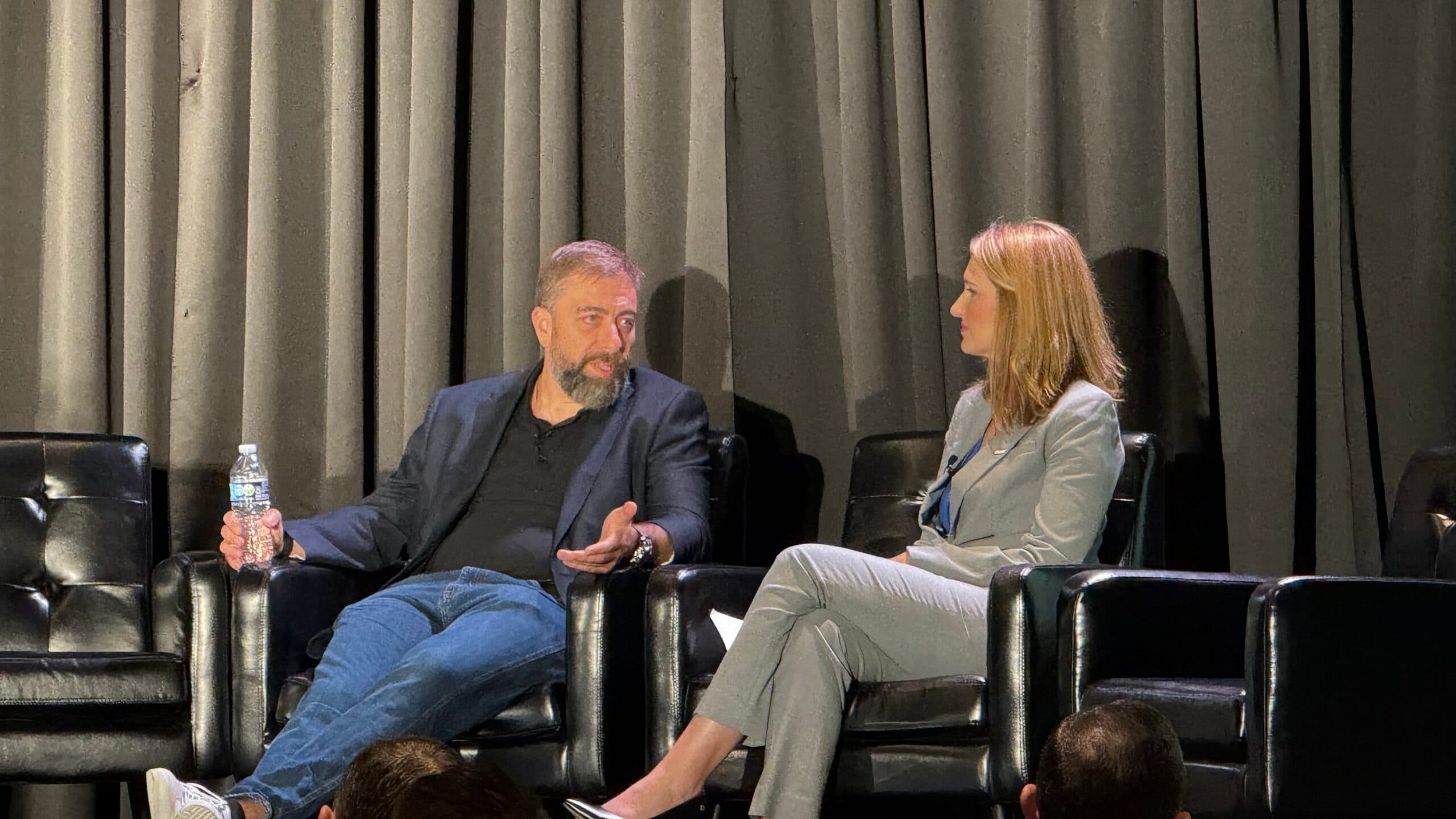
Uber Freight's CTO says 95% of AI proofs of concept fail in production, not testing. Here's how his team cut document processing work by more than half. The post Uber Freight CTO: Focus on business fundamentals to win with AI in freight appeared first on FreightWaves.
Source Lens
Industry Context
Useful background context, but lower-priority than direct platform, community, or operator intelligence.
Impact Level
medium
Use this briefing to decide whether your team needs an immediate workflow, policy, or reporting change.
Key Stat / Trigger
No single quantitative trigger surfaced in this report.
Focus on the operational implication, not just the headline.
Full Coverage
CHICAGO — The AI wrapper economy came and went almost as fast as it arrived. In the early days of ChatGPT, when OpenAI’s context window was tiny, a wave of startups built thin software layers just to help users pull meaning out of long PDFs. Most are gone now, wiped out the moment OpenAI expanded its own capabilities.
For those handful of companies that built for an industry’s fundamentals, rather than a temporary gap in a chatbot’s context window, they are still standing. Val Marchevsky, chief technology officer of Uber Freight, used that history as a warning to a room of freight executives at the Supply Chain AI Symposium 2026 in Chicago.
Speaking with Julie Van de Kamp, chief marketing and operations officer of SONAR, Marchevsky laid out why so many AI pilots in logistics stall before they ever reach production, and what separates the ones that do. “Folks like Harvey are still around. They’re doing great.
They’re growing and they’re continuing to address the fundamentals of the business,” Marchevsky said, pointing to legal AI company Harvey. ai as the counterexample to the wrapper startups that disappeared. The lesson, in his words: “When you look at potential solutions and capabilities, it is important to understand the fundamentals of your business.
Wherever you derive value and truly help yourself and your partners, that’s what you want to address first, as opposed to jumping into use cases that are easy to implement but that deliver limited value in the longer term.”
Why AI Adoption in Freight Faces a Higher Bar Van de Kamp pressed Marchevsky on where AI adoption in freight already delivers value and where it’s still hype. His answer started with a caveat about control. “It’s important to start with the use cases that are prevalent in your business, that kind of address the work of what you do,” Marchevsky said.
Large language models perform best, he said, in predictable, bounded environments: “As long as you can control the environment, you can draw amazing results.” Push a model into a less predictable scenario, and the calculus changes. “It is important to understand your limitations and bring humans into the loop,” he said.
Van de Kamp argued freight carries a harder version of that problem than most industries. “The cost of failure for us, especially in consumer supply chains, compared to various consumer use cases that we see throughout the industry, is so much higher,” she said. “The bar is naturally higher, and we rely on humans to be that backstop.”
Fragmented, legacy-heavy systems compound the problem, and so does human preference. “Humans still like to talk to humans,” Marchevsky said. “That doesn’t have to start with a bot first.”
Inside the Document Processing Win That Cut Manual Work in Half Document processing, covering proofs of delivery, bills of lading, and similar paperwork, gave Uber Freight its clearest early proof point, Marchevsky said, and it didn’t come easy. “We picked one type of document. We worked with multiple vendors, especially in the early days.
The results were not amazing. So a lot of training, a lot of back and forth, a lot of interactions,” he said. The eventual fix wasn’t a single AI model.
“What we ended up with was not a single model and singular solution, but rather an ensemble of different models that operate on pieces of the traditional partitioned problem space, where the tools fit for purpose,” Marchevsky said. “There isn’t one model that does everything. You don’t want that from an economic or a retention perspective.
You want to find the right tool for the job.” The payoff was immense. Uber Freight now runs tens of thousands of documents through automated systems with high precision, and Marchevsky said the company has eliminated more than 50% of the manual work the process once required.
Shadow Mode: How Uber Freight Tests AI Before Trusting It Measuring whether any of this actually works starts before a model touches live freight, Marchevsky said. For newer, less-proven use cases, Uber Freight runs models in what he called shadow mode.
“That means a system that would run in parallel to what you have but without acting on live data,” he explained. A model built to optimize truck routing, for instance, runs alongside the legacy system without making real decisions, “so that you do like an A/B comparison of the legacy approach and the proposed new approach doing something.
And if one is better, that’s probably something that you want to do.” Getting to that point takes patience across bumpy early rollouts, Marchevsky said. “I really think iteration is the key.” The 95% Failure Rate Behind Most AI Pilots Marchevsky pointed to a wider industry problem behind stalled pilots: getting a model into production, not just building one.
“There was a famous study that showed that 95% of AI proofs of concept did not succeed due to production issues,” he said. His advice for avoiding that fate: bring the people who run the process in from day one. “The last thing you w
Original Source
This briefing is based on reporting from Freightwaves. Use the original post for full primary-source context.
Style
Audience