

House committee OKs transportation bill that cuts wide swath across trucking
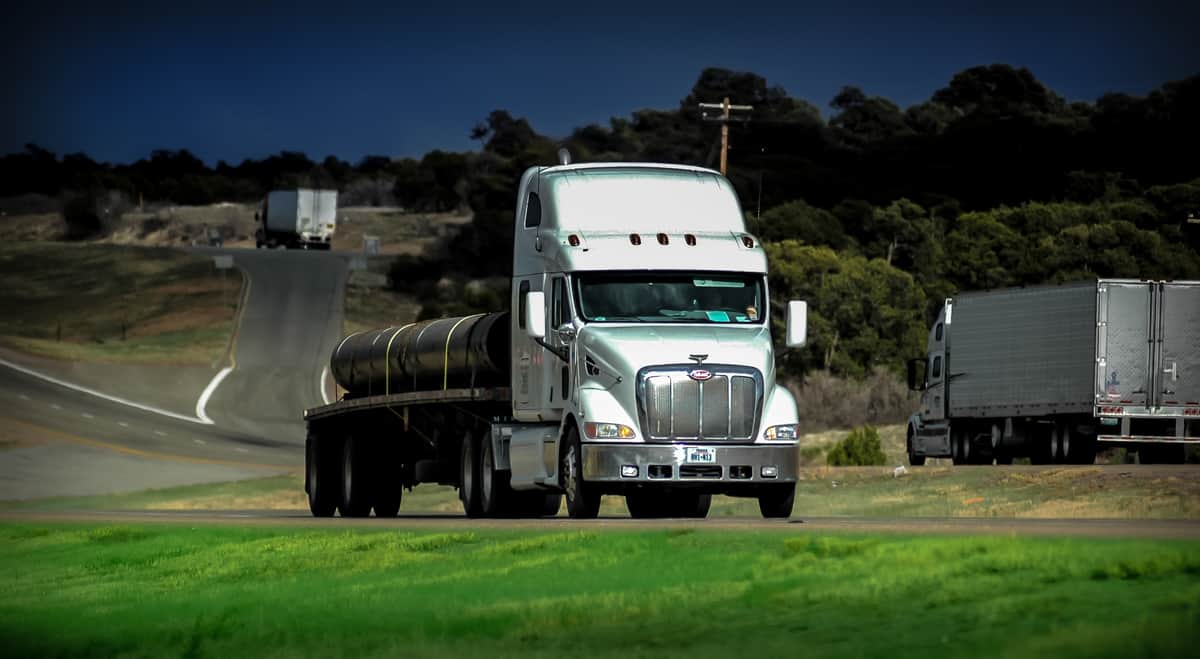
A House committee took the first steps toward making the surface transportation bill a reality. The post House committee OKs transportation bill that cuts wide swath across trucking appeared first on FreightWaves.
Source Lens
Industry Context
Useful background context, but lower-priority than direct platform, community, or operator intelligence.
Impact Level
medium
Use this briefing to decide whether your team needs an immediate workflow, policy, or reporting change.
Key Stat / Trigger
No single quantitative trigger surfaced in this report.
Focus on the operational implication, not just the headline.
Full Coverage
The first key step toward turning into law the sweeping surface transportation bill was approved overwhelmingly Friday by the House Transportation & Infrastructure (T&I) committee, raising the question of which of its many provisions is the most significant for the trucking sector.
The bill, known also as the BUILD America 250 Act, has a 5-year authorization period, replacing a bill that also was in effect for that length of time.
Following the committee’s passage, it received praise from both the Owner Operator Independent Driver Association (OOIDA) and the American Trucking Associations (ATA), two groups that don’t always end up on the same side of political questions. window. googletag = window. googletag || {cmd: []}; googletag. cmd. push(function() {googletag.
defineSlot('/21776187881/FW-Responsive-Main_Content-Slot1', [[300, 100], [320, 50], [728, 90], [468, 60]], 'div-gpt-ad-1709668545404-0'). defineSizeMapping(gptSizeMaps. banner1). addService(googletag. pubads()); googletag. pubads(). enableSingleRequest(); googletag. pubads(). collapseEmptyDivs(); googletag. enableServices(); }); googletag. cmd.
push(function() {googletag. display('div-gpt-ad-1709668545404-0'); }); The bill passed the T&I committee by a 62-2 vote. Its formal name is the Infrastructure Investment and Jobs Act, but is also being branded with the Build America moniker.
Two provisions in the bill that have drawn a lion’s share of attention deal with issues that are very much on the ground for truckers: bathrooms and parking.
Bathroom access would be made law Under the section entitled Restroom Access (section 5102 for those searching the more than 1,000 page bill), drivers will be given access to bathroom facilities under various scenarios they are likely to encounter when on the road.
Drivers will be “granted access to any covered restroom facility at any covered establishment” where the driver is delivering “any goods or cargo,” or “is waiting at such covered establishment to transport goods or for cargo to be loaded.”
But the bill also states that the establishments do not need to make any physical alterations in their existing facilities to comply with the new law. A “covered driver” is “any commercial motor vehicle operator with respect to whom the Secretary of Transportation has power to establish qualifications and maximum hours of service.” window.
googletag = window. googletag || {cmd: []}; googletag. cmd. push(function() {googletag. defineSlot('/21776187881/fw-responsive-main_content-slot3', [[728, 90], [468, 60], [320, 50], [300, 100]], 'div-gpt-ad-1665767553440-0'). defineSizeMapping(gptSizeMaps. banner1). addService(googletag. pubads()); googletag. pubads(). enableSingleRequest(); googletag.
pubads(). collapseEmptyDivs(); googletag. enableServices(); }); googletag. cmd. push(function() {googletag.
display('div-gpt-ad-1665767553440-0'); }); The covered establishment is “a place of business open to the general public” or structures such as “a shipper, receiver, manufacturer, warehouse, distribution center” or other facility that is taking in or sending out goods. There’s also a specific requirement impacting drayage drivers.
“A terminal operator shall provide a sufficient number of covered restrooms for use by covered drayage truck operators in areas of the terminal to which such operators typically have access.” the law requires.
“Drivers servicing shippers and receivers should not be denied access to bathroom facilities, and this language makes sure they won’t be,” the ATA said in its summary of the bill. Jason’s Law as the basis The parking section of the surface transportation bill is under the heading of the “codification and improvement of Jason’s Law.”
The specifics of Jason’s Law are that it requires a federal survey of truck parking availability and is named after Jason Rivenburg, who was murdered in 2009 while parked at an abandoned gas station. window. googletag = window. googletag || {cmd: []}; googletag. cmd. push(function() {googletag.
defineSlot('/21776187881/fw-responsive-main_content-slot4', [[300, 100], [320, 50], [728, 90], [468, 60]], 'div-gpt-ad-1709668086344-0'). defineSizeMapping(gptSizeMaps. banner1). addService(googletag. pubads()); googletag. pubads(). enableSingleRequest(); googletag. pubads(). collapseEmptyDivs(); googletag. enableServices(); }); googletag. cmd.
push(function() {googletag. display('div-gpt-ad-1709668086344-0'); }); But Jason’s Law also permits federal funding for parking, and that is where the latest transportation bill comes into play. The parking section of the bill allows the Department of Transportation to make grants for commercial vehicle parking.
There is a list of entities that can receive that grant money, including a state or local government. A private entity can partner with a government to complete a project, according to the bill.
As well as being able to put new parking on a federal highway, where it already exists, the grant program would permit parking to be built in what the bill calls “a freight facility
Original Source
This briefing is based on reporting from Freightwaves. Use the original post for full primary-source context.
Style
Audience