

Hormuz in the rearview as Asia-US ocean container rates soar past $7,900
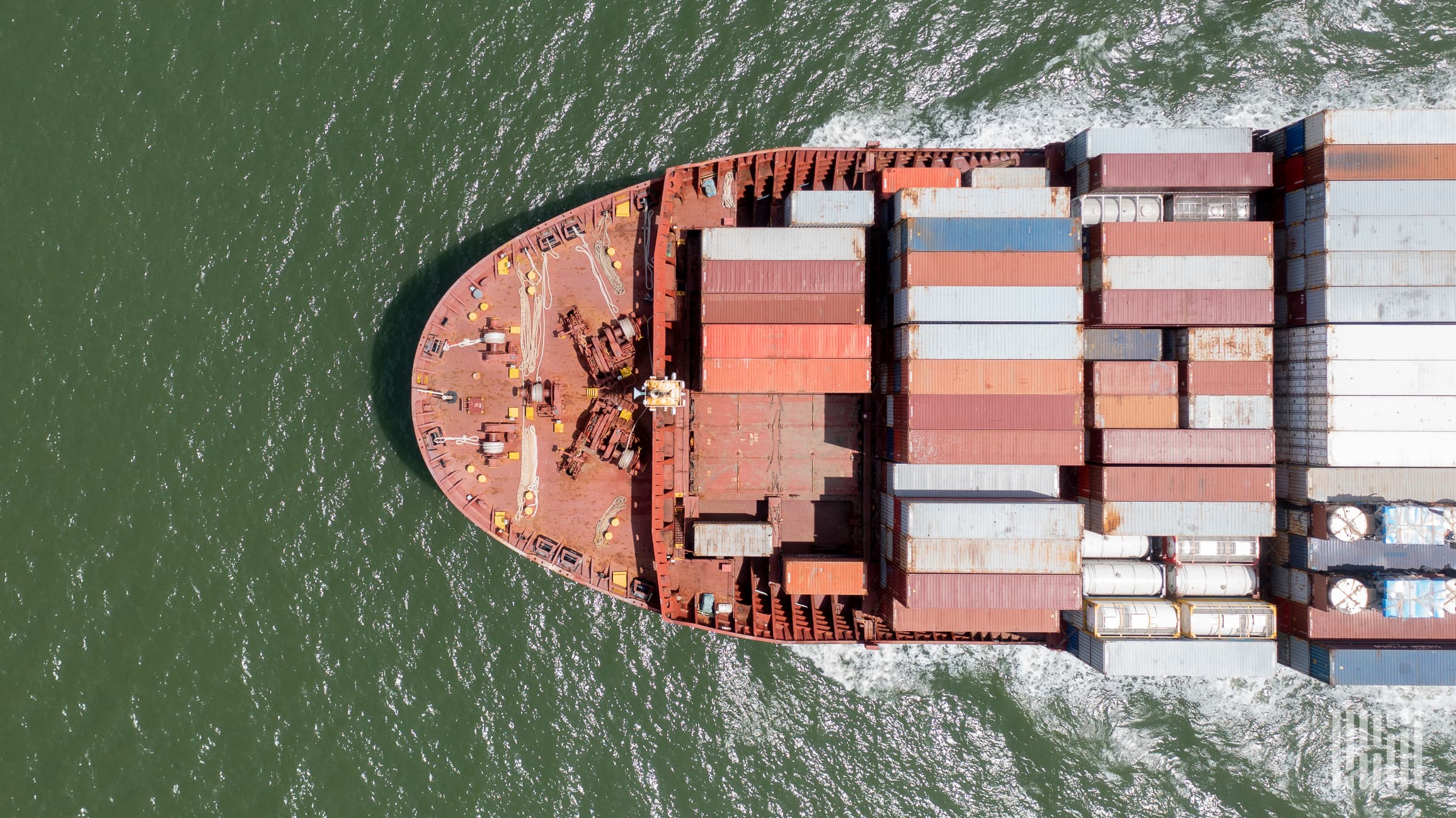
Ocean shipping rates continue their upward climb as peak-season demand, and not crude oil, are driving higher prices. The post Hormuz in the rearview as Asia-US ocean container rates soar past $7,900 appeared first on FreightWaves.
Source Lens
Industry Context
Useful background context, but lower-priority than direct platform, community, or operator intelligence.
Impact Level
medium
Use this briefing to decide whether your team needs an immediate workflow, policy, or reporting change.
Key Stat / Trigger
No single quantitative trigger surfaced in this report.
Focus on the operational implication, not just the headline.
Full Coverage
The container shipping market is being driven by geopolitics, rates, and network reshuffling, but freight-rate volatility and adjustments by carriers to protect schedules and pricing has supplanted Middle East disruptions as top-level concerns. Asia-U. S.
West Coast prices increased 8% to $6,175 per forty foot equivalent unit (FEU), according to Freightos, a data contributor to SONAR ocean market data. Prices for Asia-U. S. East Coast transportation also rose 8%, to $7,998 per FEU. SONAR‘s Ocean Supply/Demand Index reflects the surge in trans-Pacific demand, having recovered to year-ago levels.
Iran has escalated steps to assert sole authority over vessel traffic in the Strait of Hormuz, writes Freightos Research Head Judah Levine, in a note to clients, even as it negotiates with the United States over terms of a final peace deal. window. googletag = window. googletag || {cmd: []}; googletag. cmd. push(function() {googletag.
defineSlot('/21776187881/FW-Responsive-Main_Content-Slot1', [[300, 100], [320, 50], [728, 90], [468, 60]], 'div-gpt-ad-1709668545404-0'). defineSizeMapping(gptSizeMaps. banner1). addService(googletag. pubads()); googletag. pubads(). enableSingleRequest(); googletag. pubads(). collapseEmptyDivs(); googletag. enableServices(); }); googletag. cmd.
push(function() {googletag. display('div-gpt-ad-1709668545404-0'); }); “Oil volumes out of the Gulf states are rebounding, though marine traffic was paused … following Iranian strikes on transiting vessels and sites in Bahrain and Kuwait,” Levine said. The United Nations abandoned ship evacuations after Tehran attacked a Mediterranean Shipping Co.
vessel transiting a non-approved route. As crude oil flows from the Persian Gulf resume, surging peak season demand – and not oil prices – are driving elevated container rates.
“The early start to this year’s peak has sent rates spiking on the main east-west lanes since mid-May,” Levine said, “with carriers shifting capacity from secondary lanes to service this demand, contributing to rate increases on secondary trades too.”
Zim recently launched a new Asia–East Coast South America service, while Hapag-Lloyd updated service rotations. Broader growth across fleets and new vessel orders with shipyards continues, suggesting carriers are still trying to balance network expansion with an increasingly uneven demand amid geopolitical events. Since mid-May trans-Pacific prices to the U.
S. West Coast have climbed 120%, and by 85% to East Coast gateways. By comparison, Asia-North Europe rates are up 70% in that time, and 85% to the Mediterranean.
In a remarkable show of importer confidence in projected consumer spending, “[t]rans-Pacific East Coast rates are now $1,000/FEU higher than last year’s frontloading-driven summer high,” wrote Levine, “with West Coast prices just above their 2025 peak.
Europe and Mediterranean rates are $1,300- and $3,000/ per FEU above their 2025 peak season highs, respectively. window. googletag = window. googletag || {cmd: []}; googletag. cmd. push(function() {googletag. defineSlot('/21776187881/fw-responsive-main_content-slot3', [[728, 90], [468, 60], [320, 50], [300, 100]], 'div-gpt-ad-1665767553440-0').
defineSizeMapping(gptSizeMaps. banner1). addService(googletag. pubads()); googletag. pubads(). enableSingleRequest(); googletag. pubads(). collapseEmptyDivs(); googletag. enableServices(); }); googletag. cmd. push(function() {googletag.
display('div-gpt-ad-1665767553440-0'); }); The National Retail Federation said 32% of surveyed consumers had started their back-to-school shopping in June, up from 26% in 2025, an indicator for retail spending later in the year.
The surge is delaying traffic at major hubs in South Asia, the Far East and Europe, shrinking available capacity and contributing to upward pressure on rates, Levine said. The early rush is likely underpinned by an array of factors, from frontloading ahead of carrier fuel surcharges and manufacturer price increases, as well as approaching U. S.
tariff deadlines. “If enough shippers are indeed pulling peak season volumes forward, we could expect the early start to mean an early peak season unwind as well, possibly some time in July,” Levine said. Volume strength may stretch on a little longer than many shippers may have preferred due to delays at congested ports, he added.
“Carriers are set to introduce more rate increases to start July, so the degree of success carriers have with these price hikes should reflect where the market is in terms of this year’s peak-season peak.” window. googletag = window. googletag || {cmd: []}; googletag. cmd. push(function() {googletag.
defineSlot('/21776187881/fw-responsive-main_content-slot4', [[300, 100], [320, 50], [728, 90], [468, 60]], 'div-gpt-ad-1709668086344-0'). defineSizeMapping(gptSizeMaps. banner1). addService(googletag. pubads()); googletag. pubads(). enableSingleRequest(); googletag. pubads(). collapseEmptyDivs(); googletag. enableServices(); }); googletag. cmd.
push(function() {googletag. display('div-gpt-ad-1709668086344-0')
Original Source
This briefing is based on reporting from Freightwaves. Use the original post for full primary-source context.
Style
Audience