Lufthansa to buy cargo terminal operator in Germany
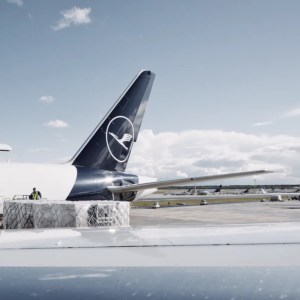
Lufthansa Cargo is acquiring LUG air cargo handling GmbH, adding ground capacity at Frankfurt, Munich, and Hamburg airports, while building a $682M cargo terminal at Frankfurt. Separately, it merged its e-commerce cross-border units into GlobeCross GmbH to create a faster, customs-integrated shipping platform.
This fits the broader pattern of legacy carriers vertically integrating into e-commerce logistics, directly competing with FedEx, DHL, and UPS on cross-border fulfillment — long-term margin pressure on incumbent express carriers could benefit high-volume marketplace sellers.
The GlobeCross consolidation is the more relevant move — it signals Lufthansa is directly competing for high-volume cross-border e-commerce freight, which could eventually pressure DHL and FedEx air freight pricing for sellers shipping from Asia or Europe. Watch your inbound freight quotes over Q3-Q4 2026 for rate shifts on transatlantic and Asia-Europe lanes.
Operational Impact
This story may require teams to revisit workflows, monitoring, or platform assumptions.
Bottom Line
Lufthansa's cargo expansion may soften air freight rates for cross-border sellers.
Source Lens
Industry Context
Useful background context, but lower-priority than direct platform, community, or operator intelligence.
Impact Level
low
Lufthansa's cargo expansion may soften air freight rates for cross-border sellers.
Key Stat / Trigger
$682 million cargo terminal under construction at Frankfurt hub
Focus on the operational implication, not just the headline.
Full Coverage
Lufthansa Cargo, the logistics subsidiary of Deutsche Lufthansa Group, has agreed to acquire airport service provider LUG air cargo handling GmbH, as it recognizes that efficient transfer operations are a way to reduce slowdowns on the ground for customers expecting fast freight service.
LUG provides cargo handling and distribution at Frankfurt, Munich and Hamburg airports in Germany. The purchase immediately gives Lufthansa Cargo (XETRA: LHA) more capacity to handle its own shipments, while diversifying its revenue stream with business from other airlines require ground handling services, the company said on Tuesday.
The transaction is subject to regular antitrust and regulatory reviews. LUG will continue to operate as independent company and customers will not experience any change in service. “In an increasingly volatile market environment, we want to become more flexible, more efficient and more resilient for our customers.
That is why we are making targeted investments in our infrastructure in our home market in Germany to set the course to provide an even better offering for our customers and achieve profitable growth,” said Frank Bauer, chief operating officer of Lufthansa Cargo, in a news release.
LUG, which is currently owned by the Dettmer Group, has about 400 employees and manages more than 538,000 square feet of warehouse space. Terms of the deal were not disclosed. Lufthansa Cargo is currently the No. 14 carrier in the world, by traffic volume, according to the International Air Transport Association.
It operates 12 Boeing 777 freighter aircraft and is able to market capacity on six 777s operated by AeroLogic, a joint venture between Lufthansa and DHL Express, for a total of 18 widebody freighters under its control.
It also manages the belly capacity of sister airlines Lufthansa Airlines, Austrian Airlines, Brussels Airlines, Discover Airlines and SunExpress to transport freight. The airline has sharpened its focus on high-margin industry sectors like pharmaceuticals, semiconductors, automotive, and artificial intelligence.
Part of the premium strategy includes modernizing cargo infrastructure on the ground. In addition to the LUG acquisition, the company is building a $682 million, 3.
5 million square-foot cargo terminal with high bays for efficient pallet storage and automated transport system that will significantly expand cargo handling capacity and efficiency at its Frankfurt hub. Lufthansa Cargo’s vertical integration extends to cross-border logistics.
The company earlier this year merged heyworld, which focuses on providing expedited cross-border shipping for e-commerce shipments and CB Customs Broker, into a new company called GlobeCross GmbH.
Lufthansa Cargo said the combination creates an integrated platform for e-commerce customers with faster, more predictable and fully compliant service in an increasingly complex trade environment.
Customers benefit from a more integrated setup that provides a single interface, shorter decision trees, reduced delays at borders and faster implementation of customized solutions, the carrier said. Click here for more FreightWaves/American Shipper stories by Eric Kulisch. Write to Eric Kulisch at ekulisch@freightwaves. com.
RELATED STORIES: Is Lufthansa giving up on its Airbus A321 cargo fleet? AI hardware, Asia demand lift Lufthansa cargo revenue 27% The post Lufthansa to buy cargo terminal operator in Germany appeared first on FreightWaves.
Check your freight forwarder contracts now — if rates are locked, hold them; Lufthansa's capacity expansion could soften spot air freight rates on EU-US lanes by late 2026.
In the next 30 days, ask your 3PL or freight broker whether GlobeCross or competing e-commerce air freight platforms offer duty-inclusive cross-border options that could cut customs delays on EU-origin inventory.
Original Source
This briefing is based on reporting from Freightwaves. Use the original post for full primary-source context.
Style
Audience