Hapag-Lloyd revises Zim offer as Israeli approval concerns persist
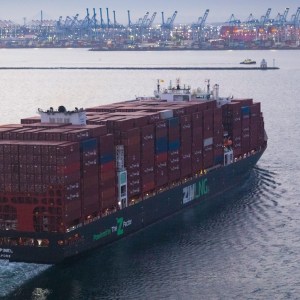
Hapag-Lloyd and partner FIMI submit revised terms for their $4.2 billion acquisition of Zim The post Hapag-Lloyd revises Zim offer as Israeli approval concerns persist appeared first on FreightWaves.
Source Lens
Industry Context
Useful background context, but lower-priority than direct platform, community, or operator intelligence.
Impact Level
medium
Use this briefing to decide whether your team needs an immediate workflow, policy, or reporting change.
Key Stat / Trigger
No single quantitative trigger surfaced in this report.
Focus on the operational implication, not just the headline.
Full Coverage
Hapag-Lloyd and Israeli private-equity firm FIMI submitted revised terms for their planned $4. 2 billion acquisition of Zim Integrated Shipping Services, seeking to resolve Israeli government concerns over maritime security, strategic assets and the country’s access to international shipping routes.
Hapag-Lloyd Chief Executive Rolf Habben Jansen visited Israel this week ahead of the submission of a new proposal Sept. 24. The revised terms are intended to address objections raised by several government bodies reviewing the transaction, including agencies with responsibility for defense, state-owned companies, ports and shipping.
Deal structure under review The original agreement, announced in February, calls for Hapag-Lloyd to acquire Zim (NYSE: ZIM) for $35 per share in cash, valuing the company at approximately $4. 2 billion. The price represented a 58% premium to Zim’s Feb. 13 share price, according to the carrier.
Zim shareholders have approved the takeover, but the deal remains subject to Israeli governmental and regulatory clearances. The proposed transaction separates certain Israeli strategic shipping assets from Zim’s international business.
Under the structure outlined earlier this year, Hapag-Lloyd would take control of Zim’s international operations, while FIMI would establish and control a separate Israeli company, Zim Israel or New Zim, that would hold assets subject to Israel’s “golden share” protections.
Those protections are designed to preserve Israel’s ability to ensure maritime service during emergencies and maintain control over designated strategic shipping capabilities.
Security, route-access safeguards Hapag-Lloyd said earlier this month that it was working with Israeli ministries to revise structural aspects of the acquisition and develop a proposal that would “further strengthen Israel’s maritime security and independence.”
The German carrier said the revised structure would secure Israeli access to key shipping routes, including connections from Asia. Reported changes include tighter limits on foreign ownership of the Israeli successor company.
The threshold at which a foreign investor would trigger government scrutiny or golden-share protections could be cut to 10% from 24%, according to reports. FIMI also has reportedly committed to list any shares in the Israeli company only on Israel’s domestic exchange.
The revised proposal is also expected to reinforce the operating role of the Israeli entity. Earlier reporting said the company would receive 16 vessels — more than the 11 vessels required under existing golden-share provisions — and would be debt-free.
The ships would be available to the government, while the company would retain a role in maintaining Israel’s maritime links during disruptions. Why the revisions matter For the U. S. market, the deal would primarily mean a larger, more integrated Hapag-Lloyd presence in the trans-Pacific and U. S.
import supply chain, rather than an immediate change in service or pricing. Until closing, targeted for late 2026, Hapag-Lloyd and Zim must continue operating independently, and the transaction remains subject to regulatory approvals. Competitive impact Zim is an important carrier in Asia–North America trades, with particular relevance to the U. S.
West Coast, the U. S. East Coast and the Pacific Northwest/Canadian gateways serving the U. S. Midwest. Its own SEC filing highlights services via Vancouver and Prince Rupert that provide access to the Canadian and U. S. Midwest markets. For Hapag-Lloyd, securing approval would add Zim’s network and commercial base to its existing global liner operations.
The companies said in February that the combined organization would operate more than 400 vessels, have capacity exceeding 3 million TEUs and carry more than 18 million TEUs annually. But that wouldn’t change Hapag-Lloyd’s seventh-place ranking among global container carriers. Read more articles by Stuart Chirls here.
Read more: But no pandemic high: Asia-US container rate at $9,600 New data shows Suez route transits rose 27% in August Hurricane Polo disrupts Mexican Pacific ports with high winds, heavy rain New report: Just a third of container shipping on-time New $100M inland rail terminal will handle 60,000 TEUs a year The post Hapag-Lloyd revises Zim offer as Israeli approval concerns persist appeared first on FreightWaves.
Original Source
This briefing is based on reporting from Freightwaves. Use the original post for full primary-source context.
Style
Audience