

Intrastate delivery worker can be ruled interstate in dispute: SCOTUS
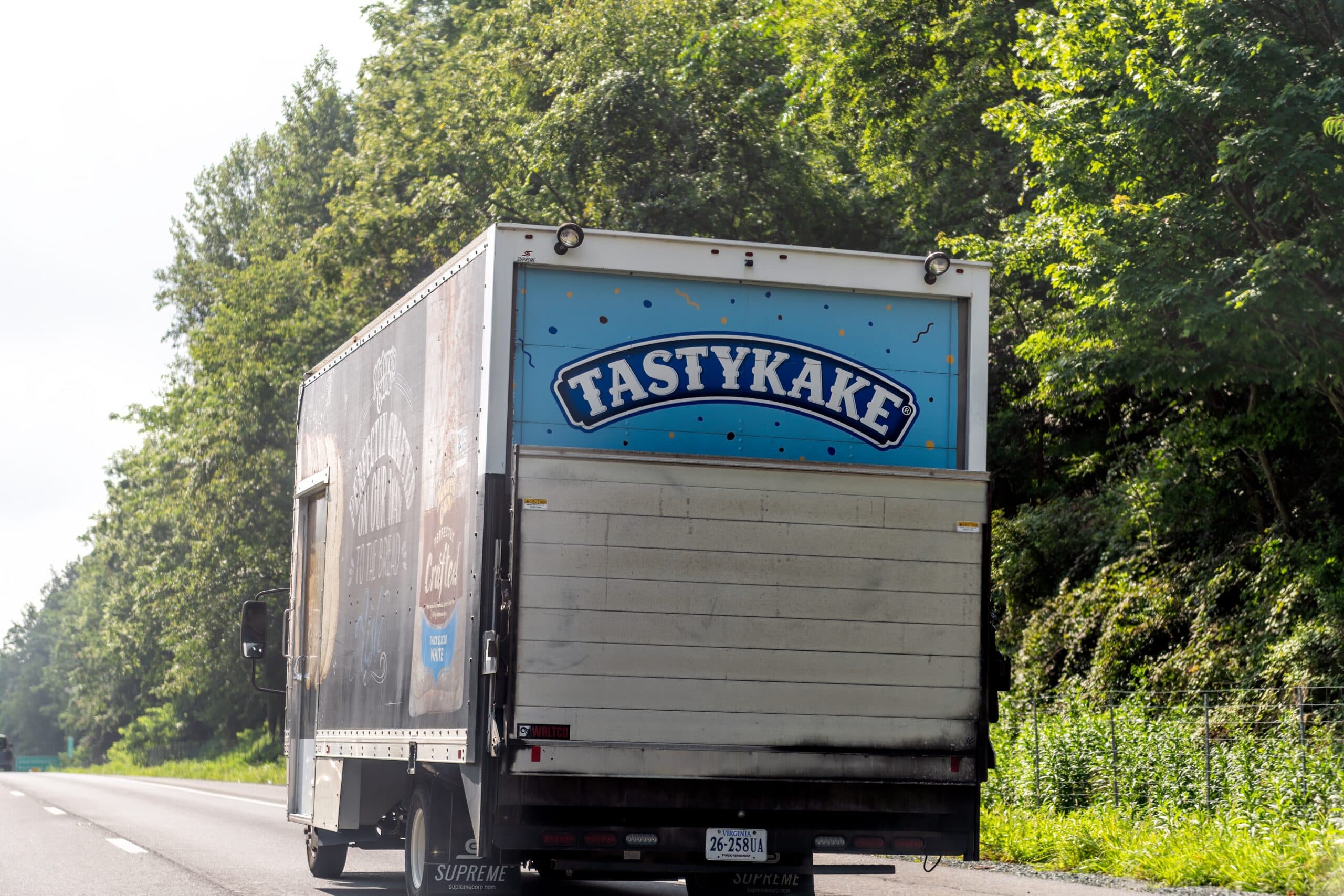
The Supreme Court widened the definition of interstate worker to include some that never cross state lines, The post Intrastate delivery worker can be ruled interstate in dispute: SCOTUS appeared first on FreightWaves.
Source Lens
Industry Context
Useful background context, but lower-priority than direct platform, community, or operator intelligence.
Impact Level
medium
Use this briefing to decide whether your team needs an immediate workflow, policy, or reporting change.
Key Stat / Trigger
No single quantitative trigger surfaced in this report.
Focus on the operational implication, not just the headline.
Full Coverage
A unanimous Supreme Court held Thursday that a transportation worker involved in the last-mile delivery of a product but who never crosses state lines can be considered an interstate worker. The most immediate impact in the case of Brock vs.
Flowers Foods is that an intrastate worker at the tail end of an interstate transportation process can sue over a dispute with an employer rather than being forced into arbitration under the Federal Arbitration Act (FAA).
In the case before the Supreme Court, Angelo Brock held a franchise to deliver products made by Flowers Foods (NYSE: FLO), which include well-known baked goods, three of which were highlighted by name in the opinion written by Justice Neil Gorsuch: Butterscotch Krimpets, Jumbo Honey Buns and Wonder Bread. Brock’s franchised area was in the Denver area.
He did not need to cross state lines to either pick up or deliver baked products. Arbitrate or litigate?
A 2022 suit by Brock against Flowers Foods over pay issues ultimately led to the Supreme Court taking up a question: can an intrastate worker that is part of an interstate supply chain still be considered interstate for the purposes of being able to sue over a dispute under an exception in the Federal Arbitration Act?
Or are they intrastate and must take that dispute to arbitration? (Brock had signed an agreement to arbitrate as part of his franchise contract with Flowers Foods). Brock’s argument that he was interstate despite his activities being entirely within Colorado was upheld both at the district court level and by the Tenth Circuit.
Without dissent, the Supreme Court said the fact that Brock’s company never sent workers across state lines did not negate his role as the final piece of an interstate process. “The Federal Arbitration Act requires courts to enforce many private arbitration agreements,” Justice Gorsuch wrote in the opening paragraph of his opinion. “But not all.”
Employers prefer arbitration for several reasons. One of the largest: a grievance brought by an individual employee can not grow into a potentially expensive class action lawsuit.
Justice Gorsuch cited the opening section of the FAA that says the act can not be used to compel arbitration in disputes that involve the “contracts of employment” of workers “engaged in interstate commerce.” “This case is the latest in a line posing questions about the scope of that exemption,” Gorsuch wrote.
“Flowers’ sole theory is that, to be engaged in interstate commerce for purposes of (the FAA), a worker must either cross state lines or interact with a vehicle that does, say, by loading or unloading the goods it carries,” Justice Gorsuch wrote.
He added that the first question–whether a fully intrastate worker can be considered interstate–already had been decided in a precedent, Southwest Airlines vs. Saxon. “Nor, we now add, does (the FAA) turn on a game of tag with vehicles that do,” Justice Gorsuch wrote.
“At least sometimes, a worker who transports goods on an intrastate leg of an interstate journey can qualify for (the FAA’s interstate) exemption without satisfying either of those criteria.” Southwest vs. Saxon shows that the interstate vs. intrastate question is not limited to delivery of goods.
In that case, the issue was over a tarmac worker for the airline. So what if this happened… Justice Gorsuch laid out a hypothetical situation. Customer A makes a deal to buy Butterscotch Krimpets from Company B in State B. “Company B makes the Krimpets in state B, but the contract requires Company B to deliver them to Customer A’s headquarters in state A.
So Company B hires a driver to take the Krimpets from the bakery in state B to the headquarters in State A. All agree that the driver in a case like that is engaged in interstate commerce.” But Justice Gorsuch then took another twist on the supply chain. What if there were three drivers?
And the added one gets the Krimpets from the first driver, goes 10 feet across the state border, “puts the Krimpets down and heads off.” The third driver then takes the snacks and brings them to the headquarters of company A. “Who was engaged in interstate commerce?” Justice Gorsuch asks.
“On Flowers’s account, only Driver 2 would be—neither Driver 1 nor Driver 3 crossed state lines or touched a vehicle that had. But that cannot be right. Each of the drivers played a direct, active, and necessary part in ensuring the Krimpets got from a point in State B (the bakery) to a point in State A (the headquarters) as the contract required.”
Justice Gorsuch, citing a precedent that goes back more than 150 years, said his example “is hardly a hypothetical at all.” In that precedent, known as Daniel Ball, waterborne ships did something like the justice’s example. And all the players in the supply chain were considered to be engaged in interstate commerce under the court’s decision.
Flowers Foods is 0-2 in recent years It was the second time in the last three Supreme Court terms that Flowers Foods lost before the Supre
Original Source
This briefing is based on reporting from Freightwaves. Use the original post for full primary-source context.
Style
Audience