

US blocks quick USMCA extension, putting annual review process into motion
The U.S., Mexico and Canada will continue negotiating about potential adjustments to the trilateral free trade agreement, which will remain in place until at least 2036.
Source Lens
Industry Context
Useful background context, but lower-priority than direct platform, community, or operator intelligence.
Impact Level
medium
Use this briefing to decide whether your team needs an immediate workflow, policy, or reporting change.
Key Stat / Trigger
No single quantitative trigger surfaced in this report.
Focus on the operational implication, not just the headline.
Full Coverage
An article from US blocks quick USMCA extension, putting annual review process into motion The U. S. , Mexico and Canada will continue negotiating about potential adjustments to the trilateral free trade agreement, which will remain in place until at least 2036.
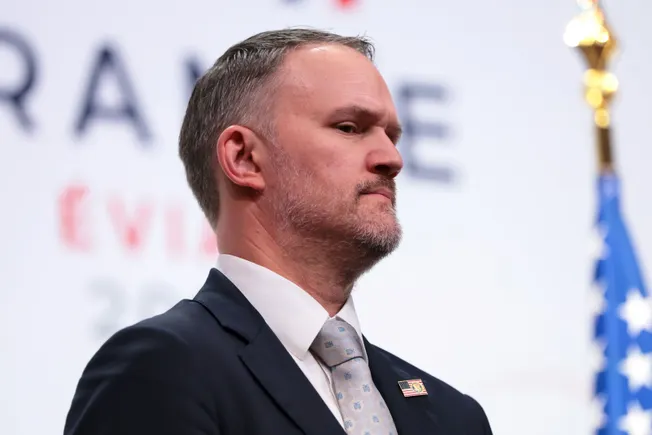
Published July 1, 2026 Phil Neuffer Lead Editor Share Copy link Email / Print License Add us on Google U. S. Trade Representative Jamieson Greer stands during a press conference at the G7 Leaders' Summit on June 17, 2026, in Evian-les-Bains, France.
Greer met virtually on Wednesday with Mexico’s Secretary of Economy Marcelo Ebrard and Dominic LeBlanc, Canada’s minister for trade with the U. S. , to discuss the future of the United States-Mexico-Canada Agreement. Anna Moneymaker via Getty Images Listen to the article 5 min This audio is auto-generated. Please let us know if you have feedback.
The United States, Mexico and Canada will not immediately extend the countries' trilateral free trade agreement for another 16 years, as they continue to iron out potential changes to the pact.
Leaders from all three countries met virtually Wednesday to kick off the joint review process for the United States-Mexico-Canada Agreement, a process that was required by the pact. During the meeting, the U. S.
Trade Representative Jamieson Greer informed his counterparts, Mexico Secretary of Commerce Marcelo Ebrard and Dominic LeBlanc, Canada’s minister of U. S. trade, that the U. S. would not extend the deal for another 16 years at this time, Ebrard said in Spanish in a video posted on X. Greer issued a similar statement after the meeting, noting the U. S.
declined to renew the agreement as is, but that it will remain in place until at least 2036 pending further negotiations. In a separate statement, LeBlanc emphasized Canada had advocated to renew the deal and that it remains fully in force and could be extended in the future.
Because the three countries did not unanimously agree to renew the agreement as currently constructed, they will now conduct negotiations over the coming year until the next review deadline on July 1, 2027. The countries will then reconvene again to determine if the deal should be renewed or if another year's worth of negotiations are required.
The deal can be renewed at any time during the process, which will be repeated annually until the three countries come to an accord or the deal expires in 2036. If an agreement is reached, the expiration date would be set for 16 years from that date, with another joint review to take place in six years.
So, for example, if the three countries agree to renew the deal next July, the expiration date would move to 2043 and the next joint review would take place in 2033. “This is when the real work begins, right?
So, with this announcement, what this means is that the countries will enter into more substantive discussions about what to do with the USMCA and whether or not there has to be changes,” James Kim, an international trade attorney at ArentFox Schiff, told Supply Chain Dive.
During the rolling annual review process, the countries will work to address a long list of issues with the deal, Mexico’s Secretary of Economy Marcelo Ebrard said on X Wednesday, with some agreements potentially made in the interim, although on no specific timeline.
"We’re in no rush, but we also don’t want any uncertainties, which is why we need to try to reach an agreement on many issues we’ve been working on for many months, Ebrard said. The three trading partners have previously held preliminary bilateral talks ahead of Wednesday’s deadline. The U. S.
and Mexico will hold another round of discussions on July 20, Greer and Ebrard confirmed Wednesday. It is unclear when discussions will be held with Canada by either country.
“We agreed on the importance of continuing our discussions and identifying ways to ensure trade and investment frameworks between Canada, the United States and Mexico continue to support North American prosperity and competitiveness,” Dominic LeBlanc, Canada’s minister for trade with the U. S. , said in a statement Wednesday.
“For Canada, this includes substantive discussions with the United States on addressing sectoral tariffs on Canadian steel, aluminum, autos and lumber.” The outcome of Wednesday’s discussions is not surprising, particularly from the U. S. perspective. U. S.
President Donald Trump has frequently expressed his desire to exit the deal, telling reporters in mid June “I would rather leave it unsigned. I'd rather have it terminated.” Despite Trump’s threats to leave the pact, there was no indication Wednesday that any of the three countries planned to exit, according to Ebrard. Meanwhile, U. S.
Trade Representative Jamieson Greer told Congress in December that the U. S. would not rubber stamp the deal but push for key changes related to rules of origin, offshoring, tariffs, export controls and critical mineral production, among several other priorities. Mexico and Canada,
Original Source
This briefing is based on reporting from Supply Chain Dive. Use the original post for full primary-source context.
Style
Audience