

Luxury ecommerce growth slows to 1.8% as industry enters structural shift
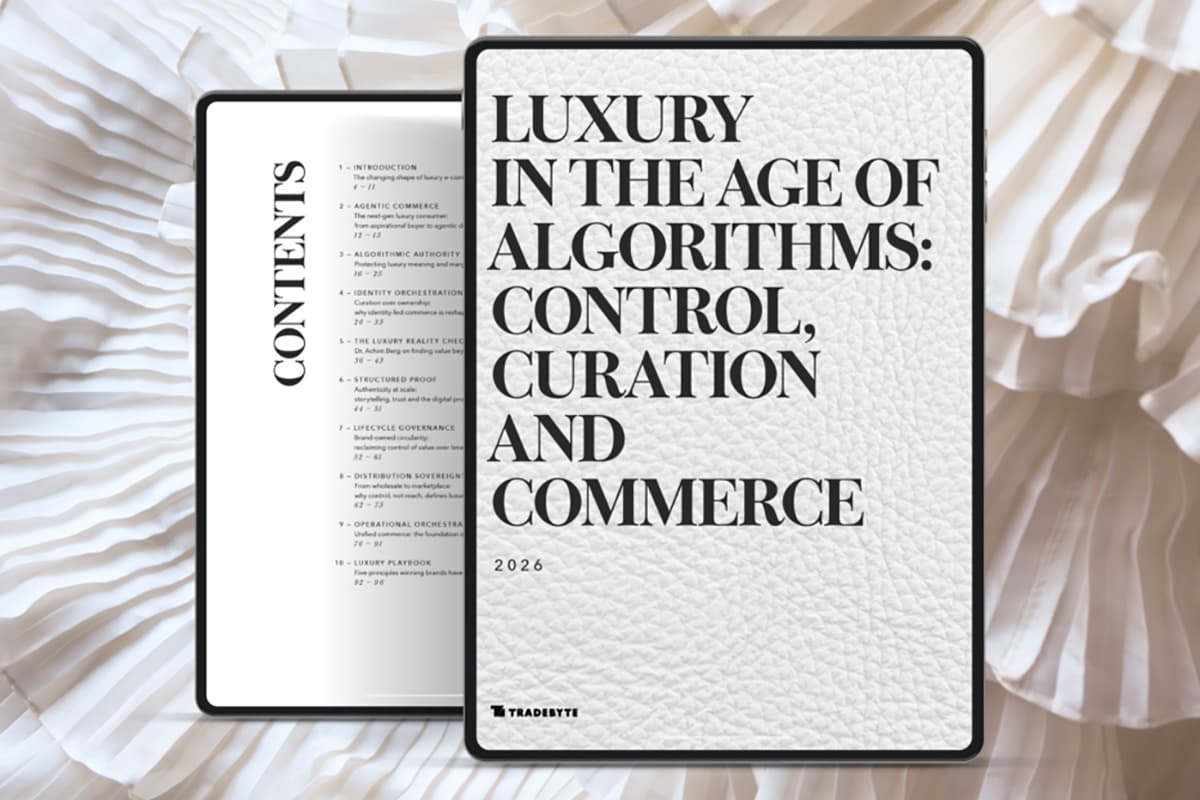
Luxury and premium e-commerce growth slowed to 1.8% in 2025 across Tradebyte's European ecosystem, ending the post-pandemic surge. Brands are abandoning wholesale-first strategies and moving to marketplace-led distribution to control pricing and product data as AI surfaces price inconsistencies instantly.
The real risk here isn't slow growth — it's that AI-powered comparison tools will punish brands with inconsistent pricing across channels, directly eroding brand equity and margin. Marketplace sellers managing luxury or premium brands should audit cross-channel price parity now before algorithm-driven discovery does it for them.
This is a leading indicator of margin compression for premium and aspirational brands on major marketplaces — as AI-driven discovery commoditizes search and comparison, brand moat shrinks without strict operational control over pricing and data.
Check your brand's pricing across Amazon, Walmart, and any wholesale channels — if MAP violations exist, AI discovery surfaces them to shoppers first, accelerating race-to-bottom dynamics before you can react.
Within 30 days, implement a unified product data and pricing feed (via tools like Feedonomics or Linnworks) to ensure consistent titles, images, and prices across every active marketplace channel.
Bottom Line
AI price transparency means inconsistent pricing now visibly destroys luxury brand value.
Source Lens
Industry Context
Useful background context, but lower-priority than direct platform, community, or operator intelligence.
Impact Level
medium
AI price transparency means inconsistent pricing now visibly destroys luxury brand value.
Key Stat / Trigger
Luxury e-commerce growth slowed to 1.8% in 2025
Focus on the operational implication, not just the headline.
Full Coverage
Tradebyte, Europe’s leading integrator for fashion and lifestyle brands, today launched its latest report, “Luxury in the Age of Algorithms: Control, Curation and Commerce in 2026”.
The report finds luxury digital commerce entering a new, more complex phase in which growth is increasingly shaped by control, curation and operational discipline rather than reach alone.
As a result, many brands are shifting away from traditional wholesale distribution toward marketplace-led commerce to maintain pricing authority and brand control in an increasingly AI-driven retail landscape. Across the Tradebyte ecosystem, luxury and premium e-commerce growth slowed to 1.
8% in 2025, signalling the end of the sector’s recent surge years and a transition to more disciplined growth. Rather than declining demand, the report identifies this as a normalisation phase, driven by a structural shift in how luxury products are discovered, evaluated and purchased online.
Accessibility, digital maturity and perceived value are driving performance further down the price spectrum, blurring traditional category boundaries. Tradebyte’s data also highlights a rebalancing of European luxury demand.
Germany continues to dominate EU luxury e-commerce GMV with 48% share, while smaller markets such as Greece (+78%), Portugal (+58%) and Romania (+42%) recorded the fastest growth across the ecosystem in 2025. The UK experienced a sharp decline in GMV in 2025.
Four forces reshaping luxury commerce According to the report, four structural pressures are redefining luxury e-commerce: AI-driven discovery, compressing comparison and purchase decisions Curated ecosystems replacing brand-led navigation, weakening traditional loyalty Radical price transparency as platforms surface and compare prices instantly Growing operational complexity as brands expand across regions, platforms and partners As AI assistants increasingly default to recommending the lowest available price, pricing consistency has become inseparable from brand value.
In this environment, brands that are absent from marketplaces risk losing influence over how their products are surfaced, compared and justified. During the frenzy, brands were dreaming the dream of reaching full direct-to-consumer. This meant eliminating wholesale and avoiding platforms.
The idea was: full customer control, channel control and pricing control. But now, in a world of declining sales, managers are more pragmatic. We see few brands pulling out of platforms these days. They cannot afford to. They want to reach broader customer groups. – Dr.
Achim Berg, Founder & Managing Director, FashionSIGHTS Brands shift from wholesale to marketplaces The report explores how many luxury brands are reassessing traditional wholesale distribution as AI-driven commerce increases price transparency across digital channels.
Retailer-controlled pricing, fragmented product data, and inconsistent brand presentation can now be surfaced instantly by algorithms that compare products across platforms. As a result, more brands are adopting marketplace and hybrid distribution strategies to retain greater control over pricing, product data and brand presentation.
However, the report warns that executing a marketplace-led strategy introduces new operational complexity. Pricing consistency, inventory exposure and fulfilment performance must be coordinated across multiple platforms simultaneously. Without unified systems, brands risk fragmented product data, inconsistent pricing signals and margin leakage.
This makes unified commerce infrastructure critical, enabling brands to manage complexity and coordinate pricing, inventory and product data across marketplaces while maintaining consistent brand presentation.
Original Source
This briefing is based on reporting from Tamebay. Use the original post for full primary-source context.
Style
Audience