Covenant’s earnings drop stock, company focused long-term
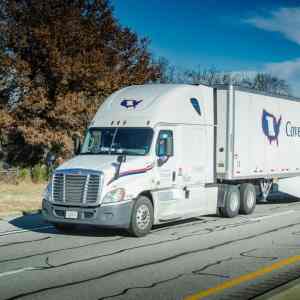
Covenant stock tumbled after its earnings report, but management is defending its strategy. The post Covenant’s earnings drop stock, company focused long-term appeared first on FreightWaves.
Source Lens
Industry Context
Useful background context, but lower-priority than direct platform, community, or operator intelligence.
Impact Level
medium
Use this briefing to decide whether your team needs an immediate workflow, policy, or reporting change.
Key Stat / Trigger
No single quantitative trigger surfaced in this report.
Focus on the operational implication, not just the headline.
Full Coverage
Covenant Logistics stock plunged Thursday on an earnings report that had little in it that reflected the strengthening truckload market. It was clear from the opening remarks on the company’s conference call with analysts that CFO James Grant was directing his comments at countering the weak numbers in the financial report.
His core message was that Covenant (NYSE: CVLG) is not set up to take advantage of sudden surges in freight rates like those that have marked the first half of 2026, and that is a good thing.
Instead, according to Grant, Covenant has undergone structural changes designed to make it more resilient in good times and bad, and is built to benefit from a longer structural strengthening of the truck market. Grant said ten years ago, Covenant was “almost entirely an irregular route carrier without multiple-year committed customer contracts.
That meant our financial results were significantly linked to the ups and downs of the volatile freight cycle, making it difficult for investors to understand the long-term value proposition of our business.” But Covenant pivoted from that to a “strategy to deeply embed ourselves in our customer supply chains.”
“We began moving away from a highly volatile, commoditized business, (and) intentionally invested in more specialized value-added businesses, such as dedicated and warehousing, which require multiyear committed relationships,” Grant said.
It showed during tough times The success of that strategy, Grant said, could best be seen during the depths of the freight recession. “When the market bottomed, our margins held up much better than our peer group average and our own historical results,” Grant said.
The fact that Covenant has not soared during the surge in the current freight market is not deterring the company from sticking with that strategy, Grant said. Instead, Covenant will chase three “execution priorities,” he said. ”Transitioning expiring contracts into new long-term commitments.” ”Moving more of our uncommitted capacity into committed revenue.”
Having its 3PL arm, Managed Freight, “return to normal levels as contract rates catch up to capacity costs.” “We expect steady improvements, not a hockey stick” is how Grant described the longer-term goal. Covenant stock Thursday was down 11. 2% to $36. 85, a decline of $4. 65.
For the month, the company’s stock after Thursday’s performance was down about 16. 6%, though for the 52 weeks it is up 51. 2%. Since a 52-week high of $49. 88 on July 21, Covenant stock’s Thursday close totaled a drop of 26. 1%. Covenant stock Friday was unchanged to slightly lower mid-morning.
The reasons why the company’s earnings might spur a decline were not hard to find. On a 6. 16% increase in freight revenue, adjusted earnings per share were down to 42 cents from 45 cents a year earlier. Combined truckload operations recorded a 3. 36% decline in revenue and a small deterioration in operating ratio (OR), to 94. 8% from 94. 5% a year earlier.
The source of the decline was primarily from its Expedited division. Freight revenue there excluding fuel was down about 12. 9% and the adjusted OR was down 70 basis points, coming in at 94. 6%. Expedited a laggard Grant addressed the lagging performance of the Expedited division.
That segment, according to the company’s 10-K published earlier this year, “primarily provides truckload services to customers with high service freight and delivery standards, such as 1,000 miles in 22 hours, or 15-minute delivery windows. Expedited services generally require two-person driver teams on equipment either owned or leased by Covenant.”
“The segment’s profitability improved sequentially from the first quarter by 450 basis points, but still fell short of our expectations for the quarter,” Grant said on the conference call in discussing Expedited. “Over the past 12 months, this segment has undertaken a considerable amount of transition.
While the fleet was reduced by 17%, freight revenue per average tractor has improved by 6. 8%. Our focus on growing our customer base with high-value cargo through multiyear committed capacity agreements has resulted in improved freight revenue per total mile but has been partially offset by a reduction in miles per average tractor for the period.”
Tough quarter for insurance costs Insurance was a significant part of the discussion on the conference call. Paul Bunn, the company’s president, said the OR performance for both the Dedicated and Expedited segments had 1. 5 to 2 points of a negative impact from insurance costs, relative to what he said was the “run rate” for the prior 24 months.
Insurance and claims were $18. 1 million in the second quarter, up from $17. 3 million a year earlier. In the first quarter, that expense was $12. 6 million. “We had a number of mediations pop up in the second quarter,” Bunn said.
“As you know, in this litigious environment, if you can get a mediation and get it settled and off the books, that’s what you do.” Bunn added that the number of mediatio
Original Source
This briefing is based on reporting from Freightwaves. Use the original post for full primary-source context.
Style
Audience