

What 21,000 foreign trucks on American highways looks like
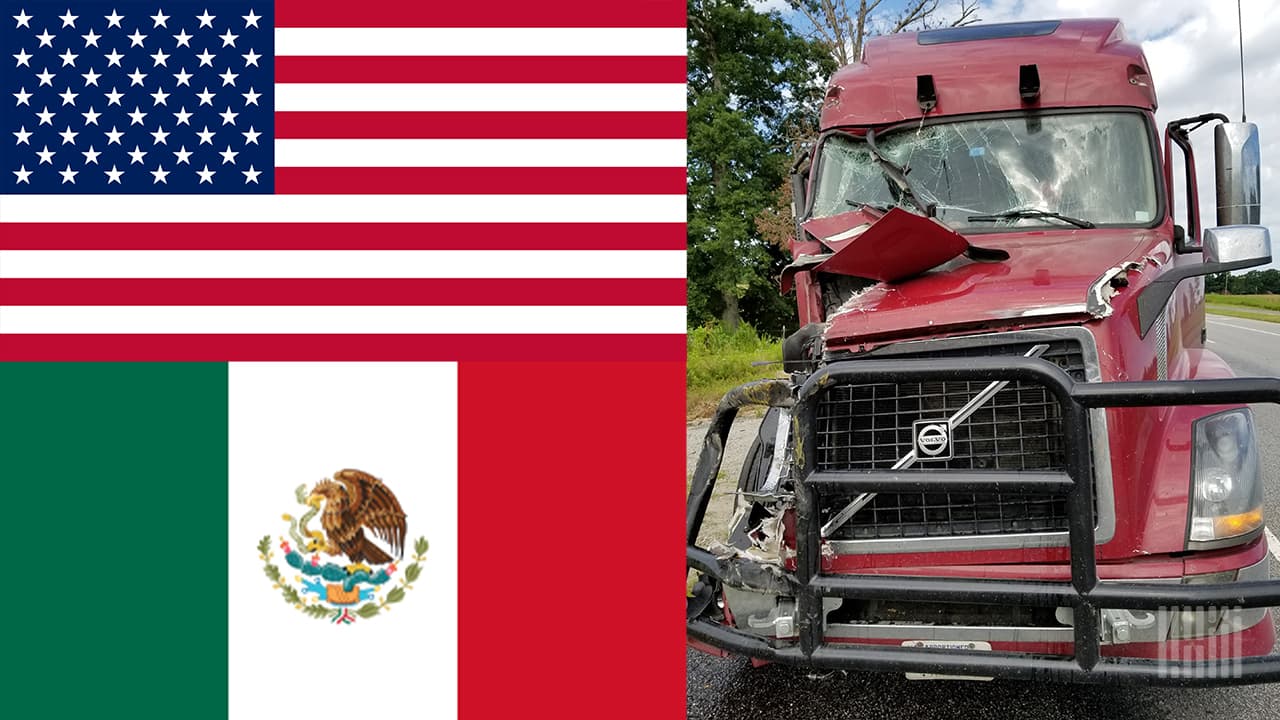
Mexican trucking carriers show 3.26 violations per inspection versus 1.04 for Canadian carriers, with Tamaulipas region carriers scoring nearly double safety baselines. American truckers face wage competition from drivers paid 35 cents per mile versus 78 cents domestically.
Cross-border shipping delays and higher freight costs are likely as enforcement tightens on underperforming carriers. Sellers using Mexican fulfillment or cross-border logistics should audit carrier partners and build buffer time into inventory planning.
Supply chain costs will continue rising as regulatory pressure mounts on low-cost international carriers, forcing sellers to balance cheaper cross-border fulfillment against reliability risks.
Review your 3PL's carrier network - if using Mexican trucking, verify safety scores and have backup options ready for potential service disruptions.
Build 2-3 extra days into cross-border inventory lead times to account for increased inspections and potential carrier shutdowns.
Bottom Line
Cross-border trucking quality issues mean higher shipping costs and delays.
Source Lens
Industry Context
Useful background context, but lower-priority than direct platform, community, or operator intelligence.
Impact Level
medium
Cross-border trucking quality issues mean higher shipping costs and delays.
Key Stat / Trigger
3.26 violations per inspection for Mexican carriers versus 1.04 for Canadian carriers
Focus on the operational implication, not just the headline.
Full Coverage
There are 21,748 Canadian and Mexican-domiciled motor carriers registered with FMCSA to operate in the United States. Most of them are legitimate freight operators moving international cargo across borders that the American economy depends on. The Laredo Gateway handles more than $300 billion in annual trade.
The supply chain connecting American manufacturing to Mexican maquiladoras and Canadian industrial corridors does not function without cross-border trucking. That reality is the baseline.
It is also the reason the safety and enforcement data embedded in that population rarely receive the close look they deserve, because the economic dependency creates political pressure not to look too closely at what the numbers say.
The numbers on cross-border carrier intelligence say something that the political framing around this issue consistently obscures. The Mexican-domiciled carrier population, specifically the carriers domiciled in Tamaulipas, performs at a level that would not be tolerated in the domestic carrier population.
And the financial consequences of tolerating it in the cross-border population are landing directly on American carriers, owner-operators, and drivers who compete against that labor market every day. Start with the inspection data because it is the most straightforward measure.
In the last 365 days, Mexican-domiciled carriers conducted 121,199 roadside inspections, resulting in 395,026 total violations. That is 3. 26 violations per inspection. Over the same period, Canadian carriers conducted 51,703 inspections and issued 53,964 violations, for an average of 1. 04 violations per inspection.
The US domestic carrier baseline runs significantly below two per inspection. Mexican-domiciled carriers are running at more than three times the Canadian rate. That gap does not exist because of aggressive targeting. Enforcement personnel do not selectively target Mexican carriers with extra scrutiny at the roadside.
The violations-per-inspection rate is what it is because of the actual condition of the equipment and the drivers being inspected. Breaking it down further, of the 395,026 violations from Mexican carriers in the last year, 208,826 were vehicle violations and 36,383 produced vehicle out-of-service orders.
Roughly one in six vehicle violations resulted in a truck being put out of service on the spot. Driver violations totaled 25,996, with 3,183 driver out-of-service orders. Hazmat violations totaled 1,853.
Compare that to Canadian carriers, who generated 15,449 vehicle violations and 5,897 vehicle out-of-service orders from fewer total inspections, with 10,226 driver violations and 1,215 driver out-of-service orders.
Now look at where Mexican carrier risk is actually concentrated, because this is where the conventional narrative about border-crossing areas gets complicated. The common assumption is that El Paso and Tijuana are the locus of cross-border trucking risk. That assumption is wrong according to the data.
Tamaulipas-domiciled carriers, the corridor running from Nuevo Laredo through Reynosa to Matamoros along the Gulf Coast of Texas, represent 2,377 of the 5,901 Mexican carriers registered with FMCSA. For context, the second-highest Mexican state in the dataset is Sonora at 60. 8, followed by Chihuahua at 52. 6.
The highest-scoring Canadian province in the dataset is Alberta, with a score of 37. 2. The Tamaulipas average is nearly double Alberta’s and nearly double the US domestic baseline, which sits around 33 on the same model. That is a structural difference and it has a geographic explanation that the data supports and that independent research confirms.
States like Veracruz, Puebla, Nuevo Leon, Jalisco, and Tamaulipas together accumulated over 700 million Mexican pesos in damages linked specifically to heavy truck crashes in 2024.
In states with heavy freight intensity like Chihuahua, Coahuila, and Tamaulipas, the share of human-factor-related crashes, including distraction, fatigue, improper overtaking, and loss of control, rises above 85 percent, and in some corridors above 90 percent. Tamaulipas is also cartel territory.
The Gulf Cartel and Cartel del Noreste have contested control of the Nuevo Laredo and Reynosa corridors for years.
Members of an organized crime group set at least four trucks on fire in Reynosa in 2022 to pressure truckers to end a blockade of the Pharr international bridge, a demonstration of the degree to which organized crime directly influences commercial trucking operations in the state.
The carriers domiciled in that environment, operating under those conditions, bring that operating environment with them when they cross into Texas. The legal framework governing what these carriers are permitted to do on American roads is clear and has been since NAFTA.
Cabotage refers to the transportation of property or passengers from point to point within a single country. Drivers may be admitted to deliver or pick up cargo traveling in the stream of international co
Original Source
This briefing is based on reporting from Freightwaves. Use the original post for full primary-source context.
Style
Audience