Export ban talk sinks diesel, boosts gasoline as White House eyes options
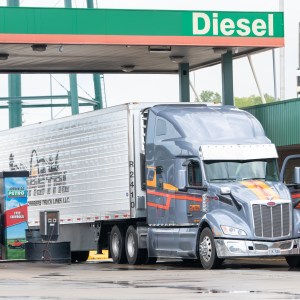
Diesel futures dropped 3.35% to $4.78/gal after White House export ban talk, while gasoline futures surged 2.85% to $3.59/gal. S&P Global warns a ban could cut refinery runs by 2M b/d, spiking gasoline and jet fuel prices in Q4 2026.
Fuel price volatility tied to policy uncertainty is a leading indicator of margin compression across all marketplace sellers dependent on domestic freight — this adds pressure on top of already-elevated FBA fees heading into peak season.
Rising diesel and gasoline prices compress last-mile and inbound freight costs — carriers will pass these through quickly via fuel surcharges, squeezing FBA and 3PL margins before Q4 peak. Audit your freight invoices now for fuel surcharge line items and lock in spot or contract rates before any policy announcement.
Operational Impact
This story may require teams to revisit workflows, monitoring, or platform assumptions.
Bottom Line
Diesel export ban talk means Q4 freight surcharges hit sellers hardest.
Source Lens
Industry Context
Useful background context, but lower-priority than direct platform, community, or operator intelligence.
Impact Level
medium
Diesel export ban talk means Q4 freight surcharges hit sellers hardest.
Key Stat / Trigger
ULSD futures hit all-time high of $5.2465/gal on September 23, 2026
Focus on the operational implication, not just the headline.
Full Coverage
Even if a diesel export ban is not implemented, the talk of it in recent days on Wednesday accomplished its goal of reducing prices, at least in the futures market. Ultra low sulfur diesel (ULSD) on the CME commodity exchange fell Wednesday by 16. 57 cents/gallon, a decline of 3. 35%, to $4. 7764/g.
It’s the lowest settlement since September 8, not all that long ago which speaks to the huge increase in the middle of the month that saw the futures price hit its all-time high settlement September 23 at $5. 2465/g.
But something else came with that decline in the price of ULSD: a surge in the futures price of RBOB, an intermediate product that serves as the price marker for gasoline in futures trading. It rose 9. 95 cts/g to $3. 587/g, an increase of 2. 85%.
It’s the highest settlement since July 23, and before that is the highest settlement since a run of settlements above $3. 60/g in the first half of May. It isn't much but the average retail price of #diesel today, as measured by the AAA, is down just a bit. It's the first decline since September 8 and only the second in the month. At about 4:30 a. m.
EDT, ULSD on CME was down 1. 37 cts/g, 0. 28%, to $4. 9284. pic. twitter. com/cnqEQHF6K4— John Kingston (@JohnHKingston) September 23, 2026 It is that reaction to a possible diesel ban that has been raised by critics of the potential policy, of which there are many.
A Wall Street Journal editorial criticizing a possible export ban was titled “Republicans are Running on Empty.” The market reaction Wednesday came a day after President Trump signaled support for the ban, joined by several Republican lawmakers. U. S. exports of ULSD in the week ended September 18 were 1.
33 million b/d, a figure far less than recent weeks which have been mostly between 1. 6 to 1. 7 million b/d. Meanwhile, U. S consumption of non-jet fuel distillates, which is about 90% ULSD, has been running about 3. 6 to 3. 8 million b/d. Those export figures are higher than recent norms.
A report by S&P Global Energy summed up the potential impacts of a ban, without referring to the market reaction Wednesday that essentially backed its report with almost perfect accuracy. Any surplus of diesel in the U. S.
created by an export ban, S&P Global Energy said, “would create significant operational and financial pressure for imports, shifting yield away from diesel,” the report said. Cutting runs by 2-million b/d The reaction among refiners, the report said, would be to reduce crude runs by about 2 million b/d “to eliminate the resulting diesel surplus.”
ULSD production in the U. S. has averaged just below 5 million b/d since the start of June. That’s about 150,000 b/d more than the corresponding period a year ago, but refiners have needed to run at about 97% of capacity to get there. Should U. S.
refiners reduce runs by that amount, S&P Global Energy said, “a run cut of this magnitude would inevitably lower the supply of gasoline and jet fuel, raising prices of these fuels.” And that is precisely the reaction seen in futures markets Wednesday. “Even with a 3% shift in yield from diesel to gasoline, the drop in gasoline production would cause the U.
S. to become a net importer of gasoline in the fourth quarter of 2026, meaning that import-dependent regions in the East and West Coasts would be vulnerable to price shocks from more expensive imported fuel,” the report added.
Moving toward some sort of restriction Where the White House stands on a ban remained murky late Wednesday but with some reports suggesting some sort of limitations are likely. Chris Wright, the Secretary of Energy, was quoted by Politico as telling a New York energy forum during Climate Week that he was opposed to a ban.
“The blunt tool of banning diesel exports definitely doesn’t work because the U. S. exports a lot of diesel,” Wright said, according to the Politico article. “We’re the largest diesel exporter in the world, but that same refinery that produces diesel also produces gasoline and jet fuel.
So, if you can’t export the diesel that comes out of our refineries when you run out of places to store it, and you have to reduce U. S. refining, which would put upward pressure on gasoline prices and jet fuel prices.”
But Politico also reported that there is a growing view in the administration that some steps need to be taken to give relief to those sectors of the economy that are getting hit with higher diesel prices, like trucking and agriculture. A 90-day ban on exports, according to Politico, is under consideration.
Bloomberg reported that Wright had “told oil industry leaders to brace for possible US curbs on diesel exports amid an intensifying debate within the Trump administration over that approach.”
“Wright’s message was delivered to company executives in calls late Tuesday, according to people familiar with the matter, hours after President Donald Trump said he’d encouraged administration officials to consider diesel export restrictions,” Bloomberg reported. More articles by John Kingston Super Eg
Pull your 3PL and carrier invoices now — if fuel surcharges exceed 20-25% of line-haul cost, renegotiate or lock contract rates before Q4 peak shipping season.
In the next 30 days, model a 5-10% freight cost increase into your Q4 COGS and reprice FBA listings to protect margin before holiday inventory ships.
Original Source
This briefing is based on reporting from Freightwaves. Use the original post for full primary-source context.
Style
Audience