

AI Adoption in supply chain nears peak hype, exec warns
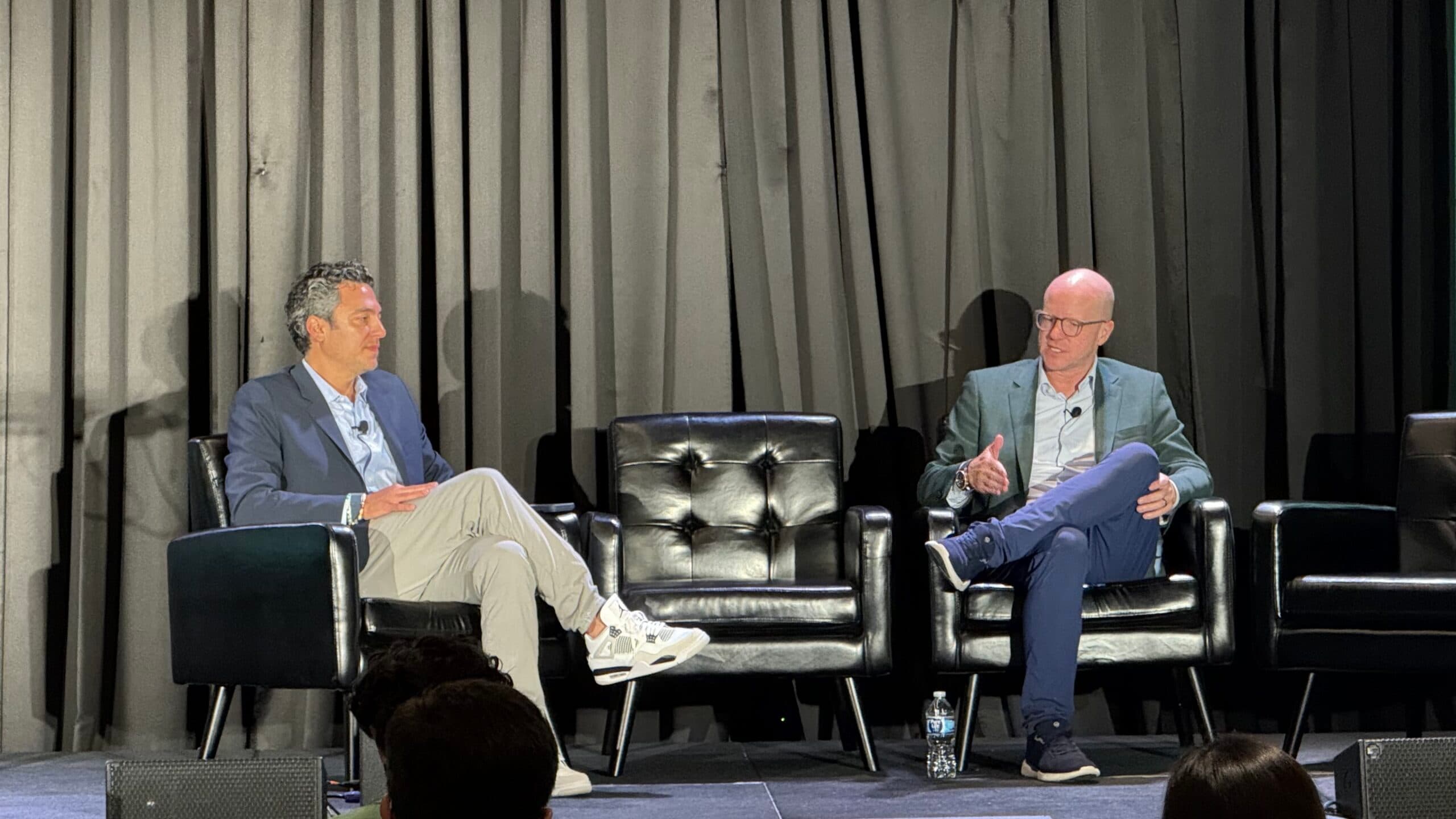
Redwood's chief innovation officer says AI adoption in supply chain is approaching Gartner's Peak of Inflated Expectations, with a reckoning close behind. The post AI Adoption in supply chain nears peak hype, exec warns appeared first on FreightWaves.
Source Lens
Industry Context
Useful background context, but lower-priority than direct platform, community, or operator intelligence.
Impact Level
medium
Use this briefing to decide whether your team needs an immediate workflow, policy, or reporting change.
Key Stat / Trigger
No single quantitative trigger surfaced in this report.
Focus on the operational implication, not just the headline.
Full Coverage
CHICAGO — The freight industry’s AI investment binge is starting to look like every hype cycle before it. One reason? Excitement is climbing faster than results.
Eric Rempel, Chief Innovation Officer at Redwood, told an audience at FreightWaves’ AI Supply Chain Symposium on Wednesday that the industry is approaching Gartner’s Peak of Inflated Expectations, with the Trough of Disillusionment right behind it.
Rempel made the comments during a conversation with FreightWaves founder and CEO Craig Fuller, who pressed him on how AI adoption in supply chain compares with the slower arc of digital transformation, a trend that took from 2015 to 2020 to take hold. Fuller opened by noting the volume of capital, both public and private, that has poured into AI.
It has also created skepticism from parts of the venture capital world. Rempel didn’t dispute the hype.
“I think if you just reference it as one of those Gartner hype cycle curves that Gartner plays out here, we’re on the way up to the Peak of Inflated Expectations, especially in supply chain, and we’re about to go into the Trough of Disillusionment,” he said. The gap between demo and deployment is the problem, Rempel said.
“There are a lot of AI demos better than anything I’ve ever seen in my entire life. You can put an AI demo together, you can build something wonderful, you can do it for the enterprise, you can do the show. It’s unbelievable.” Supply chain doesn’t run on clean demos, though. “Everything goes wrong all the time,” he said.
“If our customers could do it themselves, they wouldn’t need us.” AI Adoption in Supply Chain Needs People, Not Just Platforms Getting value out of AI isn’t a technology problem anymore, Rempel said. It’s an organizational one. “What it takes is not just a technology lens to get it valuable within your organization, but a people and process lens,” he said.
That case is complicated by a labor market narrative Rempel pushed back on directly. Despite headlines about AI-driven layoffs, Redwood has gone the other direction. “We’ve only been hiring because of it,” he said. He argued that many of the layoffs making news trace back to pandemic-era overhiring rather than AI replacing workers.
“A lot of organizations over-hired in COVID, there was a lot of bloat and waste, and they’ve done RIFs, but those RIFs are for things we just completely didn’t need,” Rempel said. “It’s a great way for a value sheet to say, ‘Hey, we’re producing results and look at what we can do as an organization.’ But I don’t think that’s the end-all, be-all.”
Spot Market Jobs, Spot Market Tokens Fuller drew on a Bloomberg opinion piece to frame the labor shift in freight terms, comparing spot market to contract rates to AI and its pricing. Instead of supply and demand of assets, it’s the supply and demand of available compute and tokens. Rempel sees the same pattern forming in AI pricing.
Flat-rate subscriptions are giving way to usage-based costs as enterprises scale up. “The AI in the subsidized era was all contract market, bigger plans, $20 or $200 a month, you get all this compute,” Rempel said. “That’s very quickly going away, especially at the enterprise level.
It’s becoming a spot market, and organizations are rethinking how they staff.” That shift is colliding with organizations that move far slower than the technology. “Compute power and capability are shifting every three to six months in experiments, but people take longer to change,” Rempel said.
“Instituting change management within organizations is a three-to-five-year journey.” Change management and virtual helpers Fuller shared a change management anecdote about a four hour long morning process to build a newsletter. The challenge was managing resistance to using AI to speed it up, even after seeing dramatically improved output.
When the worker had tried the technology three years earlier, they found it lacking, and never went back despite the changes in capabilities. The early first impressions soured the willingness to adapt and revisit. Rempel said the story maps onto adoption patterns he’s tracked for 20 years across TMS and WMS rollouts.
“Substitute AI with any change and that’s the narrative,” he said. “There are always folks within the organization who say, ‘I’ve done it this way forever, it’s fine.’ Change is scary. This is why change takes three to five years in organizations.” The keynote compared today’s AI tools to a familiar animated archetype. “AI is like the minions from the movie.
They have really great intentions, but you need to harness them, structure them, and hold them accountable,” Rempel said. Dumping an open-ended task on a model without guardrails backfires, he added: “The mistake is trying to shotgun it without giving it context or memory.”
Legacy Systems, New Stakes The conversation turned to whether AI helps or hurts companies built on legacy infrastructure. Fuller pointed to reports that Trimble is selling its transportation business, noting that 80% of the truckin
Original Source
This briefing is based on reporting from Freightwaves. Use the original post for full primary-source context.
Style
Audience