

C.H. Robinson a defendant in post-Montgomery Florida broker liability case
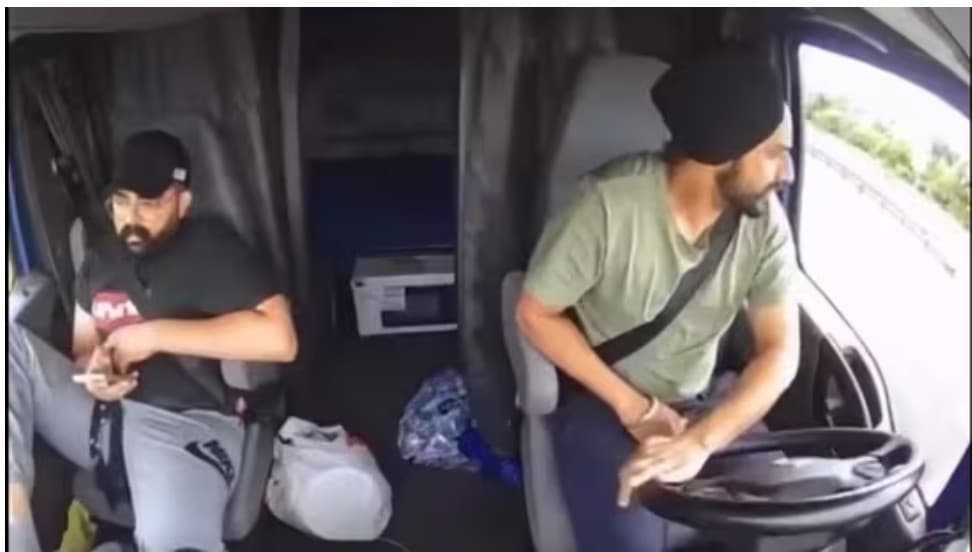
C.H. Robinson is the defendant in what is likely to be a closely-watched post-Montgomery broker liability case. The post C.H. Robinson a defendant in post-Montgomery Florida broker liability case appeared first on FreightWaves.
Source Lens
Industry Context
Useful background context, but lower-priority than direct platform, community, or operator intelligence.
Impact Level
medium
Use this briefing to decide whether your team needs an immediate workflow, policy, or reporting change.
Key Stat / Trigger
No single quantitative trigger surfaced in this report.
Focus on the operational implication, not just the headline.
Full Coverage
The combination of a high profile fatal crash involving an illegal immigrant driver plus the legal fallout from the case of Montgomery vs Caribe Transport II is likely to mean a Florida lawsuit will become a closely-watched case.
The estate of Faniola Joseph on behalf of her surviving daughter, Angeline Daudin, filed suit last week against several defendants, including C. H. Robinson, in the August 2025 crash in St. Lucie County that led to the deaths of three people riding in a minivan that smashed into a truck driven by Harjinder Singh. The case is filed in St. Lucie circuit court.
A key argument in the case is likely to be C. H. Robinson’s argument that it did not broker the load being hauled by a carrier named White Hawk, with Singh behind the wheel. A deadly U-turn Singh attempted to make a U-turn across several lanes of Florida’s Turnpike.
He was seeking to make the turn into what the lawsuit calls a “crossover slot” that is designed to handle turns for official vehicles, not a full tractor-trailer combination.
“For a commercial motor vehicle such as the truck operated by Singh, attempting a U-turn through this emergency crossover is expressly forbidden by law and the posted signage,” the lawsuit says. As Singh made the turn from the outside shoulder, it created “an unavoidable barrier for approaching northbound traffic,” the lawsuit said.
That traffic included a minivan with a driver and two passengers, including Joseph. The resulting crash with Singh’s truck saw the minivan end up under the trailer, and all three people in the vehicle were killed. Singh was in the U. S. illegally at the time of the crash. He is being held without bond.
A political hot potato The horrific nature of the crash, along with Singh’s immigration status and the fact that his CDL had been granted by California, has put the fatal wreck at the heart of political battles beyond the accident itself. The lawsuit comes just weeks after the Montgomery decision before the Supreme Court.
That unanimous SCOTUS decision settled conflicting precedents in several circuit courts regarding broker liability under the Federal Aviation Administration Authorization Act (F4A), holding that the so-called safety exception that allowed a state legal action against a transportation company could be used to take action against a broker who hired a carrier involved in a crash.
Some interpretations of F4A on the circuit court had said such action was preempted. C. H. Robinson (NASDAQ: CHRW) was the broker that hired Caribe Transport II. A truck from that company struck driver Shawn Montgomery, who was tending to his own truck on the side of an Illinois road, and he lost a leg as a result.
A lower court, affirmed by the Seventh Circuit, said the safety exception had preempted legal action against C. H. Robinson. But the Montgomery decision has ended that defense for the entire brokerage community in all jurisdictions.
While Singh and White Hawk are defendants, this case will be of interest because it is one of the first to target a freight broker in the post-Montgomery world. And not just any broker: the biggest, and the one that led the unsuccessful fight before the Supreme Court in the Montgomery case to keep the 3PL industry from being sucked into the safety exception.
Defining a broker’s responsibility C. H.
Robinson “owed a duty to exercise reasonable care in the selection and retention of the motor carrier it hired to transport the subject shipment, including a duty to select or retain a motor carrier that it knew or should have known was unfit, unsafe, unqualified or otherwise reasonably likely to cause harm to the motoring public,” the lawsuit alleges.
And in a passage that sums up the entire issue now facing 3PLs in a post-Montgomery world, the lawsuit says “the exercise of reasonable care in selecting a motor carrier, under both C. H. Robinson’s own represented standards and the custom and practice of the brokerage industry, required C. H.
Robinson to review a carrier’s publicly available safety record and qualifications before entrusting it with a shipment.”
One of the pillars of the 3PL’s legal arguments, not just in Montgomery but in lower court federal actions where it prevailed, was that a carrier registered with the Federal Motor Carrier Safety Administration (FMCSA) not under any sort of negative classification that would suggest it shouldn’t be booked by a broker relieved the 3PL of legal liability.
What will be the new set of legal precedents under that question of responsibility–a key FMCSA official, Jesse Elison, said recently at a FreightWaves forum, “we aren’t a ratings agency”–is enough of an issue that the Transportation Intermediaries Association recently asked FMCSA for a rulemaking process to help clarify the issue.
That wasn’t our guy While there are questions surrounding legal liability in a post-Montgomery freight market, C. H. Robinson’s first line of defense appears to be that it had nothing to do with White Hawk, the carrier in
Original Source
This briefing is based on reporting from Freightwaves. Use the original post for full primary-source context.
Style
Audience