

A Driver’s Paper Logs Said He Was in One Place. A Roadside Camera Network Said Otherwise. Welcome to the New Era of Trucking Enforcement.
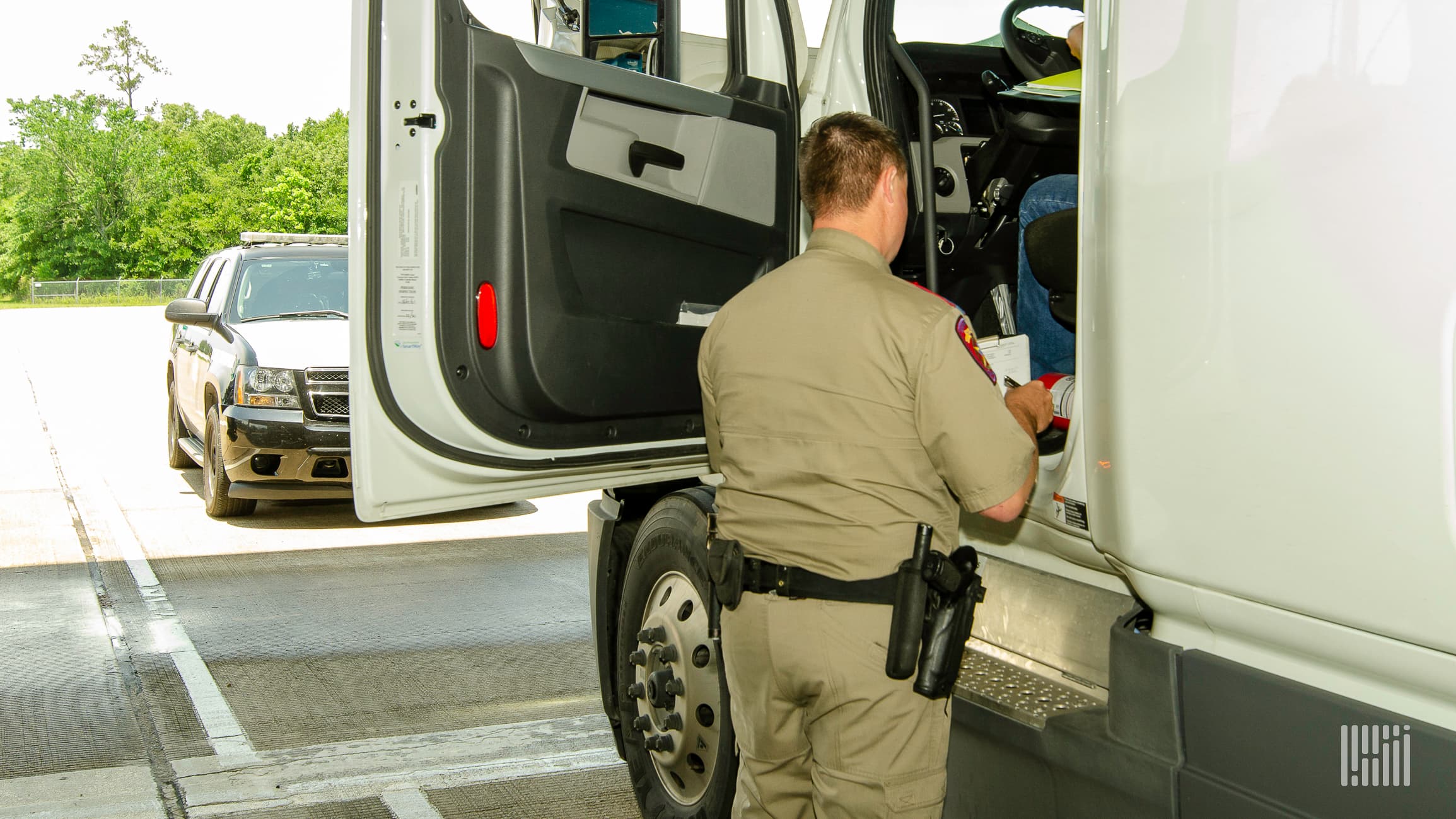
(The views expressed here are solely those of the author and do not necessarily represent the views of FreightWaves or its affiliates.) Recently, a driver pulled into an Arizona scale house learned that an officer could reconstruct his entire multi-state trip from license plate readers and roadside cameras, matching the real timeline against paper logs […] The post A Driver’s Paper Logs Said He Was in One Place. A Roadside Camera Network Said Otherwise. Welcome to the New Era of Trucking Enforce
Source Lens
Industry Context
Useful background context, but lower-priority than direct platform, community, or operator intelligence.
Impact Level
medium
Use this briefing to decide whether your team needs an immediate workflow, policy, or reporting change.
Key Stat / Trigger
No single quantitative trigger surfaced in this report.
Focus on the operational implication, not just the headline.
Full Coverage
(The views expressed here are solely those of the author and do not necessarily represent the views of FreightWaves or its affiliates.)
Recently, a driver pulled into an Arizona scale house learned that an officer could reconstruct his entire multi-state trip from license plate readers and roadside cameras, matching the real timeline against paper logs that told a different story, and the account is a clear window into how independent tracking is quietly ending the era of the falsified logbook.
Here is the excerpt of the driver explaining what happened: Source: Video Sage Outcast. A driver explains how he was tracked across Louisiana, Texas, New Mexico, and Arizona through scale-house cameras and license plate readers, then confronted with a timeline that matched his actual route but not his logbook.
The driver did not see it coming, and neither, apparently, have most of the veterans he has talked to since. He was running west, through Louisiana, Texas, New Mexico, and into Arizona, when he got pulled in at a scale. The officer ran his plate, went back into the computer, and then laid out the driver’s entire trip back to him with timestamps.
As the driver described it afterward, the officer told him he had been in Louisiana at one time, Texas at another, across New Mexico, and into Arizona at specific points along the way. The timeline the officer recited was accurate. The problem was that it did not match the driver’s logs. His logs were wrong.
The officer’s reconstruction, built from cameras and plate readers the driver never thought about, was right. When the driver asked how the match was even possible, the explanation was simple and a little unsettling. It was not a tracking device planted on his truck, and it was not something fed to enforcement by the shipper.
It was the infrastructure already sitting along the highway. As he put it, whenever he crossed scales or certain parts of the highway, there were cameras.
License plate readers at scale houses, at border and state-line entrances, and at what he described as random points along the road had captured his truck, and an officer at the end of the run was able to pull all of those sightings together into a single, timestamped picture of where he had actually been. His reaction said as much as the incident itself.
He had talked to a lot of drivers, he said, including “guys who had been doing this 15 and 20 years, and none of them had ever had this happen.”
His takeaway, and the reason he was willing to share the story at all, was that he wanted other drivers to understand that this is what is being done now, so they could stop relying on practices that no longer hold up. He is right to want the word out, because his experience is not a fluke.
It is an early, concrete look at a structural shift that is arriving fast across the entire industry. (Source: SearchCarriers. False record of duty status is one of the most common driver level HOS violations reported.
In this incident, camera tech was used to validate the violation) Why This Is Different From Anything Drivers Are Used To For most of trucking history, the record of where a truck had been came from the truck itself. The driver’s logs, the carrier’s own systems, the paperwork generated and held by the operator.
If a logbook said a truck was in one place, contradicting that claim required someone to have independently observed the truck somewhere else, and outside of a physical inspection or a witness, that rarely happened. The falsified or fudged log worked for exactly one reason: there was usually no independent record to check it against.
That assumption is what the Arizona scale-house incident demolishes. The officer did not have to take the driver’s logs at face value, and did not have to catch him in the act somewhere down the road.
He had an independent, after-the-fact record of the truck’s actual movements, assembled from cameras and plate readers the driver had passed without a second thought, and he could lay that record next to the logbook and see the gap instantly. That is a fundamentally new enforcement posture. It is not about catching a driver at a single moment.
It is about reconstructing an entire trip from infrastructure the carrier does not control, cannot opt out of, and cannot edit after the fact. The driver in this case said it himself: the officer pulled him all the way back to Louisiana just by running plates and stitching together camera sightings across state lines.
That capability did not exist in any practical, routine way for most of the careers of the veterans this driver spoke to. Now it does.
The Technology Behind the Curtain License plate recognition has existed for years, but what makes this moment different is the scale and sophistication of the camera and sensor networks now blanketing the nation’s freight corridors, and the speed with which scattered sightings can be assembled into a coherent travel history.
The most prominent company building this kind of capabi
Original Source
This briefing is based on reporting from Freightwaves. Use the original post for full primary-source context.
Style
Audience