

CVSA Roadcheck in 12 days, is a $77,000 fine in your future?
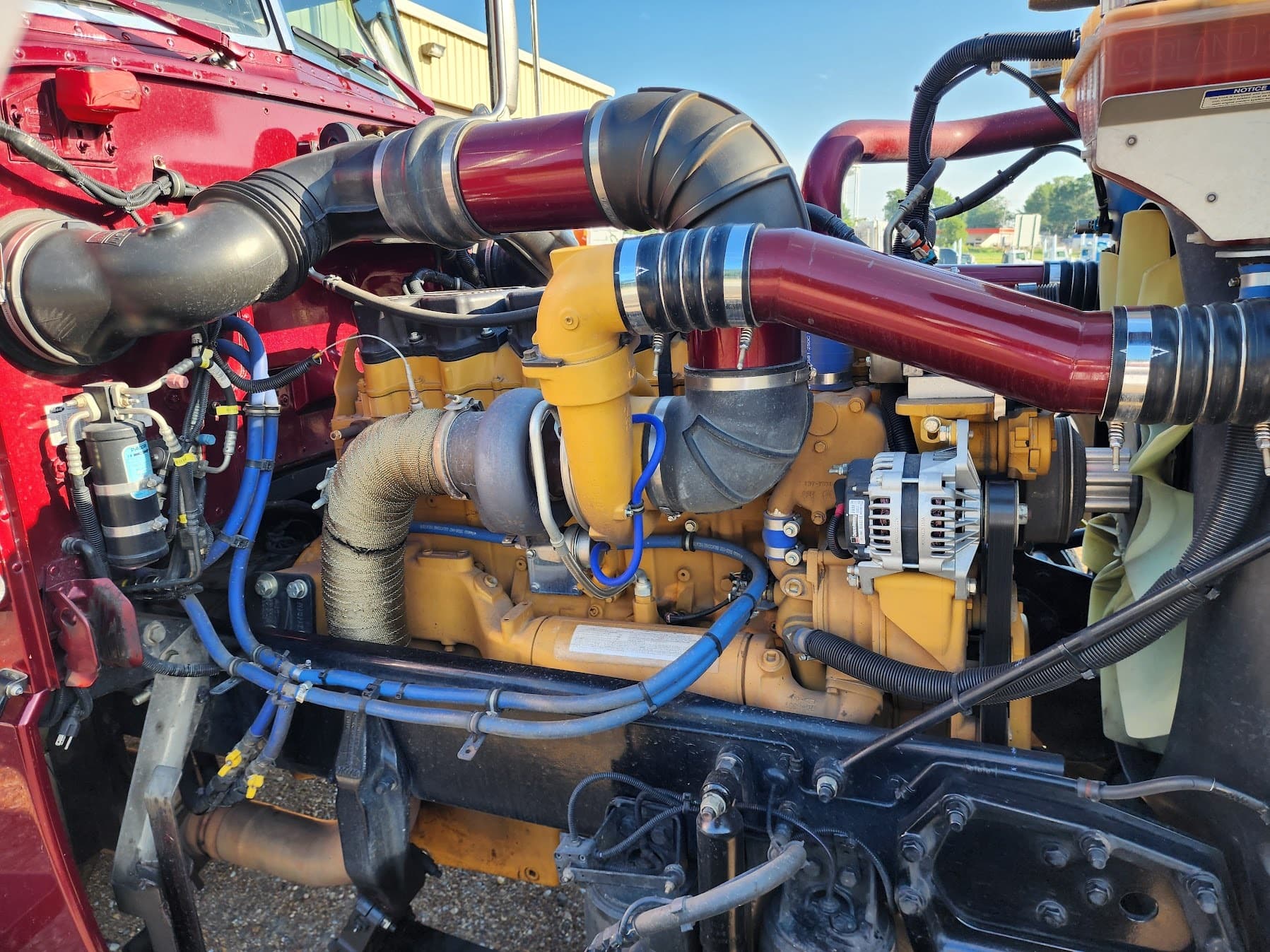
CVSA International Roadcheck runs May 12-14, 2026, focusing on ELD tampering and cargo securement violations. A carrier received a $77,000 fine for operating with documented brake defects for weeks without repair.
Ecommerce sellers using freight carriers should audit their logistics partners' compliance records now. Poor maintenance practices by your carrier can delay shipments during peak inspection periods and increase shipping costs through fines passed to customers.
Supply chain reliability depends on carrier compliance as enforcement intensifies. Sellers need backup logistics options when primary carriers face operational disruptions.
Ask freight partners for their CVSA inspection scores and out-of-service rates before May 12-14 to avoid shipping delays.
Build 2-3 day buffer into inventory shipments scheduled around May 12-14 inspection dates.
Bottom Line
Roadcheck inspections May 12-14 mean potential freight delays for sellers.
Source Lens
Industry Context
Useful background context, but lower-priority than direct platform, community, or operator intelligence.
Impact Level
medium
Roadcheck inspections May 12-14 mean potential freight delays for sellers.
Key Stat / Trigger
$77,000 fine for operating with documented brake defects
Focus on the operational implication, not just the headline.
Full Coverage
International Roadcheck 2026 is scheduled for May 12 through 14. During those 72 hours, enforcement personnel across North America will inspect commercial motor vehicles and drivers to ensure compliance with regulatory requirements for vehicles, cargo, and drivers.
Inspectors primarily conduct the North American Standard Level I Inspection, a 37-step procedure that examines the driver’s operating requirements and assesses the vehicle’s mechanical fitness. You have known this was coming since February when CVSA announced the dates. You knew the focus areas at the same time.
The driver focus for 2026 is ELD tampering, falsification, or manipulation. The vehicle focus is on cargo securement. Neither of those should require you to scramble right now. If they do, the scramble is the symptom and not the disease. Since its inception in 1988, more than 1.
4 million roadside inspections have been conducted during International Roadcheck. This is not a new event. It is not an ambush. It is a scheduled, publicly announced, annual enforcement initiative that has operated on the same basic model for nearly four decades.
Fleets that treat it as a surprise every May have a compliance culture problem that three days of inspectors on the interstate are revealing. The 2025 Roadcheck produced 56,178 inspections across the U. S. , Canada, and Mexico. Inspectors discovered 13,553 vehicle out-of-service violations and 3,317 driver out-of-service violations.
The vehicle out-of-service rate was 18. 1 percent and the driver out-of-service rate was 5. 9 percent. Nearly one in five vehicles inspected got parked on the shoulder. Brake systems topped the list of vehicle out-of-service violations, accounting for 24. 4 percent of all vehicle OOS findings.
When combined with the 20 percent defective brakes category, brake-related issues made up more than 40 percent of all vehicle out-of-service violations. Brakes. Again. Every year. The same defect category that has topped this list for longer than most people currently in the trucking industry have been alive.
And this year, while the focus areas are ELD tampering and cargo securement, brake systems accounted for 3,304 out-of-service violations in 2025, with 20 percent of defective brakes ranking third among all vehicle out-of-service categories. Focus areas change. Brakes do not go away.
That is the data telling you something consistent and important about where the real preventive maintenance gaps live in this industry. Now let me tell you about the $77,000 fine, because that story is more relevant to your operation than any Roadcheck statistic. A carrier had a brake defect on a Driver Vehicle Inspection Report.
The driver did the right thing, found the defect, documented it and submitted the DVIR. That is exactly what the system is supposed to do. The defect notation sat in that DVIR. Nobody fixed it. The vehicle kept rolling. The driver continued to note the defect on subsequent DVIRs. The vehicle kept getting dispatched. A month went by.
The defect was finally repaired. FMCSA audited the carrier. The vehicle was pulled for review as part of the sample.
The file review told the whole story: weeks of consecutive DVIR entries documenting an out-of-service level brake defect, the vehicle operating on public roads the entire time, dispatch records showing the truck was being assigned loads while the defect was known and documented and unresolved.
FMCSA assessed a civil penalty for every day from the date of the initial defect report to the date of repair. The total came to $77,000. That fine was not the result of a bad inspection. It was the result of a functional reporting system attached to a completely dysfunctional repair workflow. The DVIR did its job. The process around it did not.
Under 49 CFR 396. 11, a driver is required to prepare a written report at the completion of each day’s work for each vehicle operated, identifying any defect or deficiency discovered or reported that would affect the vehicle’s safety in operation or result in a mechanical breakdown. Under 49 CFR 396.
13, the next driver to operate that vehicle must review that report, sign it, and acknowledge awareness of any reported defects. Under 49 CFR 396. 17, every commercial motor vehicle must be systematically inspected, repaired, and maintained, and parts and accessories must be in safe and proper operating condition at all times.
The carrier in this case was compliant with the reporting requirement but completely noncompliant with the repair and maintenance obligation triggered by those reports. This is the gap that exists in fleet maintenance programs across the industry and that is exposed during audits far more often than it is caught at a roadside inspection.
The DVIR is a communication tool. It is the mechanism through which the driver, who has eyes on that vehicle every day, communicates the actual condition of the equipment to the people responsible for keeping it safe. When that communication flows into a system
Original Source
This briefing is based on reporting from Freightwaves. Use the original post for full primary-source context.
Style
Audience