

Panama container terminal bidding stacked against U.S. companies: Source
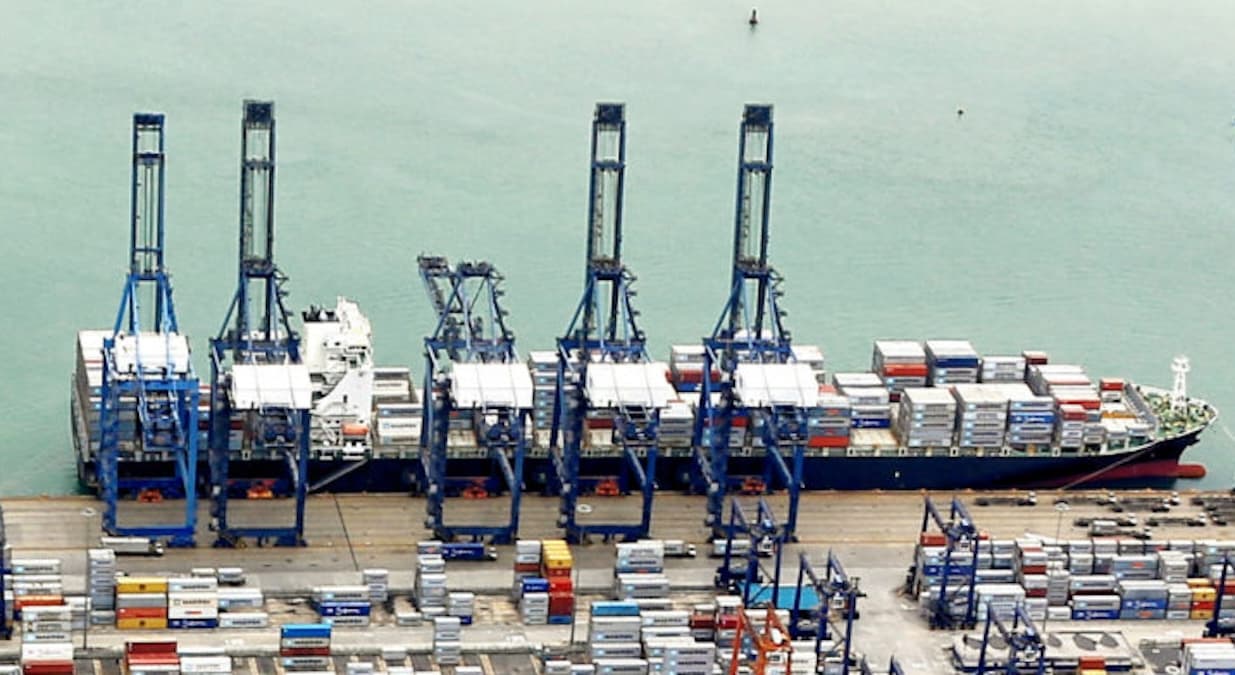
Panama seized Chinese-operated container terminals at key Pacific and Atlantic ports, but bidding criteria reportedly favor non-U.S. companies despite Trump administration's stated interest in canal presence. Similar dynamics playing out at Brazil's Port of Santos with $1.2B terminal project.
Port consolidation by European operators like Maersk could create shipping bottlenecks and rate increases for U.S. sellers importing from Asia. Monitor your primary shipping lanes through Panama Canal for potential service disruptions during the transition period.
Global port consolidation continues as European operators expand control over critical shipping infrastructure, potentially giving them more pricing power over U.S. importers.
Review your Asia-to-Americas shipping routes in your 3PL dashboard -- if over 30% flows through Panama ports, diversify carriers to avoid transition delays.
Lock in Q3-Q4 shipping rates now before new operators potentially increase fees at these critical transshipment hubs.
Bottom Line
Panama port shake-up could disrupt Asia shipping routes for U.S. sellers.
Source Lens
Industry Context
Useful background context, but lower-priority than direct platform, community, or operator intelligence.
Impact Level
medium
Panama port shake-up could disrupt Asia shipping routes for U.S. sellers.
Key Stat / Trigger
6,288 Panama Canal transits in first half of fiscal 2026
Focus on the operational implication, not just the headline.
Full Coverage
Panama may have seized control of container terminals from a longtime Chinese operator, but U. S. companies hoping to win those contracts have the deck stacked against them, a source told FreightWaves.
Panama’s Supreme Court earlier this year capped a protracted legal battle when it declared contracts with CK Hutchison unconstitutional, invalidating the Hong Kong company’s concessions to run terminals at the Pacific port of Balboa and Cristobal on the Atlantic, near the Panama Canal.
Both ports are key transshipment hubs connecting the Asia-Americas trade routes. During the first half of fiscal 2026, the Panama Canal recorded 6,288 transits, an increase of 224 transits year-over-year.
Over the same period, 254 million PC/UMS (Panama Canal Universal Measurement System) tons moved through the waterway, or approximately 5% more than the 243 million tons recorded in the same period of the prior fiscal year. window. googletag = window. googletag || {cmd: []}; googletag. cmd. push(function() {googletag.
defineSlot('/21776187881/FW-Responsive-Main_Content-Slot1', [[300, 100], [320, 50], [728, 90], [468, 60]], 'div-gpt-ad-1709668545404-0'). defineSizeMapping(gptSizeMaps. banner1). addService(googletag. pubads()); googletag. pubads(). enableSingleRequest(); googletag. pubads(). collapseEmptyDivs(); googletag. enableServices(); }); googletag. cmd.
push(function() {googletag. display('div-gpt-ad-1709668545404-0'); }); The Panamanian government in February seized control of the terminals run by Hutchison’s Panama Ports Co. , assigning temporary operating rights to the APM Terminals subsidiary of Maersk (OTC: AMKBY) while it prepares a new concessions process.
A who’s who of international companies is expected to bid including APM, DP World of Dubai, Mediterranean Shipping Co.’ s Terminal Investments Limited, PSA International of Singapore, and Manila-based International Container Terminal Services, Inc. But President Donald Trump has made it clear that the U. S.
intends to have a significant presence at the canal. While SSA Marine of Seattle and the leading U. S. operator, Ports America, headquartered in Morristown, N. J. , are said to be interested, the selection process is stacked against them from the start. “They’re not qualified,” said the source, who requested anonymity to protect relationships.
“They are free to bid, but they’re not going to score well” per Panama’s evaluation criteria, which the source said is set up against the American companies. The source did not provide further details. European and Asian operators also face the same uphill climb, according to the source.
The American companies face a similar situation at the Port of Santos, Brazil, and that Maersk has been actively working behind the scenes to block U. S. companies from entering those markets. window. googletag = window. googletag || {cmd: []}; googletag. cmd. push(function() {googletag.
defineSlot('/21776187881/fw-responsive-main_content-slot3', [[728, 90], [468, 60], [320, 50], [300, 100]], 'div-gpt-ad-1665767553440-0'). defineSizeMapping(gptSizeMaps. banner1). addService(googletag. pubads()); googletag. pubads(). enableSingleRequest(); googletag. pubads(). collapseEmptyDivs(); googletag. enableServices(); }); googletag. cmd.
push(function() {googletag. display('div-gpt-ad-1665767553440-0'); }); Santos is preparing to bid out concessions for the proposed Tecon Santos 10 terminal. The $1. 2 billion, 25-year project will add capacity of 3 million twenty foot equivalent units (TEUs) at Brazil’s largest port.
But bidding has been delayed by court rulings and debates over bidder eligibility that may bar existing Santos operators such as Maersk from the first phase. FreightWaves has reached out to the Panama Ports Authority and Maersk for comment. Read more articles by Stuart Chirls here. window. googletag = window. googletag || {cmd: []}; googletag. cmd.
push(function() {googletag. defineSlot('/21776187881/fw-responsive-main_content-slot4', [[300, 100], [320, 50], [728, 90], [468, 60]], 'div-gpt-ad-1709668086344-0'). defineSizeMapping(gptSizeMaps. banner1). addService(googletag. pubads()); googletag. pubads(). enableSingleRequest(); googletag. pubads(). collapseEmptyDivs(); googletag.
enableServices(); }); googletag. cmd. push(function() {googletag. display('div-gpt-ad-1709668086344-0'); });
Original Source
This briefing is based on reporting from Freightwaves. Use the original post for full primary-source context.
Style
Audience