

DHL Global Forwarding expands Transpacific air cargo capacity with new route
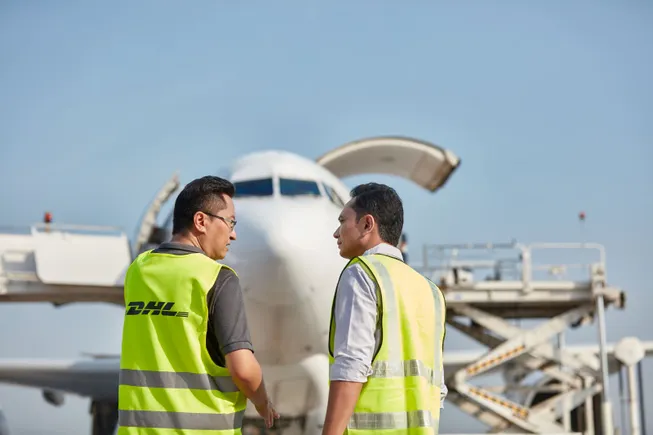
The thrice-weekly Bangkok-Cincinnati service connects manufacturing regions in Southeast Asia to U.S. hubs.
Source Lens
Industry Context
Useful background context, but lower-priority than direct platform, community, or operator intelligence.
Impact Level
medium
Use this briefing to decide whether your team needs an immediate workflow, policy, or reporting change.
Key Stat / Trigger
No single quantitative trigger surfaced in this report.
Focus on the operational implication, not just the headline.
Full Coverage
An article from DHL Global Forwarding expands Transpacific air cargo capacity with new route The thrice-weekly Bangkok-Cincinnati service connects manufacturing regions in Southeast Asia to U. S. hubs. Published July 15, 2026 Kelly Stroh Senior Editor Share Copy link Email / Print License Add us on Google Two people stand in front of an aircraft.
DHL Global Forwarding's BKK-CVG air cargo route is operated using a Boeing 777 widebody freighter with 100 tons of capacity per flight. Courtesy of DHL Global Forwarding Listen to the article 2 min This audio is auto-generated. Please let us know if you have feedback.
DHL Global Forwarding expanded its Transpacific air cargo capacity with a thrice-weekly service connecting Bangkok (BKK) with its hub in Cincinnati (CVG), according to a July 9 press release. The BKK-CVG service aims to provide shippers with more stable schedules and predictable costs, per the release.
DHL Global Forwarding’s Transpacific network also includes flight operations from Hanoi (HAN) and Taipei (TPE) to U. S. hubs such as Chicago (ORD). The widebody freighter route has 100 tons of capacity per flight — which is suited for oversized and high-value cargo, per the press release.
The air cargo service started July 1, spokesperson Laura Lehnen told Supply Chain Dive. “Southeast Asia continues to gain strategic importance as a manufacturing and sourcing region,” DHL Global Forwarding Global Head of Air Freight Henk Venema said in the release.
“With our new Bangkok–Cincinnati connection and broader Transpacific network coverage, we are offering customers not only speed and capacity, but also the reliability and control they need to build more resilient supply chains.”
The new air cargo service is part of DHL Global Forwarding’s strategy to expand capacity in its air freight network, according to the press release. For instance, the forwarder recently added capacity between Asia and Europe. Currently, the technology sector is the major driver for needed additional capacity from Southeast Asia, Lehnen said.
The Northeast and Southeast Asia to North America trade lanes have seen major gains in the past month as artificial intelligence hardware and semiconductor volumes boost air cargo demand, Xeneta reported this month.
In June, air cargo demand was up 7% year over year due to volumes tied to AI-related hardware, especially on the Asia Pacific to North America trade lane. According to Xeneta, those volumes have been making up for the fall in e-commerce traffic.
Xeneta Chief Airfreight Officer Niall van de Wouw said that supply and demand is pushing up rates on the Transpacific corridors, both of which logged a more than 40% spike in spot rates in the final week of June compared with late February. Editor's note: This story was first published in our Logistics Weekly newsletter. Sign up here.
Recommended Reading AI, semiconductors drive June air cargo demand By Kelly Stroh • July 8, 2026 Add us on Google Share Copy link Email / Print License Filed Under: Logistics, Freight, Air Cargo
Original Source
This briefing is based on reporting from Supply Chain Dive. Use the original post for full primary-source context.
Style
Audience