

Once again, Ryder’s bottom line is boosted by used vehicle sales
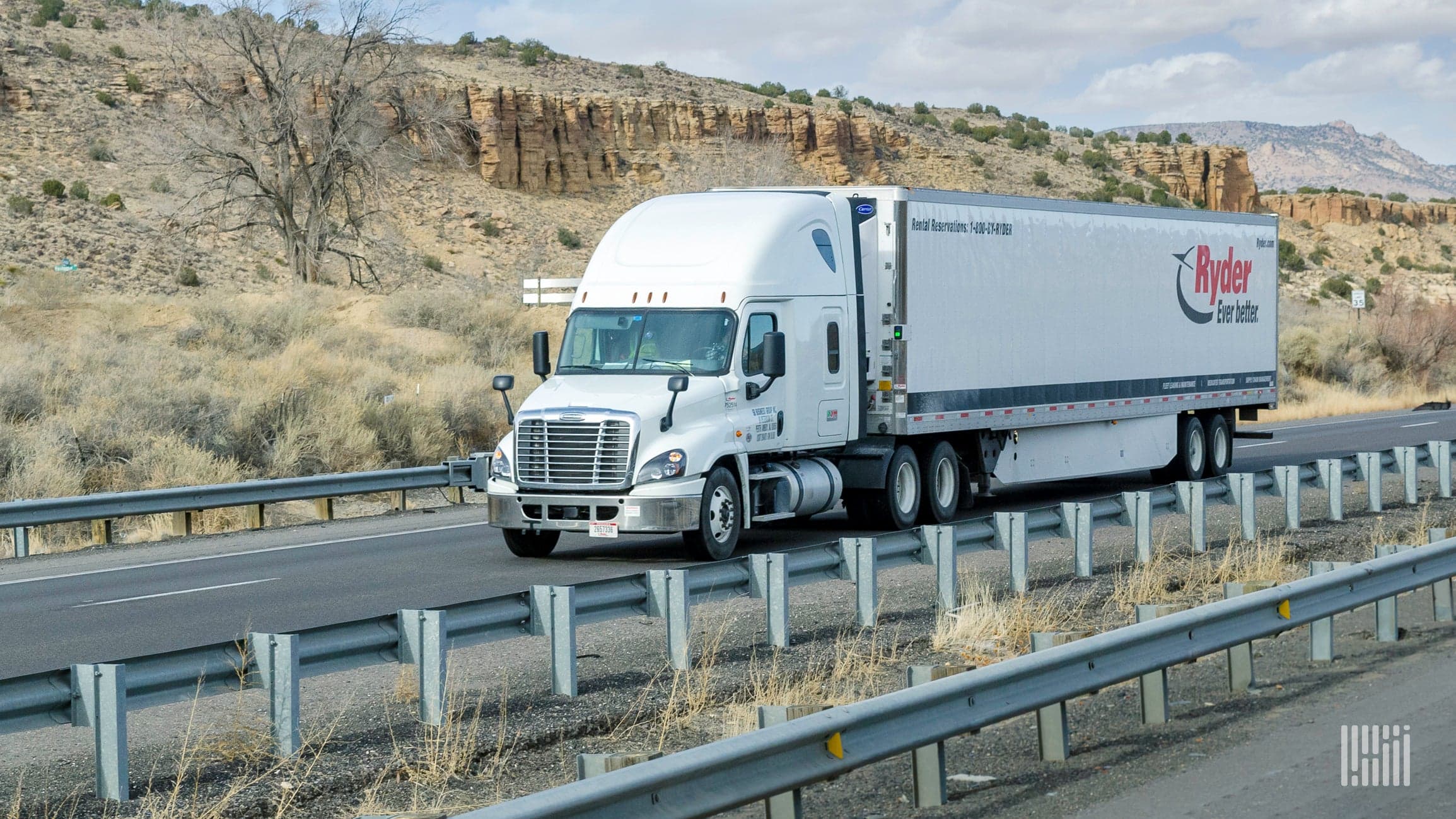
A variety of performances being hit, including used vehicle sales, let Ryder hit most of its key targets in the second quarter. The post Once again, Ryder’s bottom line is boosted by used vehicle sales appeared first on FreightWaves.
Source Lens
Industry Context
Useful background context, but lower-priority than direct platform, community, or operator intelligence.
Impact Level
medium
Use this briefing to decide whether your team needs an immediate workflow, policy, or reporting change.
Key Stat / Trigger
No single quantitative trigger surfaced in this report.
Focus on the operational implication, not just the headline.
Full Coverage
Ryder posted a solid but not spectacular performance in the second quarter, with enough optimism for the second half of the year that the company gave a slight boost to its forecast of some key financial metrics. Ariel Rosa, an analyst at Citi, described Ryder’s performance as aligning with Citi forecasts.
“It was a moderate quarter given the relatively in-line print and guides,” Rosa said in a quick hit release on the earnings shortly after they were published but before the company’s earnings call with analysts. The non-GAAP earnings per share bottom line at Ryder came in at $3. 73, up 12% from a year earlier. Citi’s note said its estimate was $3.
71, slightly above Wall Street consensus of $3. 69. On a heavy selloff day for Wall Street, Ryder’s stock at approximately 2:40 p. m. was down 3. 55%, $9. 81 to $266. 56.
But Ryder (NYSE: R), in its earnings release, said an unspecified large impact of that came from share repurchases, though it also cited higher earnings in its Fleet Management Solutions (FMS) segment, which houses the company’s benchmark truck rental and leasing operations. A small gain in operating revenue at FMS, up 1% sequentially to $1.
303 billion, was still above Citi’s consensus that it would be closer to $1. 29 billion. But it was still close enough to its forecast that Citi said it was “in-line with our view that truck capacity reduction is providing some support.”
But Citi noted that a reduction in average fleet size by 15% will limit Ryder’s ability to take advantage of that stronger market. The company’s overall forecast for 2026 improved in several ways. Its projection of non-GAAP earnings per share was increased to $14. 40-$14. 80. In the first quarter, that number was $14. 05-$14. 80.
Return on equity is now projected to be 18%, after a first quarter forecast of 17% to 18%. Operating revenue growth is still projected to be 3%, “primarily driven” by the performance at its Supply Chain Services contract logistics segment. Net cash and free cash flow projections are unchanged at $2. 7 billion and $700-$800 million.
Ryder has tried to diversify its business for many reasons, one of which is to not see its earnings so dependent on used vehicle sales. But those sales are still a major variable for profitability at Ryder and were cited as a key boost to its strong first quarter performance. Used vehicle sales were a clear tailwind in the second quarter as well.
Tractor sales brought in an average price increase of 3% more than the second quarter of 2025. For trucks, the year-on-year increase was 6%. The most important takeaway from the used tractor sales data in the $R quarterly earnings is that used tractor sales were up 6% sequentially. The first quarter downturn now looks like an outlier.
The 6% sequential number is what was recorded in the fourth quarter also. pic. twitter. com/y8bB4STv1Y — John Kingston (@JohnHKingston) July 23, 2026 But the company sold fewer vehicles, just 5,100 in the second quarter compared to 6,200 in the second quarter of last year. Sequentially, that was up from 4,600 vehicles in the first quarter of 2026.
“In used vehicle sales, results outperformed our expectations as market conditions continued to strengthen,” CEO John Diez said in remarks included in the company’s earnings report. Selling above what’s booked The financial benefit or hit to the company’s earnings from used vehicle sales are reported as a cost center in its report.
For the second quarter, that used vehicles sales net number was negative $7 million, which is a positive to the company’s costs; it was plus $2 million a year ago. In the first quarter, when the used vehicle sales were highlighted by the company as a driver of performance, it was negative $12 million.
Used vehicle pricing gives a lift to the bottom line at Ryder when the sale of a vehicle takes place at a number more than the residual value the company has booked for depreciation. In her remarks on the analysts’ call, CFO Cristina Gallo-Aquino said that situation–with pricing above residual value estimates–continues to prevail.
Gains on those sales are now expected to be about $40 million for the year, which is up about $10 million from what had been forecast earlier. Gallo-Aquino said Ryder this year expects about $500 million in proceeds from the sale of used vehicles, which she described as “in line” with what the company collected in 2025.
Diez said Ryder expects second half improvement, “and certainly going into 2027, we would expect year over year that pricing will continue to accelerate into that double digit range.” Various other metrics showed Ryder operating stronger on either a year-on-year or sequential basis.
The average fleet count was down from a year ago, but the utilization rate was better. For its commercial rentals, Ryder had an average fleet count of 29,200, down from 34,300 a year ago. But its utilization was up by 5 percentage points, to 75%. Sequentially, the average fleet count was down from 30,500 in the first quarter.
The average number of customer vehicles under Select Care contracts in the SCS segment is up to 44,300 vehicles from 43,000 a year ago, and 43,900 sequentially. NoX and upcoming purchases There were questions on the call about the upcoming 2027 emissions changes required by the Environmental Protection Agency and their tighter rules on nitrogen oxide (NoX).
That rule recently underwent some changes, but they were not as sweeping as had been expected. The issue has been raised on other calls in the past, not just for Ryder but other companies that are going to buy trucks: how is this impacting your capital expenditure plans? Diez said Ryder is looking for guidance from the truck builders.
“I think we’re still sitting on the fact that we’re waiting for the OEMs to reveal what the price increases are going to be for the second half,” he said. “Until we get that information from the OEMs, we won’t be able to pass that along to our customers.” But Diez added he doesn’t expect the changes to be major.
“I don’t think it is going to be dramatically different than what we’ve been planning for, which is the fact that we’re still expecting significant increases to not only deal with the EPA regulatory change, but also with some of the inflation and tariff-related activity that that the OEMs are looking to pass on to the customers,” he said.
“We’ll probably have more clarity in the third quarter.” Asked about securing drivers for Ryder’s Dedicated Transportation Solutions segment, Diez said “we are seeing evidence of tighter driver capacity.” “We are seeing the number of days that it takes to find drivers has ticked up a little bit,” he said.
The tightening is also in the company’s order book, Diez said. “Our pipeline shows that,” he said. “Our sales activity shows that. So I would suspect we’re going to continue to see good strong sales here for the balance of the year.” Used vehicle sales were cited as a reason for the increase in forecasted EPS.
The gains on those sales are now expected to be about $40 million for the year, which is up about $10 million from what had been forecast earlier. Gallo-Aquino said Rydeer this year expects about $500 million in proceeds from the sale of used vehicles, which she described as “in line” with what the company collected in 2025.
Used vehicle pricing gives a lift to the bottom line at Ryder when the sale of a vehicle takes place at a number more than the residual value the company has booked for depreciation. In her remarks, Used vehicle pricing remained above residual value estimates used for depreciation purposes.
In her comments on the analysts’ call, CFO Cristina Gallo-Aquino said that situation–with pricing above residual value estimates–continues to prevail.
More articles by John Kingston Stronger market helped Triumph in 2Q, Graft stresses other factors Trump promise on military CDLs sounds similar to existing programs Briefs in as sides gets read to rumble over non-domiciled CDLs The post Once again, Ryder’s bottom line is boosted by used vehicle sales appeared first on FreightWaves.
Original Source
This briefing is based on reporting from Freightwaves. Use the original post for full primary-source context.
Style
Audience