3 factors that may shape air cargo market in H2
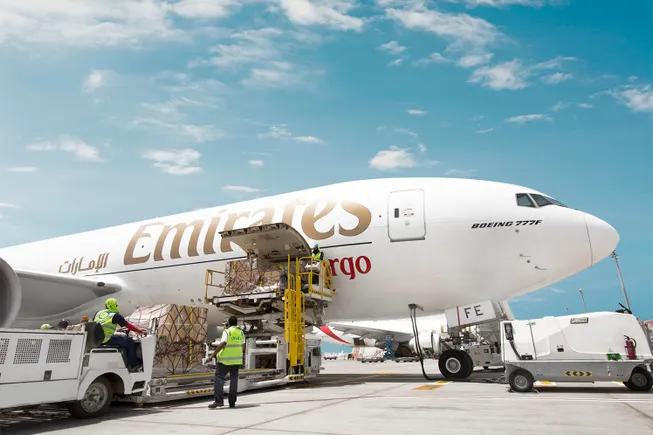
The Iran war continues to drive market volatility while artificial intelligence-related cargo fuels growth on the Transpacific trade lane.
Source Lens
Industry Context
Useful background context, but lower-priority than direct platform, community, or operator intelligence.
Impact Level
medium
Use this briefing to decide whether your team needs an immediate workflow, policy, or reporting change.
Key Stat / Trigger
No single quantitative trigger surfaced in this report.
Focus on the operational implication, not just the headline.
Full Coverage
An article from 3 factors that may shape air cargo market in H2 The Iran war continues to drive market volatility while artificial intelligence-related cargo fuels growth on the Transpacific trade lane. Published Aug.
3, 2026 Kelly Stroh Senior Editor Share Copy link Email / Print License Add us on Google An Emirates SkyCargo Boeing 777 freighter aircraft being loaded. Air freight rates are expected to rise between 5% and 15% in 2026, according to Xeneta. Courtesy of Emirates SkyCargo Listen to the article 7 min This audio is auto-generated.
Please let us know if you have feedback. A cooling world economy will likely slow air cargo market growth over the next six months as rates rise further, according to Xeneta’s Air Freight Outlook Update published in July. After starting the year generally stabilized despite geopolitical conflicts and shifting U. S.
trade policies, air cargo sector was thrown a curveball in February with the start of the Iran war. Despite the war’s more regionalized cargo impact, 12% of global capacity was removed “overnight,” per Xeneta. Market demand swung as a result, falling 3% in March before recovering in April through June.
Meanwhile, a blockade of shipments through the Strait of Hormuz — a critical waterway for global oil — drove fuel volatility and higher costs. However, fuel prices have begun to ease even as they remain at higher than usual levels, according to the International Air Transport Association.
With the Iran war continuing, ocean reliability remains low, keeping air cargo volumes from shifting back to maritime, further boosting activity as ocean shippers began to pull forward inventory, spurring higher rates for the mode.
However, elevated inventories due to frontloading may leave less to ship, possibly dampening Q4 peak season air cargo demand, Xeneta reported. Here is a mid-year look at three key factors that will shape the air cargo sector in the back half of 2026. 1.
Global demand and capacity poised to slow Although global air cargo demand rose 4% year over year at the end of June, up from Xeneta forecasts for 2% to 3% growth from earlier in the year, a slowing global economy could eventually dampen growth on different corridors.
Now, Xeneta sees demand growth for the full year to be toward the higher end of its original forecast. On the capacity side, Xeneta anticipates growth toward the lower end of the 2% to 3% range, a decline from its forecast earlier in the year. In turn, demand may keep pace or even surpass capacity.
“Shippers should — how should I say this — not expect a huge price cut in air freight services anytime soon.” Tom Crabtree Managing Director at Transport Research Advisory This phenomenon has already started to occur. For instance, on a corridor level, Asia-Pacific carriers saw a 4. 3% year-over-year increase in capacity in June as demand rose 7.
9%, IATA reported. Meanwhile, carriers based in North America saw capacity increase by 6. 2% YoY in June, while demand was up 13. 1% YoY, per IATA.
Compounding the issue, aircraft manufacturers Boeing and Airbus’ supply chains have still yet to fully recover since the COVID-19 pandemic, Tom Crabtree, managing director at Transport Research Advisory, told Supply Chain Dive.
So far, in the first six months of the year, Boeing and Airbus have built about 75 widebody passenger aircraft combined — only a six-unit improvement compared to the first six months of 2025.
Failure by the two manufacturers to produce enough widebody airplanes, which move roughly 40% of air cargo, would force the global freighter fleet to continue working overtime, Crabtree said. “Shippers should — how should I say this — not expect a huge price cut in air freight services anytime soon,” Crabtree added. 2.
Shipper rates set to rise At the start of the year, Xeneta initially forecast air cargo rates to drop by up to 10%, but the firm now expects rates to increase 5% to 15% year over year.
Ripple effects of the Iran war are a primary driver, as the conflict has not only created network and fuel volatility, but it also has impacted long-term contracting, leaving forwarders to secure space or negotiate prices on the spot market, per Xeneta. In Q2 of this year, forwarders were procuring nearly 50% of air freight volumes on the spot market.
During that same quarter, the share of newly-agreed shipper-forwarder contracts valid for up to three months increased to 58%, up from 22% the prior year. Many companies are holding off negotiating 2026 contracts until conditions stabilize, according to Xeneta.
Since the end of February, air freight rates have increased due to fluctuating jet fuel prices and high demand, Crabtree said. At one point, air freight prices were up 38% year over year, he added, noting they have eased since the beginning of July. Air cargo shipper freight rate growth for the first six months of 2026.
Xeneta “So, if you're a shipper, these are swings that are really hard to work around,” Crabtree sai
Original Source
This briefing is based on reporting from Supply Chain Dive. Use the original post for full primary-source context.
Style
Audience