

A $290,000 Tesla Semi for $50,000?? California’s Incentive Stack Is Real, but the Number Hides as Much as It Reveals.
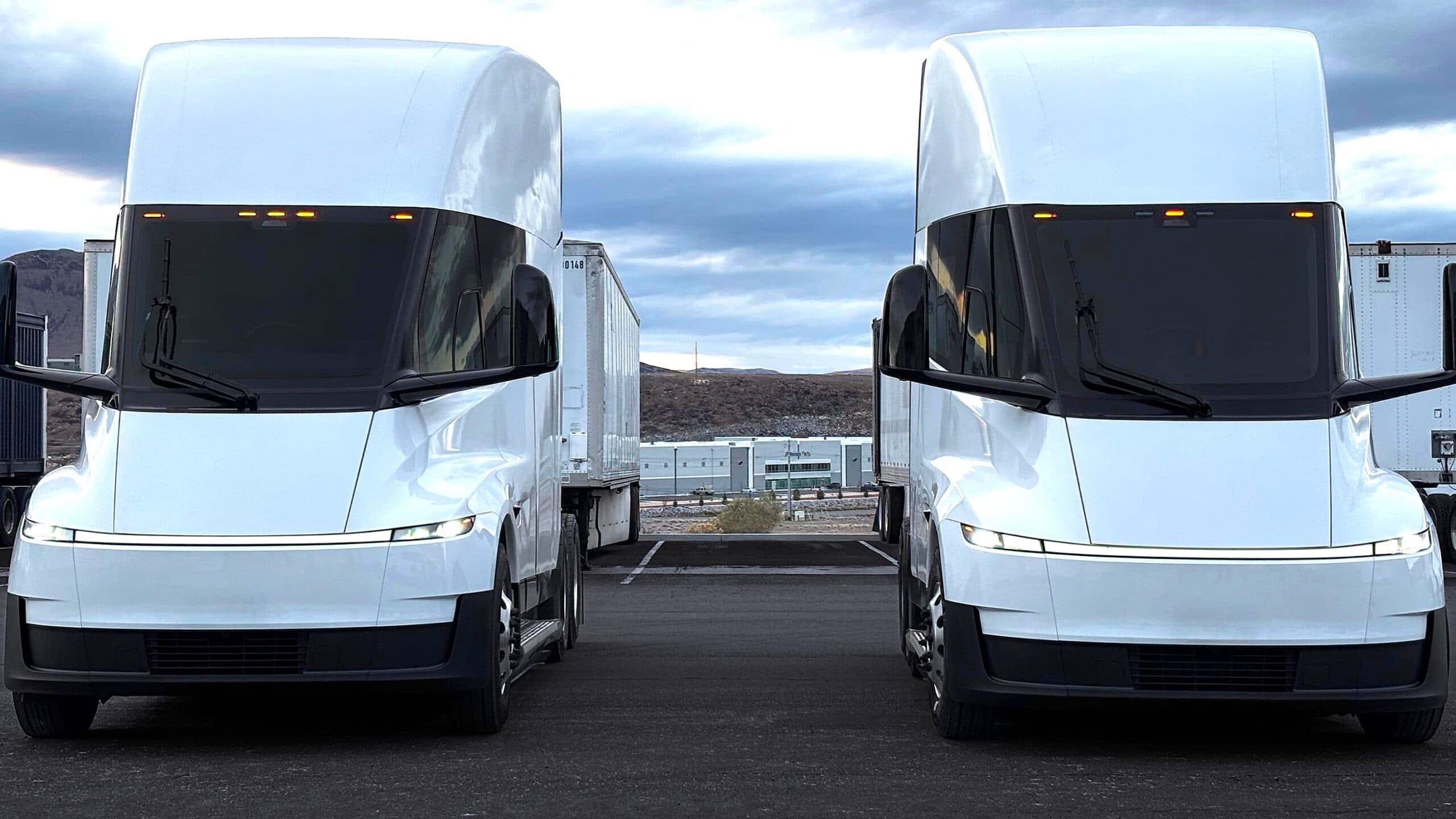
A claim is circulating that stops you mid-scroll: a California small fleet can now buy a Tesla Semi for as little as $50,000. The Tesla Semi carries a $290,000 sticker. The post lays out how two California incentive programs stack to knock $240,000 off that price, leaving a net cost of roughly $50,000, which it […] The post A $290,000 Tesla Semi for $50,000?? California’s Incentive Stack Is Real, but the Number Hides as Much as It Reveals. appeared first on FreightWaves.
Source Lens
Industry Context
Useful background context, but lower-priority than direct platform, community, or operator intelligence.
Impact Level
medium
Use this briefing to decide whether your team needs an immediate workflow, policy, or reporting change.
Key Stat / Trigger
No single quantitative trigger surfaced in this report.
Focus on the operational implication, not just the headline.
Full Coverage
A claim is circulating that stops you mid-scroll: a California small fleet can now buy a Tesla Semi for as little as $50,000. The Tesla Semi carries a $290,000 sticker. The post lays out how two California incentive programs stack to knock $240,000 off that price, leaving a net cost of roughly $50,000, which it calls 83% off.
For an owner-operator or small fleet, a number like that demands a hard look, because if it is real it changes the equipment math completely, and if it is too good to be true it is worth knowing why before anyone gets excited. So here is the honest breakdown: what is accurate, what is verified, and what the headline number leaves out.
NEWS: California small fleets can now buy a Tesla Semi for as low as $50,000 by stacking two state incentive programs, Tesla Semi announced today. The Tesla Semi MSRP is $290,000. HVIP, the existing Clean Truck and Bus Voucher program, gives $120,000 off each Semi for up to 20… pic. twitter.
com/IRVEw4u4Rq— Muskonomy (@muskonomy) June 26, 2026 What the Claim Gets Right The core of it holds up. California does run two incentive programs that can be stacked on a single zero-emission truck, and together they can approach the figures in the post. The first is HVIP, the Hybrid and Zero-Emission Truck and Bus Voucher Incentive Project.
It has been around for years, it is administered through the California Air Resources Board, and it provides a point-of-sale voucher, a direct discount at purchase, not a tax credit you wait to claim.
For a qualifying zero-emission Class 8 truck like the Semi, the voucher has been worth up to $120,000, with enhanced amounts available to fleets that meet the small-business definition. That part of the post is accurate. The second is newer.
On May 13, 2026, Governor Newsom announced the California Clean Fuel Reward, or CCFR, a rebate program for electric medium- and heavy-duty trucks, with applications opening in late June 2026.
The state describes it as funded through California’s Low Carbon Fuel Standard, not federal money, which is the detail in the post that matters most right now: because CCFR is funded by the state’s LCFS program rather than by federal dollars, it is insulated from the federal EV credit rollbacks happening at the national level.
The program has $250 million available in its first year and more than $1 billion committed through 2030. Those figures are confirmed by the Governor’s office. And the programs can be stacked.
HVIP’s own rules state that its vouchers can be combined with other eligible public incentives, with HVIP always paying last, up to 90% of the vehicle cost through combined public incentives. Industry analysts have confirmed the same thing.
Ann Rundle, Vice President at ACT Research, noted that California allows the stacking of benefits so buyers can combine incentives, and that no other state’s programs are as comprehensive or as well funded.
The claim that combined incentives can cover up to 90% of the purchase cost for a small fleet is consistent with what the state and independent analysts say. So the headline is not totally off base. A California small fleet, buying the right truck and qualifying for both programs, can in principle get an enormous discount off the Semi’s price.
This is strictly based off of these incentives. Where the Number Needs an Asterisk Now the important part, because the claimed $50,000 figure depends on several things all going right, and the post does not mention any of them. The CCFR rebate amount is the first wrinkle. The post says CCFR adds another flat $120,000 on top of HVIP’s $120,000.
The state’s published CCFR structure describes rebates ranging from $7,500 up to $120,000 depending on vehicle class, with the top of that range reserved for the heaviest Class 8 vehicles. So a Class 8 Semi could reach the top tier, but the rebate is tied to vehicle class and program rules, not a guaranteed flat $120,000 on every truck.
The exact amount depends on how the program scores the specific vehicle and the buyer. The “$290,000 MSRP” is itself soft. Tesla has not published firm, final pricing for the Semi in the way a legacy manufacturer lists a truck.
Reporting on the price has ranged from roughly $250,000 to $290,000 for the production models, and at least one major customer, Ryder, cut its order and cited “dramatic changes to the Tesla product economics,” which is a polite way of saying the price moved up significantly from the original 2017 figures of $150,000 to $180,000.
If the real transaction price is higher than $290,000, the net cost after incentives is higher than $50,000. The issue is simply we do not know for certain what the MSRPs are on the Tesla semi from a final price perspective. Funding is first-come, first-served, and it runs out.
HVIP vouchers are distributed until the money for a funding round is gone, and Tesla has captured a dominant share of what is available. The post itself notes Tesla Semi accounted for 965 of 1,067 HVIP applications in Californi
Original Source
This briefing is based on reporting from Freightwaves. Use the original post for full primary-source context.
Style
Audience