

Which Amazon Sellers Are Exempt From the April 15 Ad Change
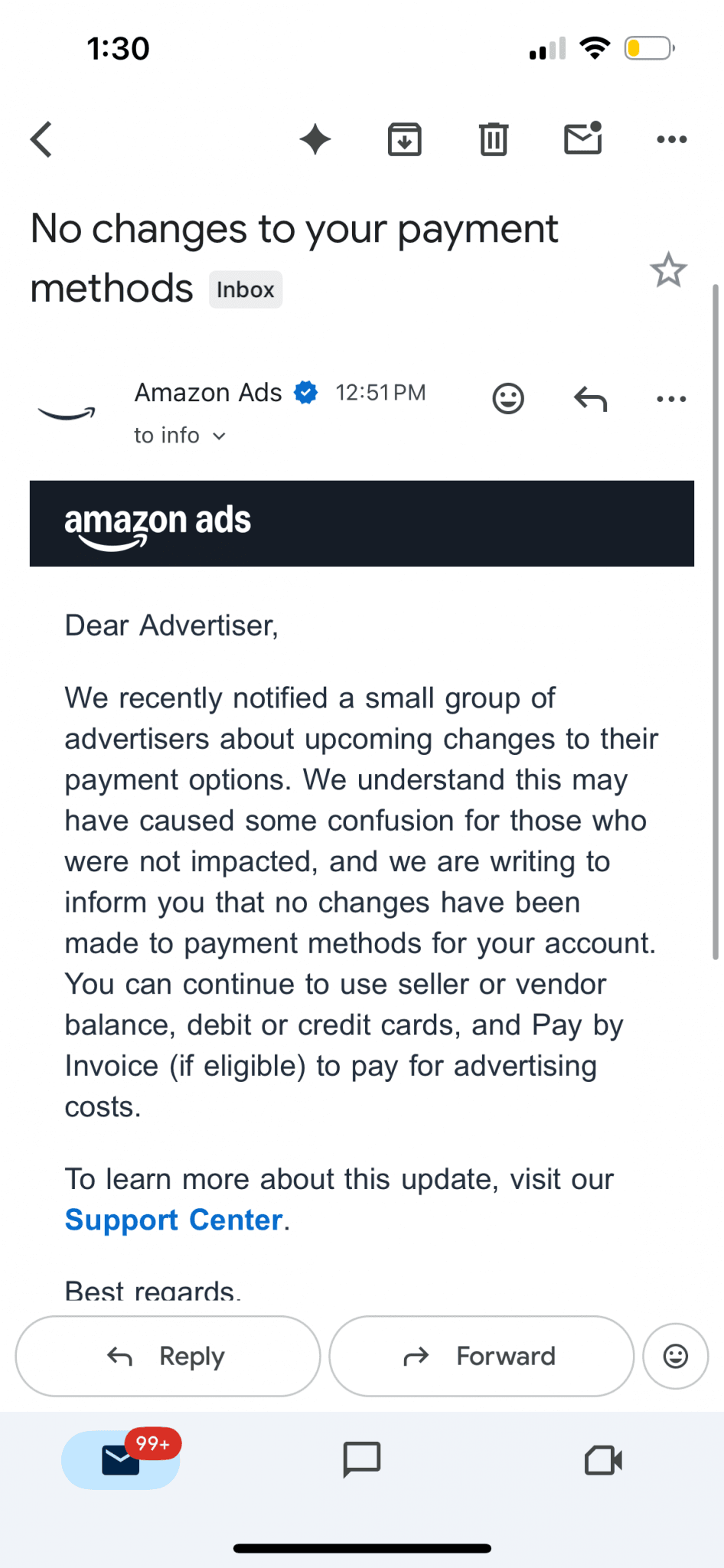
Amazon's April 15 ad billing change from credit cards to seller proceeds deduction only affects high-volume advertisers, with many sellers receiving exemption emails confirming they can keep credit card billing.
This phased rollout by ad spend volume means smaller sellers have breathing room but should expect eventual migration. Check your March ad spend -- if above $50K monthly, start planning cash flow adjustments now.
Platforms are systematically eliminating credit card interchange fees on high-volume ad accounts, following Meta's playbook to improve margins at advertiser expense.
Check Advertising Console payment settings -- if you didn't receive a change notification email, you're exempt for now but monitor monthly ad spend thresholds.
Calculate 60-day working capital buffer impact if spending $50K+ monthly on ads to prepare for future billing changes.
Bottom Line
Amazon ad billing change hits big spenders first, small sellers safe for now.
Source Lens
Operator Tactics
Tactical content that tends to be strongest when tied to workflow, process, or execution.
Impact Level
medium
Amazon ad billing change hits big spenders first, small sellers safe for now.
Key Stat / Trigger
$80,000 monthly PPC spend threshold for receiving change notifications
Focus on the operational implication, not just the headline.
Full Coverage
Amazon's decision to shift advertising costs from credit card billing to automatic deduction from seller proceeds has turned out to be narrower in scope than initially feared. A follow-up email from Amazon Ads confirms that some accounts will not be affected at all.
What Amazon Told Some Sellers The follow-up email, sent by Amazon Ads and screenshotted across Reddit and seller forums, reads: For sellers who received this message, nothing changes on April 15. Credit cards remain a valid primary payment method.
Who Gets the Change and Who Does Not The picture that has emerged from seller forums is that the billing change is being rolled out in phases based on ad spend volume. Sellers reporting notification of the change tend to be high-volume spenders.
One seller on Reddit's r/FulfillmentByAmazon reported spending $80,000 per month on PPC and receiving the change notification. Another, a verified $10M+ annual sales seller, confirmed receiving the same email despite spending significantly more.
The working theory among sellers is straightforward: the larger the ad spend, the more interchange fees Amazon absorbs on credit card transactions, and the more incentive Amazon has to move those accounts off card billing first.
As one seller put it, “Can't see any upside for Amazon to allow anyone to continue high PPC spend on cards for them to pay the 2-3% interchange fees.”
Amazon has said the overwhelming majority of advertisers already pay by deducting ad costs from retail proceeds, meaning the April 15 change was always intended to affect only a subset of remaining holdouts on card billing.
The follow-up clarification email is Amazon's attempt to reduce noise from sellers who were alarmed by the initial announcement but are not actually subject to the change. Related reading: Meta Ends Credit Card Payments for DTC Ad Accounts—Amazon Next?
Why the Confusion Happened The original notification went only to affected accounts, with no public announcement. When sellers who received it posted it publicly, the reaction spread well beyond the actual scope of the change. Sellers who had not received the email assumed the change was coming for everyone, and the alarm spread accordingly.
That framing drove the April 15 boycott discussion, where sellers organized through the Million Dollar Sellers community planned to turn off all ad spend for one day to protest the change. The boycott was premised on the idea that all sellers were losing credit card billing.
The follow-up email complicates that narrative, since a significant portion of the seller base appears not to be affected. What Affected Sellers Still Face For the sellers who did receive the original notification, nothing about the financial impact has changed. Starting April 15, advertising costs are deducted from retail proceeds before disbursement.
The approximately 60-day working capital buffer that existed when ad spend ran on a credit card cycle and proceeds arrived on a separate cycle is gone for those accounts. Credit card rewards on ad spend disappear entirely as a primary payment method, replaced by a one-time $2,500 promotional credit. The rollout pattern also signals where this is heading.
High-spend accounts are being moved first. Sellers currently unaffected who spend meaningfully on Amazon Ads should not assume their current billing arrangement is permanent. The direction of travel, as both Amazon and Meta have demonstrated this year, is away from credit card billing for ad spend at scale.
The post Which Amazon Sellers Are Exempt From the April 15 Ad Change first appeared on EcomCrew.
Original Source
This briefing is based on reporting from EcomCrew. Use the original post for full primary-source context.
Style
Audience