

Amazon tests e-cargo bikes in Washington, D.C.
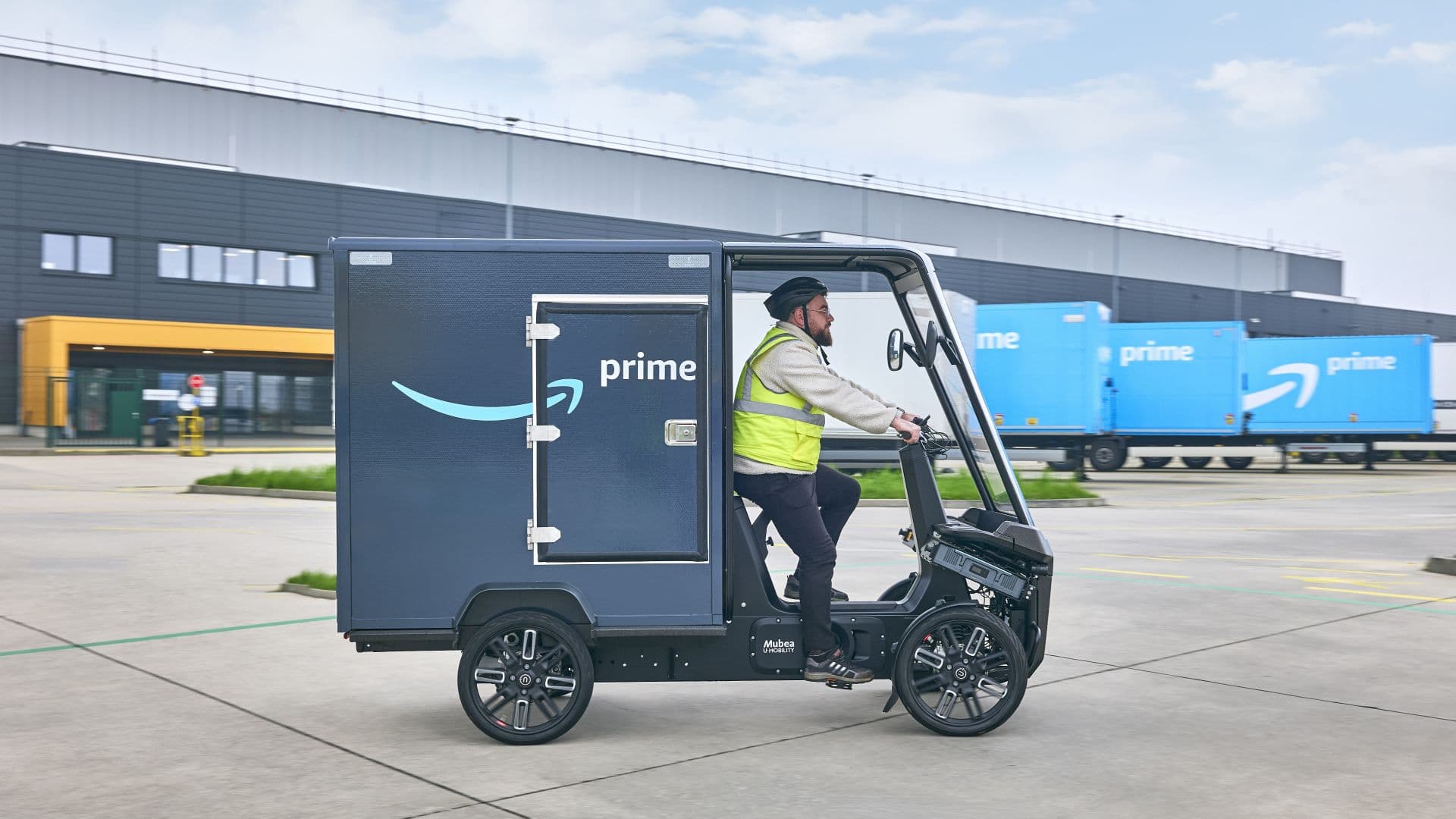
Amazon is making deliveries in the District of Columbia using battery-powered cargo bikes, part of a broader micromobility policy aimed at reducing emissions, noise and congestion in cities. The post Amazon tests e-cargo bikes in Washington, D.C. appeared first on FreightWaves.
Source Lens
Industry Context
Useful background context, but lower-priority than direct platform, community, or operator intelligence.
Impact Level
medium
Use this briefing to decide whether your team needs an immediate workflow, policy, or reporting change.
Key Stat / Trigger
No single quantitative trigger surfaced in this report.
Focus on the operational implication, not just the headline.
Full Coverage
Amazon has launched its second U. S. pilot project for electric cargo bikes, this time in Washington, D. C. , as part of a broader effort to reduce transportation emissions and congestion by embracing small, lightweight vehicles for package delivery in dense urban environments.
The retail and logistics goliath this month launched a 10-month program to assess how e-bikes can support package delivery operations in the nation’s capital, the District Department of Transportation said in a news release.
During the trial, independent delivery partners will deliver Amazon (NASDAQ: AMZN) packages to customers using a fleet of up to 15 battery-powered e-cargo bikes. The e-cargo bikes have four wheels and a secure rear cargo hold, along with covered seating, a windshield and windshield wipers to protect delivery drivers from the elements.
In 2024, Amazon also started testing a new e-bike model in Brooklyn and in May 2025, it announced the introduction of more than 250 of these bikes to deliver next-and same-day packages to customers in Manhattan. The e-cargo bikes in the District are loaded at an Amazon microhub located on a secure surface parking lot in Southwest, D. C.
Couriers are increasingly deploying e-cargo bikes in cities, especially in Europe, where deliveries are concentrated close together. Bikes use pedestrian and commercial loading zones and operate in bike lanes, allowing packages to be delivered while helping to reduce traffic and noise, transportation planners say.
UPS, for example, uses e-bikes for delivery in London. DHL Express uses cargo bikes throughout Europe.
The reason e-bikes are used in Europe is that hourly wages are much less for drivers than in the United States and couriers can afford their use even though the number of parcels delivered is less per person than with a motor vehicle, said Satish Jindel, a parcel industry expert and president of ShipMatrix.
Amazon’s lower wage scale, compared to FedEx and UPS, is also why it can utilize e-cargo bikes in the United States, he added. Globally, Amazon employs several micromobility options, including e-cargo mopeds and pushcarts.
In 2024, Amazon and its delivery service partners delivered 170 million packages via such transportation modes, up from 125 million packages in 2023. Amazon also added new micromobility hubs, which are smaller, centrally located delivery stations in urban cores.
There are now 70 of these hubs in more than 45 cities, including London, Paris and Barcelona, Spain, according to a journal entry on the company’s website. Amazon says more than 1. 5 million Amazon parcels are delivered with e-cargo bikes in Berlin each year.
Last June, the e-tailer introduced e-cargo bikes in Barcelona and in November it expanded e-cargo bike operations in Florence, Italy. In the United Kingdom, Amazon operates electric cargo bikes in cities such as Manchester, London and Glasgow. E-cargo bikes are also replacing traditional delivery vans in towns like Croydon, England. Amazon’s U. K.
e-bikes can reach a maximum speed of 15 mph, travel up to 31 miles per battery charge and carry loads of up to 440 pounds. The bikes can operate without requiring a driver’s license and are permitted to use bike lanes. Amazon expects to make about 2. 5 million deliveries by e-cargo bike and foot in the U. K. every year.
An Amazon driver operates an e-cargo moped in Milan, Italy. (Photo: Amazon) Meanwhile, the majority of Whole Foods Market and Amazon Fresh grocery deliveries in Manhattan and Brooklyn are now completed using e-bikes. Amazon recently expanded deliveries using e-cargo mopeds in Milan, Italy.
The small vehicles enable associates to deliver packages to businesses and residents even when parking is limited. Amazon said it currently uses e-cargo mopeds in 13 cities in Italy and Spain. Pushcarts are used in pedestrian areas where access with other modes is difficult.
When the San Fermin festival in Pamplona, Spain, shut down city streets, some packages were delivered with special foldable pushcarts that can navigate crowds in lieu of vans, Amazon said. Amazon uses on-foot delivery in London and the suburb of Camden following successful trials around the area.
In New York, many orders are also delivered in Manhattan and Queens using pushcarts. Last year, associates delivered up to 250,000 packages by foot. Amazon announced in October plans to buy thousands of pedal-assist vehicles from Rivian spinoff Also. Rivian is an electric vehicle maker that has supplied more than 25,000 vans to Amazon so far.
It should be noted that Amazon delivers billions of packages per year, so non-van deliveries are a small fraction of the total. Click here for more FreightWaves/American Shipper stories by Eric Kulisch. RECOMMENDED READING: Amazon cranks up 30-minute delivery in major US cities The post Amazon tests e-cargo bikes in Washington, D. C.
appeared first on FreightWaves.
Original Source
This briefing is based on reporting from Freightwaves. Use the original post for full primary-source context.
Style
Audience