

Westport advances natural gas trucks with ACT Expo CNG system launch
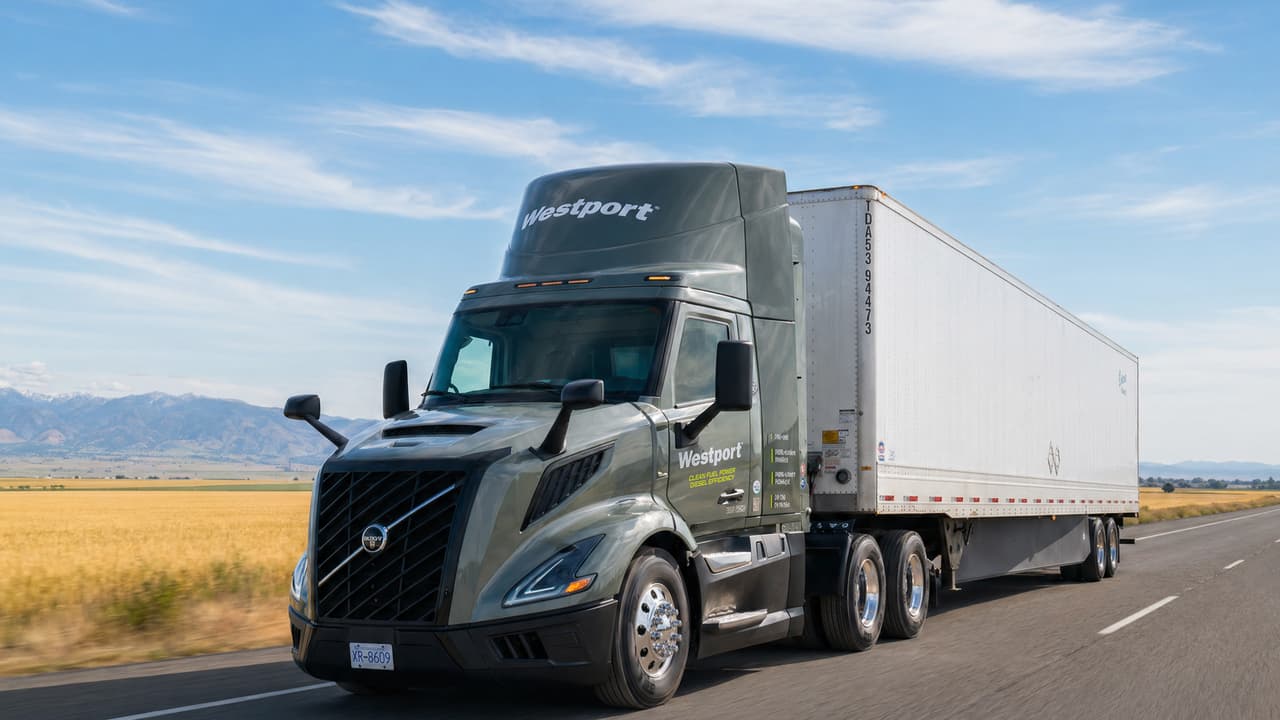
Westport launched a next-generation CNG fuel system for trucks at ACT Expo 2026, demonstrating diesel-equivalent performance with 600+ mile range. The technology is already powering 10,000+ trucks globally using LNG and now targets North America's CNG infrastructure.
This freight innovation signals potential shipping cost volatility as carriers evaluate fuel alternatives amid diesel price fluctuations. Sellers should monitor freight rates more closely as logistics partners may adjust pricing structures during this transition period.
Transportation fuel diversification could create short-term logistics pricing volatility while potentially reducing long-term shipping costs as natural gas remains cheaper than diesel.
Track shipping costs in Seller Central's 'Manage FBA Shipments' report -- if freight rates increase 5%+, negotiate locked rates with 3PLs before Q4.
Diversify logistics partners now to avoid disruption if carriers switch fuel systems and face temporary capacity constraints.
Bottom Line
CNG truck rollout means potential freight cost shifts for sellers.
Source Lens
Industry Context
Useful background context, but lower-priority than direct platform, community, or operator intelligence.
Impact Level
medium
CNG truck rollout means potential freight cost shifts for sellers.
Key Stat / Trigger
10,000+ trucks already operating globally
Focus on the operational implication, not just the headline.
Full Coverage
Westport announced Thursday that it is bringing its next-generation compressed natural gas (CNG) fuel storage and delivery system to ACT Expo 2026. The announcement marks the first North American demonstration of the technology, which the company says can match diesel performance while running on widely available CNG.
The system will be showcased at the May 4-7 event in Las Vegas on a Volvo VNL 300 heavy-duty truck that produces 500 horsepower and 1,850 pound-feet of torque, with fuel efficiency closely comparable to that of diesel-powered models.
The demonstration represents what Westport calls a critical step toward commercializing high-pressure direct injection (HPDI) technology for the North American market. “Showcasing our next-generation high-pressure CNG system at ACT Expo marks a defining milestone for the future of clean transportation,” said Dan Sceli, chief executive of Westport.
“By combining advanced high-pressure storage with Cespira’s proven HPDI fuel systems, we’re demonstrating that fleets can achieve diesel performance and efficiency using widely available natural gas.”
The Joint Venture Behind HPDI The HPDI fuel system is managed through Cespira, a joint venture between Westport and Volvo Group launched about a year and a half ago. The technology is already commercially available in more than 30 countries, powering over 10,000 trucks worldwide using liquefied natural gas. window. googletag = window.
googletag || {cmd: []}; googletag. cmd. push(function() {googletag. defineSlot('/21776187881/FW-Responsive-Main_Content-Slot1', [[300, 100], [320, 50], [728, 90], [468, 60]], 'div-gpt-ad-1709668545404-0'). defineSizeMapping(gptSizeMaps. banner1). addService(googletag. pubads()); googletag. pubads(). enableSingleRequest(); googletag. pubads().
collapseEmptyDivs(); googletag. enableServices(); }); googletag. cmd. push(function() {googletag. display('div-gpt-ad-1709668545404-0'); }); One defining feature of this technology is that it doesn’t replace a diesel engine. Rather, it’s modified to work with diesel engines. “This is a diesel engine. It’s just running on natural gas,” Sceli said.
“It’s not a new engine. There’s no new engine development. It’s a base diesel engine that is modified with our system — the injectors, the controls and whatnot — to run natural gas,” Sceli added. The compression-ignition approach requires no spark plugs, no modifications to the transmission or cooling system, and no changes to engine maintenance schedules.
This also helps when getting these trucks serviced. “When this truck pulls into a service center, all those experienced diesel mechanics with all the diesel equipment — it’s a diesel engine coming in for service,” Sceli said.
Engineering for the North American Market While HPDI has proven successful in Europe with LNG, North America’s infrastructure favors CNG because of its extensive pipeline network and stable pricing. Westport engineered a high-pressure (~700 bar) CNG platform specifically to address this market gap. “North America is a compressed natural gas market.
We have our pipelines, we have the infrastructure — lots of infrastructure,” Sceli said. “Natural gas is stable in price and there’s plenty of it.” The abundance of natural gas in North America introduces additional fuel cost savings potential depending on the retail price of diesel.
The release notes that Westport’s system on the demo truck offers a driving range of more than 600 miles and up to 10 miles per gallon equivalent. window. googletag = window. googletag || {cmd: []}; googletag. cmd. push(function() {googletag.
defineSlot('/21776187881/fw-responsive-main_content-slot3', [[728, 90], [468, 60], [320, 50], [300, 100]], 'div-gpt-ad-1665767553440-0'). defineSizeMapping(gptSizeMaps. banner1). addService(googletag. pubads()); googletag. pubads(). enableSingleRequest(); googletag. pubads(). collapseEmptyDivs(); googletag. enableServices(); }); googletag. cmd.
push(function() {googletag. display('div-gpt-ad-1665767553440-0'); }); The storage tanks used leverage technology originally developed for hydrogen applications. High-pressure tank valves, pressure relief devices and safety controls from Westport’s existing components business integrate with storage tanks originally engineered for hydrogen.
Sceli noted that one of the benefits of the original hydrogen use case is the high-pressure storage. Many companies invested in hydrogen storage capabilities, reducing the upfront research and development costs.
Additionally, the fact that CNG molecules are larger than hydrogen molecules also works in Westport’s favor, making them easier to contain and manage at high pressure. A Bridge to Hydrogen The HPDI system offers fuel versatility that extends beyond natural gas. With minimal hardware changes, the system can run on CNG, renewable natural gas or hydrogen.
Unlike fuel cells, HPDI-equipped engines do not require 99. 999 percent pure hydrogen, eliminating the need for dedicated super-clean distribution systems and avoiding the co
Original Source
This briefing is based on reporting from Freightwaves. Use the original post for full primary-source context.
Style
Audience