

The freight recession’s hangover is finally lifting on auction lots
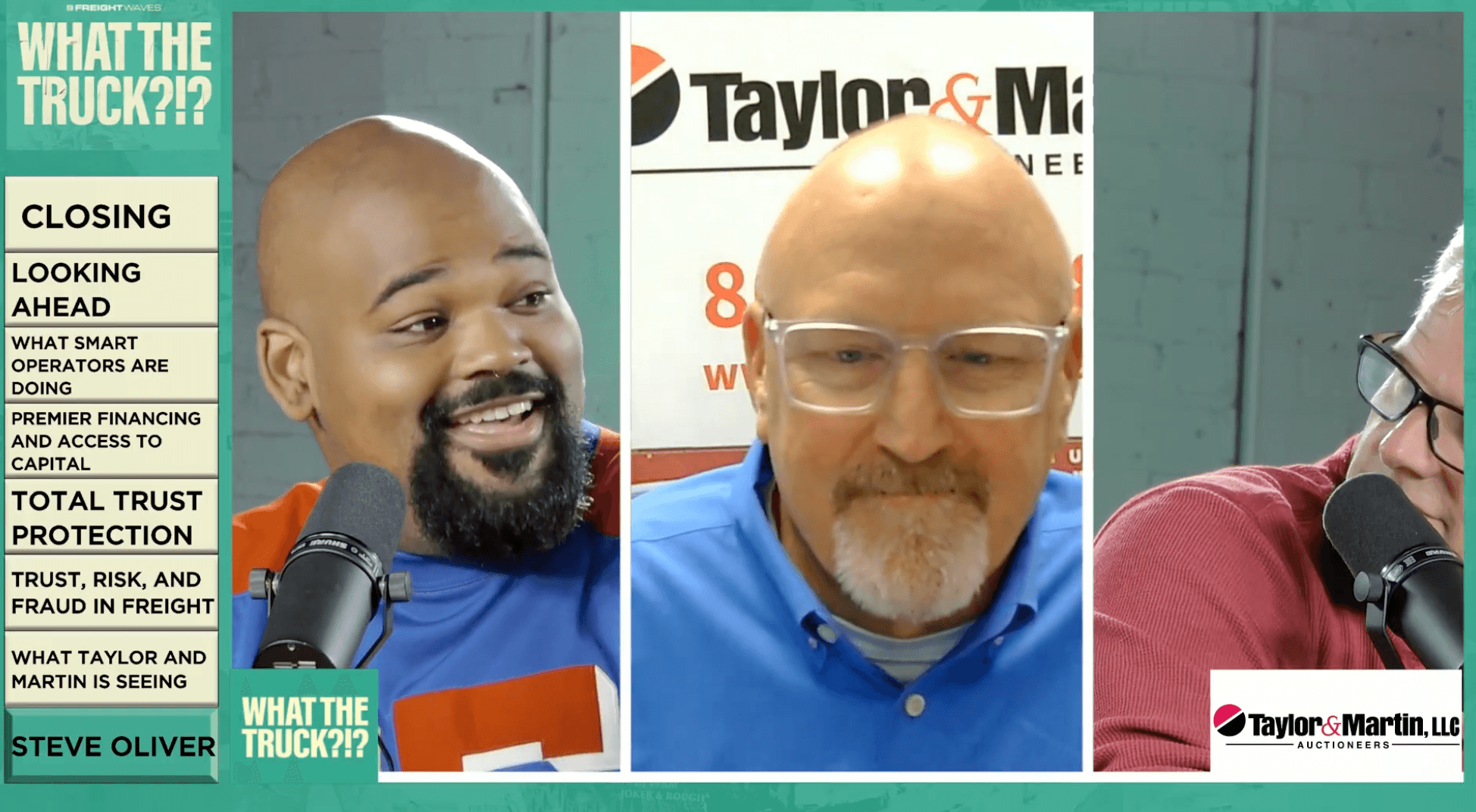
Taylor & Martin’s Steve Oliver explains how rising freight rates, constrained new truck production and lingering pandemic-era debt are reshaping the used equipment market The post The freight recession’s hangover is finally lifting on auction lots appeared first on FreightWaves.
Source Lens
Industry Context
Useful background context, but lower-priority than direct platform, community, or operator intelligence.
Impact Level
medium
Use this briefing to decide whether your team needs an immediate workflow, policy, or reporting change.
Key Stat / Trigger
No single quantitative trigger surfaced in this report.
Focus on the operational implication, not just the headline.
Full Coverage
The freight recession left its fingerprints on carrier margins, fleet headcounts, and the rows of idle trucks lining auction lots around the country. But if the downturn’s signature was oversupply and compressed values, early 2026 is starting to tell a different story. Rates are ticking up and auction attendance is rising.
The owner-operators who sat on the sidelines for the better part of two years are buying again. Steve Oliver, vice president of sales and marketing at Taylor & Martin, sees it in real time. The company specializes in transportation equipment and sells close to 20,000 pieces annually across 12 locations nationwide (soon to be 13).
When carriers and owner-operators feel confident enough to invest, Taylor & Martin is one of the first places that confidence shows up. In a conversation with FreightWaves, Oliver described a market that is responding to even modest positive signals with remarkable speed.
“As you guys started to talk about rates ticking up in January, we immediately saw an increase in auction attendance — owner-operators buying more equipment than they had the previous 18 months to two years,” Oliver said. “If people feel like they can make a living, they are in.
They come in, they buy equipment, and they put it to work as soon as they can possibly get it on the road.” Responsiveness is a defining feature of the trucking economy, and it carries risk.
Low barriers to entry mean that when conditions improve, capacity floods back into the market quickly, along with downstream concerns around equipment provenance, fraud, and trust. The pandemic changed how equipment gets bought and sold. Before COVID, buyers routinely showed up at auction sites to inspect trucks in person. The pandemic broke that habit.
Remote bidding surged, and many buyers never went back. The shift created both an obligation and an opportunity. Taylor & Martin responded with what it calls “Total Trust Protection,” a transparency initiative designed to give remote buyers confidence in what they’re purchasing. “COVID taught everybody that they can sit at home,” Oliver said.
“We want to make sure that we’re giving the people buying that equipment some security, some safety, and some transparency on what they’re buying.” The program extends to the pre-auction process, where Taylor & Martin verifies VIN numbers against titles and flags discrepancies before equipment ever hits the block.
“If we have any kind of suspicion, we’re running a Carfax or a RigDig report to try to make sure that if there are things people need to know about this equipment, we can communicate that,” Oliver said. “The company that you buy stuff from matters.” The emphasis on provenance verification reflects a broader industry concern.
Organized freight theft has escalated well beyond opportunistic trailer break-ins. “We’ve always heard stories about people flipping the locks or the tags off the back of a trailer and stealing stuff,” Oliver said. “But these truly organized crime rings that are trying to steal freight — that’s something that you hear about regularly nowadays.
It’s absolutely insane.” The pandemic freight boom produced some of the most extreme equipment valuations the auction industry has ever seen. Capacity was scarce, freight was abundant, and carriers were willing to pay almost anything for a truck that could run.
“Our highest-priced truck was a regular Volvo 860 that sold for $240,000 or $250,000 in 2022, which is probably $50,000 more than it was brand new,” Oliver said. The distortion wasn’t a mystery to anyone watching, least of all the people facilitating the sales. But the auction model is price-agnostic by design. The market sets the number.
“The great thing about an auction is the market decides what it’s worth,” Oliver said. “We watch this with open eyes knowing there’s not a prayer these trucks are always worth the kind of money that people are paying for them.” What surprised Oliver was how long the reckoning took.
Carriers who overpaid had banked enough pandemic-era cash to service the debt far longer than expected. When the music stopped, it was often the lenders left holding the bag. “People made so much money during the COVID time that they were able to hang on for much longer,” he said.
“The lender then is maybe sending the same piece of equipment back to us two or three or four years later, and it’s worth nowhere in the realm of what they had financed.” Oliver’s outlook for the balance of the year is notably optimistic. New truck production contracted sharply during the downturn as manufacturers right-sized output.
Capital expenditure on new equipment stalled. The freight market has shown enough life to lift used truck values off their floor. The combination creates what Oliver described as a genuine window where pent-up demand could push used prices high enough to help some pandemic-era buyers finally get whole.
“The reality is that since freight rates ticked up a little bit, used truck values have gotten better
Original Source
This briefing is based on reporting from Freightwaves. Use the original post for full primary-source context.
Style
Audience