

Texas court nixes shipper liability in Home Depot/Werner case
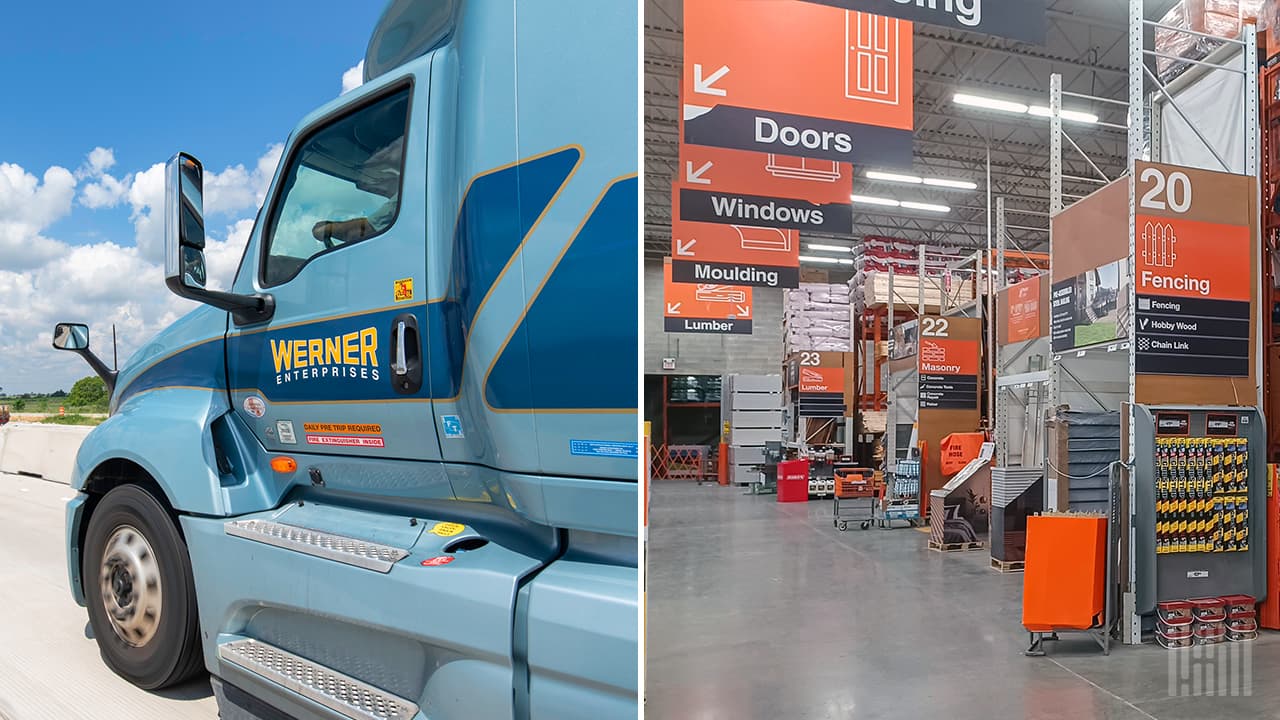
The Texas Supreme Court has taken some wind out of the sails of the sudden debate over shipper liability. The post Texas court nixes shipper liability in Home Depot/Werner case appeared first on FreightWaves.
Source Lens
Industry Context
Useful background context, but lower-priority than direct platform, community, or operator intelligence.
Impact Level
medium
Use this briefing to decide whether your team needs an immediate workflow, policy, or reporting change.
Key Stat / Trigger
No single quantitative trigger surfaced in this report.
Focus on the operational implication, not just the headline.
Full Coverage
Just one day after the Montgomery Supreme Court decision set off speculation that the case could open the doors to shipper liability on top of widening the legal exposure of brokers, a Texas court slowed down that talk in the Lone Star State. The case of Montgomery vs.
Caribe Transport II, which widened broker liability in safety-related incidents, came down on May 14. A day later, the Texas Supreme Court said in a case involving Home Depot and tangentially Werner Enterprises, “one who hires an independent contractor is generally not liable for the contractor’s torts.”
Home Depot (NYSE: HD) hired Werner Enterprises (NASDAQ: WERN) to move freight. (Although in trucking terms Werner would not be considered an independent contractor, it is for this case because it was hired by Home Depot to move its freight).
The crash that launched the case occurred in April 2024 near Houston, on a frontage road of the Katy Freeway, just west of the interstate 610 loop around Houston. Juwan Smith, an employee driver at Werner, was transporting freight for Home Depot. Smith crashed with Natalio Garcia at an intersection along the road after reportedly running a red light.
Garcia was killed. Home Depot was not initially named as a defendant in the case but was added later. Defining ‘duty’ The various arguments in the case focus on the term “duty,” and what was Home Depot’s “duty” to ensure a safe driver. “An existing duty already applies to the carrier and its employee,” Home Depot argued in an earlier legal filing.
“A new duty, or the extension of an existing one involving the shipper’s selection of a carrier, is unwarranted.” In that same argument, Home Depot said “attempts elsewhere to impose liability against the shipper have failed.”
“There is an existing remedy available to the injured motorists, and it lies against the driver and his employer, not the person who hired the independent carrier,” Home Depot said. The Texas Supreme Court agreed.
“The plaintiffs’ liability theory is not viable because it transforms the commonplace act of shipping goods into a basis for sweeping tort liability untethered from control, conduct and risk,” Judge John Phillip Devine wrote in his opinion blocking litigation against Home Depot.
Quoting a precedent, Judge Devine echoed the words of an earlier decision: “The existence of a legally cognizable duty is a prerequisite to all tort liability,” the precedent said. “Dismissal is required when the pleadings do not entitle the claimant to the relief sought.” Ramy P.
Elmasri of the firm of Clausen Miller, who represents insurers and who wrote an online commentary about the case, told FreightWaves that the case against Home Depot was somewhat unique, at least in Texas, because “no one really has tried this before.”
“The trial court correctly held that there was no precedent in the state of Texas to expand liability beyond the actual actors involved in the event,” Elmasri said. But he added that the state’s plaintiffs’ attorney “ has been trying to get to this type of expansion to increase the deep pockets aspect of it.” With revenue in 2025 of $164.
7 billion, Home Depot’s pockets are fairly deep.
‘Unworkable and disruptive’ In that online commentary, Elmasri said the court “recognized that imposing liability on passive shippers would effectively require retailers, manufacturers, distributors, and commercial customers to independently investigate, monitor, and continually reevaluate the safety performance of more than one million federally regulated motor carriers operating nationwide.”
Requiring that sort of due diligence, Elmasri wrote, “would be unworkable, commercially disruptive, and fundamentally inconsistent with the federal regulatory framework governing interstate carriers.”
The Texas decision, according to Andrew Petersen of the law firm of Ziegler Gardener Bell, “recognizes that liabilities get really tenuous the further down the line you get.”
“So at least in the state of Texas, the Supreme Court recognized that fact and said, look, only in these certain circumstances are you going to be allowed to pursue that type of claim particular against a shipper,” he said in an interview with FreightWaves. “This would of course extend to a broker in the same situation.”
Shippers can be liable in some cases In his online commentary, Elmasri noted that the decision does not free shippers from all liability. If it can be shown that they are responsible in part for an incident, they can be held liable. Elmasri cited the case of United Rentals North America vs. Evans.
That 2023 decision also before the Texas Supreme Court found that United Rentals was responsible for improperly securing heavy equipment to a flatbed, with that freight ultimately falling off the truck and killing a motorist.
“Unlike United Rentals, where the shipper itself affirmatively created the roadway danger by improperly loading oversized equipment onto an incompatible trailer, Home Depot merely shipped ordinary goods through a f
Original Source
This briefing is based on reporting from Freightwaves. Use the original post for full primary-source context.
Style
Audience