

EV transition challenges auto supply chain resilience, Moody’s says
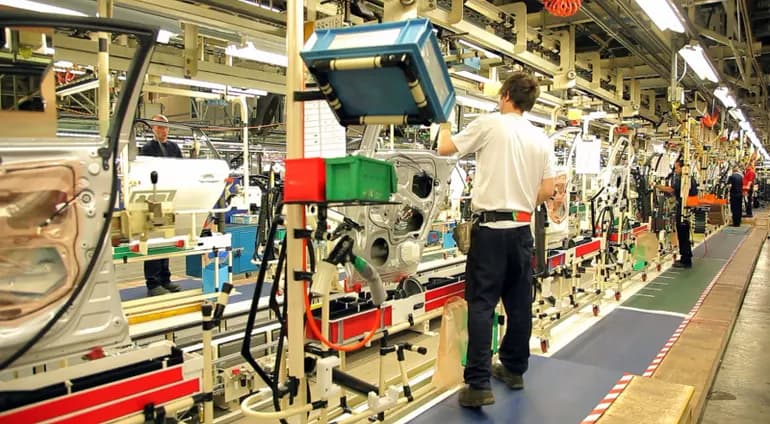
Legacy automakers have the added complexity of having to run different supply chains for internal combustion engine, hybrid and EV powertrains.
Source Lens
Industry Context
Useful background context, but lower-priority than direct platform, community, or operator intelligence.
Impact Level
medium
Use this briefing to decide whether your team needs an immediate workflow, policy, or reporting change.
Key Stat / Trigger
No single quantitative trigger surfaced in this report.
Focus on the operational implication, not just the headline.
Full Coverage
An article from EV transition challenges auto supply chain resilience, Moody’s says Legacy automakers have the added complexity of having to run different supply chains for internal combustion engine, hybrid and EV powertrains.
Published July 7, 2026 Paul Myles Contributor Share Copy link Email / Print License Add us on Google Automakers offering new electrified powertrain options will have to take charge of multiple supply chains. Courtesy of Toyota Motor UK First published on Listen to the article 3 min This audio is auto-generated. Please let us know if you have feedback.
Electric vehicles may have a lot less complexity and moving parts compared to internal combustion engine powered vehicles, but the reverse is true when it comes to an automaker’s supply chain.
While the ICE vehicle manufacturer has close control over much of its supply chain, the EV automaker is not so lucky, Vitaliano Tobruk, Moody’s supply chain industry practice lead, said in an online interview with WardsAuto.
A June 1 Moody’s analysis said the auto industry is facing several major structural pressures making supplier risk more interconnected and harder to assess through traditional, point-in-time approaches.
“In the past companies were also able to plan with stability, demand was predictable, and so this means that supply chain didn't change direction too often,” Tobruk said. “Now it's completely different, because if you take EVs, for instance, there are also logistics of software and semiconductors.
Each of these are changing on its own and these changes are also linked,” he added. Battery investment will depend on consumer demand for EVs, on government regulation and also how trade rules impact the automotive supply chain through energy costs, raw materials and even how many semiconductors have been allocated to the auto industry, Tobruk said.
“The problem is that all these events are changing at the same time, so when companies try to plan a longer-term investment, the ground is still moving,” he said.
On top of this it is important to understand that the automotive industry now has a high dependence on other industries, such as semiconductors, and they are vying for supplies with other industries that could be growing faster, Tobruk said. Artificial intelligence is probably the biggest threat currently to auto supply chains, the analyst said.
With AI data centers making demands for semiconductors that are growing faster than the auto industry, this is also a more profitable area for semiconductor manufacturers. Legacy automakers have the added complexity of having to run different supply chains, for ICE, hybrid and EV powertrains.
“So, this means that a supplier has also to support three different supply chains and, sometimes, investments are also split among those chains,” said Tobruk.
On top of these specific supply chain challenges, there are geopolitical pressures such as trade tensions, tariffs, regulations in some regions seeking to promote EV adoption, as well as differing safety, sustainability and compliance requirements.
Combined with faster vehicle development timelines, it’s putting extra pressure on traditional risk frameworks as new technologies move into production more quickly, said Tobruk. What to do? Faced with these multiple challenges, what can an automaker do to mitigate supply chain problems?
“It's not easy because, you know, it's in this period of uncertainty,” Tobruk admitted. However, he suggests the best course to plot a way through these challenges is to increase visibility throughout existing supply chains so that, when something does change, it’s easy to spot early and react to it.
“Because, without end-to-end transparency across the suppliers at risk, it also is not possible to properly assess where you need the resiliencies,” said Tobruk. In addition, the auto industry faces a particular problem finding alternative suppliers due to various regulatory requirements, such as tooling validation and certification.
“Resilience means visibility, flexibility and also adaptability,” Tobruk noted. “So again, these three elements allow you to react quickly when an event happened.”
Recommended Reading SDVs pose challenges to automotive supply chains, Moody’s says wardsauto Why Western OEMs are falling behind China in SDV development WardsAuto Honda limits tariff impact via logistics, procurement tweaks WardsAuto Add us on Google Share Copy link Email / Print License Filed Under: Risk and Resilience, Procurement, Manufacturing
Original Source
This briefing is based on reporting from Supply Chain Dive. Use the original post for full primary-source context.
Style
Audience