

Samsara tracking label targets $35B cargo theft problem
Cargo theft costs U.S. businesses $35 billion annually. Samsara’s new tracking label delivers real-time freight visibility across any carrier with no system overhaul required. The post Samsara tracking label targets $35B cargo theft problem appeared first on FreightWaves.
Source Lens
Industry Context
Useful background context, but lower-priority than direct platform, community, or operator intelligence.
Impact Level
medium
Use this briefing to decide whether your team needs an immediate workflow, policy, or reporting change.
Key Stat / Trigger
No single quantitative trigger surfaced in this report.
Focus on the operational implication, not just the headline.
Full Coverage
LAS VEGAS — Cargo theft is costing U. S. businesses roughly $35 billion annually, a figure that has climbed 60% year over year. Much of the damage traces back to a single, persistent gap: shippers don’t know where their freight is between carrier scans.
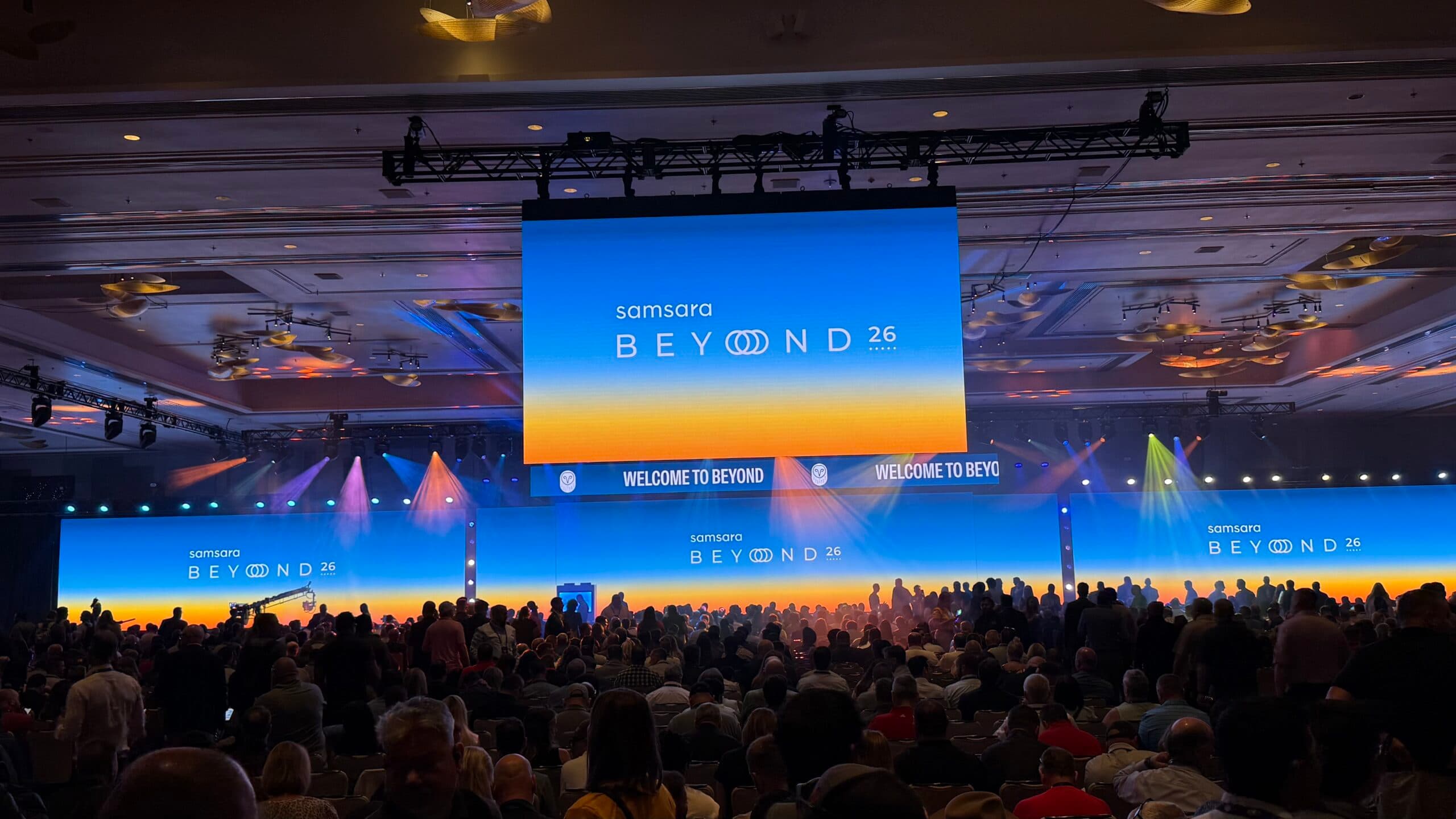
Samsara (NYSE: IOT) moved Wednesday to close that gap with a pair of product launches at its Beyond 2026 customer conference in Las Vegas. The company introduced the Samsara Tracking Label, a single-use, paper-thin Bluetooth label delivering near-real-time shipment visibility.
It also announced Agent Studio, a no-code tool that lets operations teams build and deploy AI workflows without IT support. “A Label You Can Slap on a Box and Walk Away” The Tracking Label is adhesive-backed, flexible and paper-thin, with a 45-day battery life and no lithium or hazardous materials.
It ships cleared for air, ground and rail and can be discarded without special handling once a shipment arrives. What drives it is the Samsara Network: millions of connected devices spanning trucks, trailers, buses, construction equipment and warehouse scanners covering 99% of major U. S. roads and tens of thousands of worksites.
The network continuously listens for Tracking Labels, detecting location in near-real time without requiring carrier involvement. David Gal, Samsara’s vice president of connected equipment, put the customer need plainly during the keynote.
“Our customers have been using asset tags to track critical shipments, and that works, but it’s not purpose-built for cargo,” Gal said. “What they’ve been asking for is a label they can slap on a box and walk away. That’s exactly what the Tracking Label is.” The gap the label fills is notable.
Traditional carrier scans deliver status updates at pickup and delivery, with little visibility in between, even on less-than-truckload (LTL) and full truckload moves carrying thousands of dollars in cargo.
“In LTL and truckload shipping, you typically only hear about your shipment twice — when it’s picked up and when it’s delivered,” said Dave Tu, president of DCL Logistics, a third-party logistics provider and early Tracking Label adopter. “Samsara’s Tracking Label changes that.
It gives us a level of visibility that just didn’t exist before, and when you’re moving high-value cargo, that’s a big deal. It’s like watching your Uber driver on the way to pick you up — you can see every move, every turn, right up until it pulls up to the door.”
DCL now manages fulfillment and carrier handoff for leading brands across consumer electronics, consumer packaged goods, enterprise hardware and GPUs. Where the Samsara Tracking Label Shifts the Market Bluetooth-based asset tracking has historically struggled with fragmented infrastructure.
Zoe Roth, senior research analyst at 451 Research from S&P Global, identified that as the defining constraint. “Our data shows that organizations rely heavily on GPS and cellular technologies — adopted by over half the market — to track non-powered assets, often absorbing higher hardware costs to guarantee visibility,” Roth said.
“Meanwhile, lower-cost alternatives like RFID and BLE currently sit at around 39% adoption, historically constrained by fragmented infrastructure, according to our 451 Research Supply Chain Digital Transformation Survey 2026.
Providing a persistent, wide-area network for Bluetooth assets could dramatically shift this landscape, enabling scale where infrastructure has previously been the bottleneck.” The Shipment Center, a dashboard managing Tracking Label-equipped freight, pairs location data with AI-driven exception management.
A shipping manager can ask which packages face delay risk from weather and focus on flagged shipments rather than monitoring every move manually. The Samsara Shipment App activates labels with a single barcode scan and connects directly to existing TMS or ERP systems, with no system replacement required.
Agent Studio Automates the Work Nobody Wants to Do The second launch, Agent Studio, is available in open beta as a no-code workshop where operations teams can build and deploy AI agents from templates or from scratch. Johan Land, Samsara’s chief product officer, tied it directly to the company’s data advantage.
“Samsara has spent the last 10 years deeply embedded in the world’s most complex physical operations, giving us unprecedented visibility into what’s happening on the ground,” Land said. “In 2025 alone, we captured 25 trillion data points across the Samsara Network across vehicles, equipment, worksites, and operations.
Now, customers can act on this insight by leveraging Samsara’s platform to fully automate workflows without extensive IT expertise.” The studio ships with more than 15 prebuilt templates across safety and maintenance.
Early deployments include a driver assistance agent at a major food distributor that fields parking, weigh station and policy questions, saving 30 minutes of communication time per call, and a daily fleet briefing tool at a food bank t
Original Source
This briefing is based on reporting from Freightwaves. Use the original post for full primary-source context.
Style
Audience