

Carrier diversification unravels the last-mile delivery duopoly
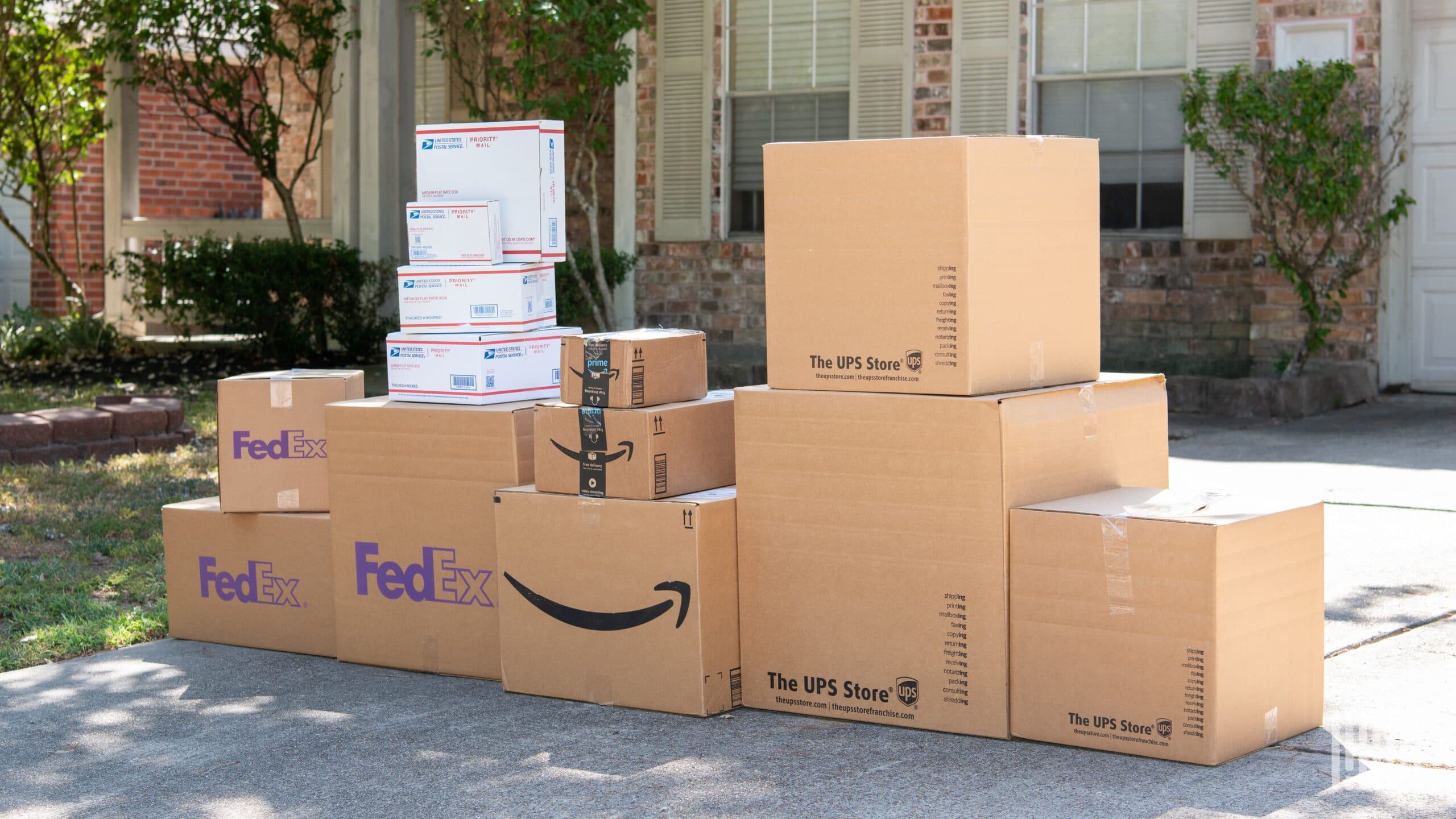
Consumers now expect free delivery in 2.6 days, down from 3.4. Meeting that promise pushed more than half of retailers past FedEx, UPS and the Postal Service. The post Carrier diversification unravels the last-mile delivery duopoly appeared first on FreightWaves.
Source Lens
Industry Context
Useful background context, but lower-priority than direct platform, community, or operator intelligence.
Impact Level
medium
Use this briefing to decide whether your team needs an immediate workflow, policy, or reporting change.
Key Stat / Trigger
No single quantitative trigger surfaced in this report.
Focus on the operational implication, not just the headline.
Full Coverage
The truck that pulls up to your door is less and less likely to be brown or purple. It might be a Honda Civic with a phone mounted to the windshield, or a van carrying a logo you have never seen. Retailers arranged it that way, and the reason has more to do with a stopwatch than a rate sheet. Consumers will now wait a maximum of 2.
6 days for free shipping, down from the 3. 4 days that held steady for years, according to AlixPartners’ 14th annual Home Delivery Survey, released in June. Meeting that promise has turned last-mile carrier diversification from a procurement tactic into the operating default. The survey found 55% of retailers using carriers outside FedEx, UPS and the U. S.
Postal Service, and more than a third actively shifting volume away from FedEx and UPS. The stakes show up in lost customers, no longer just freight spend. Some 88% of shoppers told AlixPartners that a late delivery accompanied by nothing but an apology weakens or ends their willingness to buy from that retailer again.
That puts roughly 20% of demand at risk. Meanwhile, 83% of executives reported per-package costs rising year-over-year, and most said home delivery does not improve their profitability. AlixPartners surveyed 1,000 U. S. consumers and 100 North American transportation, logistics and supply chain executives at companies with sales of $100 million or more.
The Retreat Was Deliberate Amazon handled 6. 7 billion parcels in 2025, up 9. 8%, passing the Postal Service to become the largest domestic parcel carrier by volume, according to data published in March by ShipMatrix Inc. USPS volume fell 8. 3% to 6. 6 billion. UPS dropped 8. 3% to 4. 4 billion. FedEx delivered 3. 6 billion, up 5. 9%.
Total industry volume barely moved, rising 0. 4% to 23. 9 billion packages. Volume at alternative carriers, a group that includes UniUni, Veho, Gofo, Jitsu, SpeedX, OnTrac and Better Trucks, grew 13% to 2. 6 billion units. Revenue for that cohort climbed 15. 4%. None of this volume growth went to UPS and FedEx.
Both are walking away from commodity last-mile delivery to chase B2B logistics and high-value e-commerce shipments where they can charge a premium for complexity. The problem with that pivot is the math: business-to-consumer traffic now represents 75% of the parcel market, and the B2B segment they are pursuing has shrunk to 25%.
The exit shows up on invoices. Ground parcel rates ran 34% above the 2018 baseline during last year’s peak season, with the average surcharge climbing 13% from the third quarter to the fourth, according to the TD Cowen/AFS Freight Index. Both carriers implemented a 5. 9% general rate increase for 2026.
Ground fuel surcharges grew 26% year-over-year while tracked diesel prices rose 4. 7%. “Record-high rates do not spell good news for shippers, but there is still room for pricing concessions if shippers know where to look and what buttons to push,” said Mingshu Bates, chief analytics officer and president of parcel at AFS Logistics, in a news release.
Why Carrier Diversification Became the Default More than 90% of executives surveyed by AlixPartners now run a mix of last-mile carriers, and 32% use four or more. What once was a hedge became infrastructure. The carriers absorbing that volume are building for it explicitly.
Veho relies on 120,000 crowdsourced drivers using their own vehicles and delivers in nearly 60 markets for Macy’s, Lululemon, Sephora, HelloFresh and Stitch Fix, along with logistics providers including Flexport, ShipBob, ShipHero and Stord.
In February the company introduced FlexSave, which lets shippers trade day-definite delivery for a wider window at a lower rate, routed by a platform Veho calls MaestroAI.
“The ever-increasing shipping rates have put brands in an impossible ‘Catch-22’: pay hefty, unsustainable shipping fees, or bear the cost of slow and low-quality delivery that erodes the customer trust,” said Veho co-founder and CEO Itamar Zur in the announcement.
“FlexSave gives brands and logistics leaders a new, better path: a highly cost-effective delivery that keeps the brand promise intact.” That pitch lands because the alternative keeps getting more expensive.
E-retailers face legacy carriers raising rates roughly 6% annually and layering on surcharges that function as profit centers, according to Veho and parcel industry analysts. Reliability Overtakes Price A more telling finding in this year’s AlixPartners data is not the 55%.
It is that reliability has edged past cost as the top reason executives pick their primary last-mile carrier. Procurement teams spent two decades optimizing for cost per package. They must now optimize for consistency. Amazon set that benchmark and keeps raising it. The company added one-hour and three-hour delivery windows this year, priced at $9.
99 and $4. 99 for Prime members, covering 90,000 SKUs across hundreds of cities. It also invested $4 billion in its rural delivery network, while FedEx and UPS impose remote delivery surcharges of $16. 50 and $16. 75. Parcel a
Original Source
This briefing is based on reporting from Freightwaves. Use the original post for full primary-source context.
Style
Audience